Volvo Trains Humanoid Robots for Belgian Plant
▼ Summary
– Volvo Cars has initiated training for Hexagon Robotics’ AEON humanoid robots at its Ghent plant in Belgium, marking the first such implementation at a Volvo facility.
– The wheeled AEON robots are currently being taught via demonstration to place parts with high precision before handling more complex tasks and integrating with existing automation.
– A larger pilot program involving additional units is scheduled for the first half of 2027, with full production integration expected from mid-2027 onwards.
– Other European manufacturers like BMW and Siemens are also testing similar humanoid technologies, while Hyundai plans to mass-produce the Atlas robot starting in 2028.
– The primary goal of these deployments is to automate physically demanding tasks, thereby improving worker safety and efficiency alongside human teams.
Volvo Cars has initiated the first phase of training humanoid robots at its manufacturing facility in Ghent, Belgium. This marks a significant milestone as the Ghent plant becomes the initial site within the company’s global network to test this technology. The automaker confirmed that the initiative is currently in a learning stage, with a broader pilot program scheduled for the first half of 2027 and full integration into production lines expected by mid-2027.
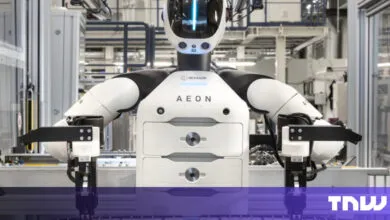
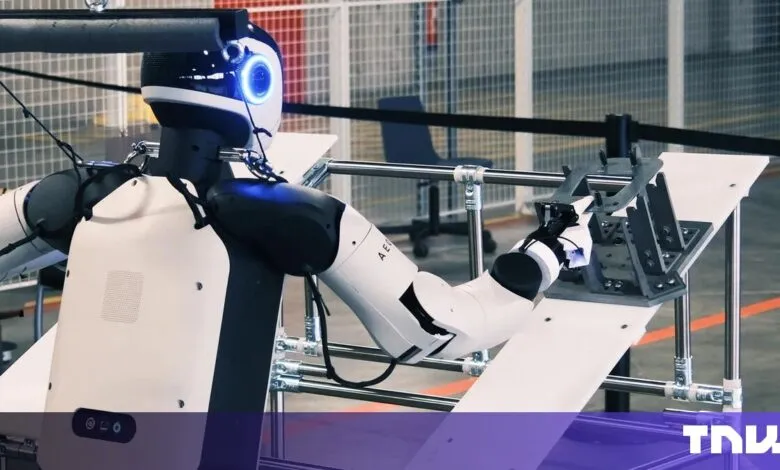
The specific models undergoing evaluation are the AEON humanoid robots developed by Hexagon Robotics. These machines stand 1.65 meters tall and weigh 60 kilograms. Unlike traditional bipedal robots, AEON utilizes wheels for mobility rather than legs. Each unit is equipped with advanced cameras and sensors, allowing it to manipulate parts while carrying loads of up to 10 kilograms. Currently, human operators are guiding the robots through demonstration tasks, teaching them to place components into fixtures with high precision. As the training progresses, the scope will expand to include handling additional parts, navigating the factory floor, and collaborating with existing automated machinery. Additional units will be deployed to support the larger pilot program beginning in early 2027.
Integration with current workflows is a primary design consideration for the deployment strategy. Magnus Nilsson, chief manufacturing officer at Volvo Cars, emphasized the practical advantages of the system’s architecture. “AEON’s humanoid design means it can fit into our production as it is today, alongside our teams and existing automation,” he stated. The overarching goal is to alleviate the burden on human workers by assigning the most physically demanding tasks to the robots, thereby improving overall working conditions.
This move places Volvo among other major European industrial players experimenting with similar technologies. BMW commenced its own pilot program using AEON robots at its Leipzig plant earlier this year. Additionally, Siemens reported in April that a humanoid robot successfully completed an eight-hour shift at its facility in Erlangen. While these companies are exploring various applications, some competitors are pursuing more aggressive timelines. Hyundai Motor Group, which owns Boston Dynamics, has announced plans to begin mass-producing the Atlas humanoid robot starting in 2028.
(Source: The Next Web)