EU Quantum Act: Key details ahead of launch

▼ Summary
– The European Commission is unveiling the Quantum Act in Strasbourg to transform European quantum research into commercial products and manufacturing capabilities.
– Leaked drafts indicate the law aims to prioritize EU-controlled companies for public contracts and mandate post-quantum encryption for critical sectors.
– The legislation addresses a significant investment gap where Europe holds substantial scientific talent but captures only a small fraction of global private funding compared to the US.
– While member states like France have already invested heavily, the Act serves as a framework rather than direct funding and requires approval from the European Parliament and member states.
– The proposal will be discussed at the European Quantum Technologies Conference in Dublin before entering a lengthy legislative debate process that could take years.
The European Commission is set to introduce the Quantum Act in Strasbourg, a legislative initiative designed to transform Europe’s elite quantum research capabilities into tangible industrial assets. This new law aims to bridge the gap between scientific discovery and commercial application, fostering the growth of manufacturing facilities and market-ready products.
Henna Virkkunen, the Commission’s executive vice-president for tech sovereignty, will present the plan at 10:00 CET following the formal adoption by EU commissioners during their weekly meeting. While the official text remains unpublished, leaked drafts provide insight into the proposal’s core objectives. A version obtained by MLex in October indicates that certain public contracts will be reserved for companies controlled by the EU or those from nations with mutual agreements with the bloc. Additionally, the draft outlines eligibility criteria for participation in flagship European quantum projects and mandates that critical sector buyers adopt systems capable of resisting post-quantum encryption.
Bridging the Commercial Gap
The legislation addresses a significant disparity in funding despite Europe’s strong scientific foundation. The continent hosts approximately one-third of the world’s quantum startups and produces top-tier research. However, it captures only about 5% of global private quantum investment, whereas the United States secures more than half. The proposal seeks to operationalize the Quantum Europe Strategy, adopted in July 2025, which sets a goal for Europe to lead the global quantum landscape by 2030.
“Quantum might sound like science fiction to some, but it is already a reality,” Virkkunen said when she launched that strategy last year.
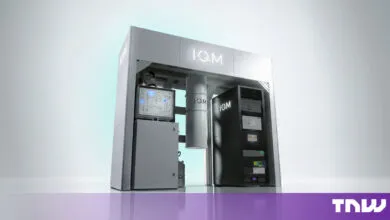
Commission officials characterize the Act as a structural framework rather than a direct financial injection. Some stakeholders have even suggested consolidating the sector, arguing that an excessive number of small firms compete for the same limited customer base. Nevertheless, several member states have accelerated their own initiatives ahead of Brussels. France has committed €500mn to support domestic quantum champions, while Finland’s IQM operates Europe’s sole private quantum chip factory.
Legislative Path and Immediate Impact
The introduction of the Act does not guarantee immediate changes, as the proposal must undergo scrutiny and amendment by the European Parliament and national governments. This legislative process typically spans several years. In the interim, the debate surrounding the Act will take center stage in Dublin. The topic will dominate the agenda at the European Quantum Technologies Conference, scheduled to run from November 30 to December 2.
(Source: The Next Web)