Iranian hackers exploit new method to cause chaos

▼ Summary
– Hackers destroyed millions of euros worth of food by manipulating refrigeration systems in hundreds of French supermarkets.
– French intelligence attributed the attack to Shahid Kaveh, an elite hacking unit linked to Iran’s Islamic Revolutionary Guard Corps.
– The group, also known as CyberAv3ngers, has previously targeted critical infrastructure in US states using Israeli-made devices.
– This incident represents a significant escalation in Iranian cyber warfare strategy with a new focus on European targets.
– Experts note the attack signals Iran’s willingness to disrupt the global economy in response to international isolation.
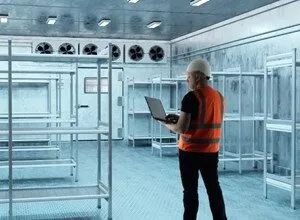
In October, a coordinated cyber assault struck supermarkets across France, causing widespread spoilage by manipulating the temperature controls of hundreds of refrigeration units. The operation resulted in the destruction of millions of euros worth of food, marking one of the most unconventional and disruptive incidents in recent cyber history. While previous attacks on commercial cooling systems have occurred, none had ever reached this magnitude within the heart of Europe.
French intelligence agencies quickly traced digital artifacts back to an elite hacking unit affiliated with the Islamic Revolutionary Guard Corps (IRGC). Specific indicators, including the presence of Farsi code, pointed directly to the group known as Shahid Kaveh. This unit is named after Mahmoud Kaveh, an Iranian commander who perished during the Iran-Iraq war of the 1980s. It operates under the oversight of the IRGC’s Cyber Electronic Command and has long been identified by Western intelligence services as a significant threat actor.
The group, which frequently adopts the online alias CyberAv3ngers, has established a pattern of targeting critical infrastructure. During 2023 and 2024, the hackers compromised Israeli-made industrial control devices embedded in water, manufacturing, and transportation systems throughout multiple US states. Although these intrusions caused minimal operational disruption, they were accompanied by explicit ideological warnings. As stated by the attackers: “Every equipment ‘made in Israel’ is CyberAv3ngers legal target.”
This latest incident represents a notable shift in state-sponsored cyber activities. Historically, Iranian hackers have focused their efforts elsewhere, making the decision to strike European infrastructure a clear escalation in the Islamic Republic’s cyber warfare strategy. Experts interpret this move as a demonstration of increased willingness to inflict economic damage on European targets.
The geopolitical context behind this aggression appears linked to broader international tensions. According to analysts, the attacks serve as a warning regarding the consequences of economic isolation. Ellie Geranmayeh of the European Council on Foreign Relations highlighted this strategic messaging, stating: “Iran has very clearly messaged that the global economy will be disrupted as a consequence of it being shut out from the world.”
(Source: Ars Technica)