Can chip startups survive space funding?
▼ Summary
– Building data centers in space faces significant financial hurdles because lenders cannot repossess chips from orbiting satellites, leading to stricter financing terms.
– SpaceX’s $40 billion chip financing deal reportedly excluded orbital use for the chips due to these collateral risks, though terrestrial operations remain lucrative for the company.
– Elon Musk predicts space data centers will become cheaper within two to three years, a claim dependent on achieving fully reusable Starship rocket flights which have faced recent technical setbacks.
– Startups like StarCloud and Orbital, alongside SpaceX, face higher costs for purchasing chips compared to terrestrial counterparts, complicating the economics of space-based computing.
– Google is pursuing an alternative strategy through Project Suncatcher by deploying its own TPU chips in space, while SpaceX and Tesla collaborate on internal chip development.
The Collateral Conundrum of Orbital Computing
Building data centers in space presents a formidable array of technical and logistical hurdles, ranging from complex engineering requirements to a severe shortage of launch vehicles capable of delivering hardware to orbit. However, an equally significant barrier lies in the financial structures required to fund these ventures. The current ecosystem for data center construction relies heavily on debt financing, where cloud providers borrow capital to build infrastructure and repay loans through generated revenue streams. These agreements typically utilize the servers themselves as collateral, allowing lenders to seize and resell the equipment if a borrower defaults. This security mechanism lowers borrowing costs because even older chips retain substantial value; according to the Compute Credit Index Research, certain H100 units are trading at approximately half their 2023 cost basis, while some H200 configurations maintain their initial 2024 pricing.
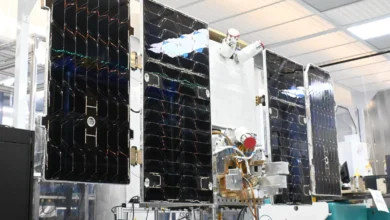
Repossessing such assets becomes impossible when they are installed in satellites traveling at 17,500 miles per hour in low Earth orbit. Consequently, lenders involved in SpaceX’s massive $40 billion chip financing deal reportedly insisted that none of the purchased hardware be allocated to orbital data center initiatives. It remains uncertain whether SpaceX agreed to this restriction. While the viability of space-based compute is currently secondary to terrestrial operations, the company has found success deploying compute at ground stations. During its most recent earnings call, CEO Elon Musk highlighted efforts to accelerate this expansion by assigning rocket engineers to solve manufacturing bottlenecks, such as producing turbine blades for generators more quickly than existing suppliers.
Launch Constraints and Economic Realities
Despite immediate terrestrial successes, long-term plans face uncertainty regarding land acquisition and power availability for new facilities. Many projects encounter local opposition and regulatory delays, while the market awaits clearer signals on compute demand and the ability of buyers to monetize capacity. Musk stated earlier in 2026 that he anticipates space will become the “cheapest” location for operating data centers within two to three years. This projection hinges entirely on achieving full reusability with the Starship rocket. Recent test flights have shown mixed results, with the booster stage failing to recover despite the successful landing of the orbital stage in Texas. Uncertainty persists regarding the timeline and expense of preparing the second stage for future missions.
Even with advancements in launch technology, companies like SpaceX, along with startups such as StarCloud, Cowboy Space Corporation, Sophia Space, Orbital, and others, must still procure hardware. The economics of space data centers appear increasingly difficult, as these entities may pay more for chips than their terrestrial counterparts. This dynamic could benefit competitors like Google, which is advancing Project Suncatcher to deploy its own TPU chips in space. Meanwhile, SpaceX and Tesla are collaborating on Terafab, a U. S.-based semiconductor foundry. However, the project has not yet broken ground and requires billions of dollars and several years before it can produce semiconductors at scale.
(Source: TechCrunch)