Google’s First Data Center Satellite Is Online

▼ Summary
– Google’s Suncatcher prototype space data center satellite launched successfully and is communicating with ground control.
– The satellite carries four TPUs and generates up to 1 kW of power, enabling limited inference workloads in orbit.
– Engineers tested the system by having it write a haiku about space using the Gemma 4 model and report orbital conditions.
– Ongoing tests will evaluate TPU performance under thermal stress and radiation effects like bit flips in real space environments.
– Future plans include launching two more satellites in 2027 with higher power capabilities and inter-satellite optical links.
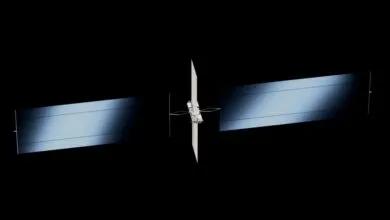
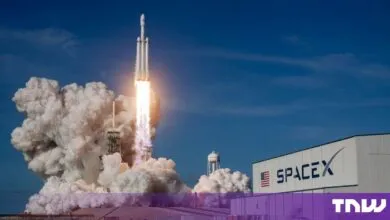
Google’s Suncatcher prototype, a pioneering space-based data center, is now operational following its launch earlier this month. The satellite hitched a ride on a SpaceX Falcon 9 rocket alongside more than 100 other spacecraft, marking a significant milestone in orbital computing. Designed to demonstrate the feasibility of performing large-scale inference workloads directly in orbit, the mission aims to pave the way for future networks of closely flying satellites equipped with advanced processing power.
The hardware aboard Suncatcher includes four Google Tensor Processing Units (TPUs) capable of generating up to 1 kW of electricity. However, the immense power requirements of these chips mean that only one TPU can be active at any given time, limiting continuous operation to approximately 20 minutes per cycle. This constraint adds complexity to the already challenging task of managing space-to-ground communications. Following a three-week commissioning phase to verify subsystem functionality, engineers successfully sent their first prompt to the satellite’s pre-loaded model, Gemma 4, developed by Google DeepMind. The request was to compose a haiku about life in space, resulting in the following output:
“Blue marble below
Data streams in silent grace
Starlight feeds my core. ✨”
Beyond testing creative writing capabilities, Google utilized the platform to evaluate how the model handles real-time reporting on orbital conditions. A spokesperson confirmed to TechCrunch that the satellite is operating nominally. The ongoing test campaign will focus on assessing chip performance under thermal stress and exposure to the space radiation environment. While Google has extensively tested TPUs in Earth-based particle accelerators, this mission provides critical data on how actual radiation effects impact processor integrity in orbit. Radiation can induce “bit flips,” altering stored memory values and potentially corrupting data without triggering standard monitoring alerts. Ground tests suggested that radiation would have minimal impact on inference workloads but posed greater risks for model training; the current mission allows the team to validate these dynamics in a real-world setting rather than relying solely on simulations.
If the onboard TPUs prove robust, the next phase involves launching two additional satellites in 2027. These follow-on craft will feature enhanced power generation capabilities and demonstrate inter-satellite optical links, enabling coordinated distributed workloads. Suncatcher stands out among competitors by prioritizing high-speed connectivity between satellites for coherent processing. In contrast, SpaceX plans to use laser links but intends to keep its data centers too far apart for effective shared processing. Other entities like Starcloud and Cowboy Space are focusing on performing inference loads on individual, isolated satellites.
The success of Suncatcher is closely tied to the broader ambitions of Alphabet, Google’s parent company, which holds a significant investment stake in SpaceX. Both companies rely on the development of Starship, Elon Musk’s heavy-lift rocket, to achieve full and rapid reusability necessary for scalable orbital infrastructure. A peer-reviewed analysis published earlier this month estimated that SpaceX would need to fly Starship 1,800 times to realize the same learning-driven cost reductions achieved by its previous vehicles.
As a classic Google moonshot, Suncatcher targets infrastructure that will be economical in the 2030s. However, the path forward may depend on how the company navigates immediate pressures from the AI boom. Alphabet recently saw its stock decline after reporting that efforts to integrate AI into its search businesses are negatively impacting ad revenue growth. The Suncatcher prototype carries four TPUs, though it can only operate one at a time.
(Source: TechCrunch)