StepSecurity Raises $20M as Hackers Target Dev Tools
▼ Summary
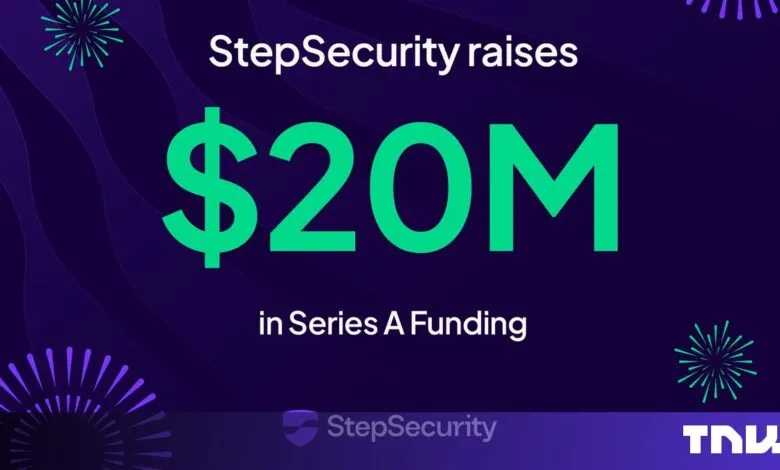
– StepSecurity, a Seattle-based security startup founded by former Microsoft engineers, has raised $20 million in Series A funding led by Elephant with additional investments from other firms.
– The company protects software development environments including laptops, code repositories, and build pipelines from malicious code hidden in open-source software supply chains.
– StepSecurity recently helped identify poisoned versions of Microsoft’s agent-framework toolkit that were designed to steal passwords and keys from developers.
– Founders Varun Sharma and Ashish Kurmi established the company in 2021 after experiencing major breaches like SolarWinds and Codecov, leveraging their extensive industry experience.
– The firm plans to expand its protection services to AI agent sandboxes as threats like the Miasma worm increasingly target AI coding tools.
StepSecurity, a Seattle-based cybersecurity firm, has secured $20 million in Series A funding to combat the rising threat of malicious code embedded within open-source software. The round was led by Elephant, with additional participation from Runtime Ventures, Inner Loop Capital, and SaaS Ventures, bringing the company’s total capital raised to $23 million. The startup focuses on securing the entire software development lifecycle, protecting everything from individual developer laptops to the build pipelines that ship final products.
The urgency behind this investment is driven by the increasing sophistication of supply chain attacks. Hackers are increasingly hiding malware in free, widely used libraries, allowing them to steal sensitive credentials like passwords and API keys once the code executes. Highlighting the shift in attacker capability, CEO Varun Sharma noted in a recent blog post: “A supply chain attack used to take a skilled team. Now one person can vibe code it.”
This financial injection arrives during a period of heightened activity in the security sector. On November 17, researchers discovered two poisoned versions of agent-framework, Microsoft’s Python toolkit for AI agents, which sees nearly 200,000 downloads monthly. StepSecurity identified the compromised code, which was designed to exfiltrate user secrets. This incident underscores a broader trend where developer tools have become primary targets for large-scale breaches. For instance, Binance attributed its massive $6.3 billion hack to a tampered developer tool introduced via a fake job interview. Similarly, a malicious extension for Claude Code recently affected up to 5,000 users of the Cursor IDE.
StepSecurity was founded in 2021 by former Microsoft engineers Varun Sharma and Ashish Kurmi. Both veterans had witnessed major industry disruptions firsthand; Sharma spent approximately 15 years at Microsoft, while Kurmi previously led security efforts at Uber and Plaid. Their motivation stemmed from experiencing the fallout of high-profile incidents like the SolarWinds and Codecov breaches. Today, their platform protects more than 20,000 open-source projects through their free tool, Harden-Runner. Additionally, their research team played a key role in tracking the ChainDrop npm worm earlier in August. While the company declined to share specific financial figures, it reported that annual revenue grew fivefold in both 2024 and 2025.
Looking ahead, StepSecurity aims to expand its defenses into the realm of artificial intelligence. The company plans to secure the sandboxes where AI agents execute code, a critical area as worms like Miasma begin targeting AI coding assistants. The competitive landscape is also intensifying, with rivals such as Belgium’s Aikido achieving unicorn status with a $1 billion valuation in January. As the market for developer security matures, StepSecurity’s focus on preventing malicious code insertion positions it as a vital player in protecting the modern software supply chain.
(Source: The Next Web)