Google, Blue Origin partner on rocket as long-term issues persist
▼ Summary
– Blue Origin will launch Google’s Project Suncatcher satellites in 2029 using the New Glenn rocket.
– The mission aims to deploy solar-powered satellites with AI computing capacity into Sun-synchronous orbit.
– This launch serves as a technology demonstration for networking and machine learning in space.
– Google is relying on third-party launch providers rather than developing its own orbital vehicle.
– Economic viability depends heavily on achieving ultra-low-cost heavy lift capabilities for future scalability.
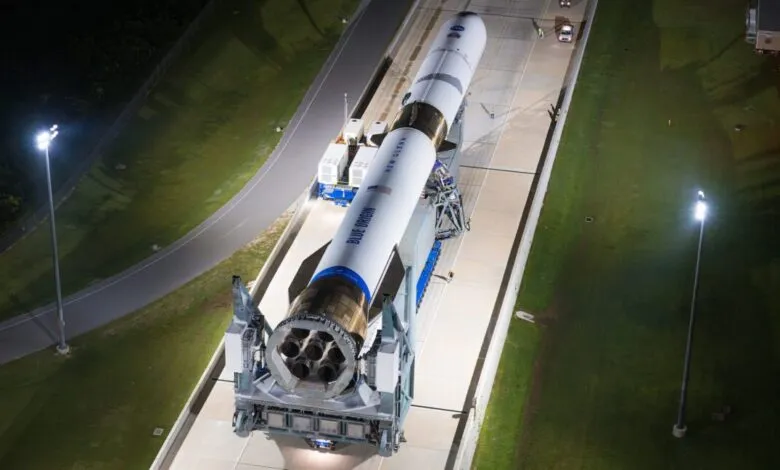
Google has formalized a partnership with Blue Origin, securing launch services for its ambitious Project Suncatcher initiative. The tech giant announced that Blue Origin’s New Glenn rocket will deploy satellites for the project in 2029. This collaboration marks a significant step in Google’s effort to establish scalable, orbiting data centers, a concept initially described as a research “moonshot” roughly a year ago.
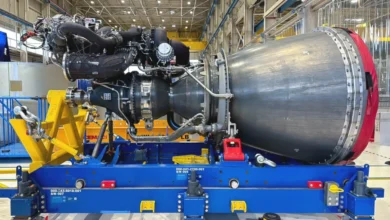
The mission utilizes the 7×2 variant of New Glenn, a configuration distinct from the heavier version of the vehicle. This specific rocket model has completed three launches to date. The objective is to place satellites into Sun-synchronous orbit, an orbital path chosen to provide nearly continuous exposure to solar energy. Each satellite is designed to house computing hardware comparable in capacity to a standard data center rack.
“Project Suncatcher is a long-term moonshot to scale AI infrastructure in space by tapping into the abundant solar power in orbit,” said Travis Beals, senior director of Project Suncatcher at Google, in the news release. “This dedicated launch with Blue Origin represents a crucial milestone on our roadmap as we expand the boundaries of what’s possible for the future of compute.”
Strategic Timing and Capacity Constraints
The timing of this announcement highlights the tightening availability of commercial heavy-lift launch capabilities. US providers, including Blue Origin, are currently seeing their schedules fill through 2030. By securing a slot now, Google ensures access to the necessary lift capacity for its 2029 deployment.
While the exact specifications of the satellites remain undisclosed, industry estimates suggest they could weigh several tons. The primary goal of this initial flight appears to be technological validation rather than full-scale operational deployment. The mission aims to test the feasibility of networking solar-powered satellites equipped with AI chips and demonstrating machine-learning computations in a zero-gravity environment. Consequently, this launch serves primarily as a proof-of-concept for space-based AI infrastructure.
Economic Viability and Launch Dependencies
A critical challenge facing the Project Suncatcher program lies in its reliance on third-party launch providers. Unlike traditional cloud infrastructure, which relies on terrestrial hardware, orbital data centers require massive amounts of material to be lifted into space. The central question is whether Google can sustain a large constellation of these facilities in the 2030s without owning its own launch fleet.
The economic model for space-based computing hinges entirely on launch costs. Industry consensus indicates that ultra low-cost, heavy lift capability is a prerequisite for competitiveness. Without drastically reduced prices per kilogram to orbit, orbital data centers cannot compete financially with established terrestrial facilities. As launch windows become scarcer and more expensive, the viability of Google’s space ambitions remains tied to the broader economics of the commercial spaceflight market.
(Source: Ars Technica)