PSI aims to commercialize AI-driven scientific discovery

▼ Summary
– MIT graduate David Turturean utilized Anthropic’s Fable 5.2 model to solve the longstanding Aaronson-Ambainis conjecture in quantum computing.
– The proof, autoformalized in Lean and reviewed by experts, suggests limitations on how quantum computers can speed up certain problem types.
– This achievement highlights a broader shift where AI systems are increasingly capable of solving complex scientific and mathematical problems.
– PSI employs specialized model harnesses and scaffolding to tackle deep research challenges, distinguishing its approach from general-purpose AI dumps.
– The company currently generates revenue by optimizing data center physics but aims to convert theoretical breakthroughs into tangible technologies.
Physical Superintelligence (PSI) is positioning itself at the forefront of a new era in scientific discovery, leveraging advanced artificial intelligence to resolve complex theoretical problems that have stumped researchers for decades. The startup recently demonstrated its capabilities by solving the Aaronson-Ambainis conjecture, an eighteen-year-old challenge in quantum computing, using early access to Anthropic’s Fable 5.2 model. This achievement highlights a shifting paradigm where AI is no longer just a辅助 tool but a primary engine for breakthrough research.
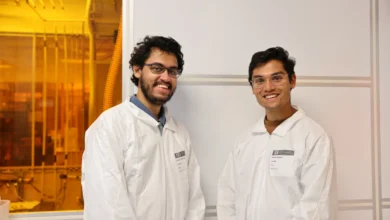
David Turturean, a recent MIT graduate and technical staff member at PSI, utilized the model to tackle the conjecture. He had previously deferred admission to MIT’s prestigious computer science and AI lab to join the startup, betting on the transformative potential of AI-driven research. Reflecting on the rapid pace of development, he noted the diminishing role of traditional academic publishing in this new landscape. “I’m totally accepting the idea that this might be the last paper I ever put out,” Turturean told TechCrunch. “In a few months, like, why would you even put out a paper?”
The solution provided by PSI addresses the Aaronson-Ambainis conjecture, which explores whether quantum computers can solve specific problems significantly faster than classical ones. Scott Aaronson, one of the conjecture’s originators, acknowledged the validity of the proof despite his own difficulty fully grasping the technical details. He cited the autoformalization of the proof in Lean, a language for formal mathematics, as key evidence of its correctness. Aaronson expressed a mix of emotions regarding the news, noting that the problem was among the last major open questions in quantum query complexity. “A proof of full [Aaronson-Ambainis conjecture] was one of the last remaining open problems in quantum query complexity that everyone seemed to agree was centrally important,” Aaronson wrote. “I was surprised, honestly, to see it missing from OpenAI’s Mathocalypse dump a few weeks ago. Surely they tried it, so was it really so much harder than all the problems that were solved?”
Turturean emphasized that the result, while negative in the sense that it closes off one potential avenue for quantum speedup, is valuable because it clarifies the boundaries of current technology. “It’s a negative result that allows people to know, okay, we’re no longer looking there,” he said. This outcome underscores the broader upheaval AI is causing in scientific methodology, moving beyond abstract mathematics into more tangible physical sciences.
To achieve such results, PSI employs a specialized infrastructure designed for rigorous scientific inquiry. CEO Matt Pines argues that effective research systems require robust support structures. “An effective kind of research system should have lots of things related to harnesses, lots related to tools, memory systems, simulation infrastructure,” Pines explained. “You want to be able to really go after a problem at breadth and depth, and be able to consider a wide range of potential alternatives.” Currently, the company generates revenue by optimizing data center operations, simulating variables such as heat, power, water, and sound to improve site performance and community impact. However, the long-term strategy focuses on translating theoretical physics breakthroughs into real-world technologies.
Pines noted that convincing investors of this vision required patience. “Six to nine months ago, when I was talking to investors, like I had to sort of stretch to validate that conditional, right? Like, ‘no, no, no, trust me, pretty soon, theoretical physics is going to be mostly the domain of machines,’” he recalled. “And it’s not there yet, but it’s on its way.”
Applying AI to physics presents unique challenges compared to mathematics or computer science, where logic can be strictly codified. In physics, models must align with empirical reality. “At the end of the day, physics is different than math because it’s the real world …nature gets a vote in your models of reality,” Pines stated. PSI is focused on efficiently validating computational results through experiments. “If it’s a true fact of nature, that’s a trick that you can exploit,” he added. “You could build a device out of it, right? The AI suggests an idea; it allows you to do something in the world you weren’t able to do before….and so each of those are kind of loops that PSI is building.”
The emergence of these entities as “neolabs for science” raises questions about ethical standards and transparency. PSI chose to withhold the release of its findings until Anthropic’s model was nearly public, allowing them to share the solution with relevant experts first. Jim Halverson, a Northeastern University professor who advises PSI, emphasized the importance of responsible conduct. “As an academic, we wanted to play our role in doing things the right way,” Halverson said. He plans to attend an upcoming summit at MIT where physicists will discuss best practices for this accelerated pace of discovery. “Best practices are still emerging … We figured that transparency is a good way to go, and contacting experts is a good way to go.”
For Turturean, the experience highlighted the profound implications of AI-generated insights. After sitting on the result, he reviewed the AI-elicited solution to ensure it could be presented naturally to humans. “And I think it also made me realize, oh my God, the weight of what AI can do,” he said. As the academic community adapts to these changes, the expectation remains that researchers must be able to explain and validate these machine-derived discoveries.
(Source: TechCrunch)