YC Startup Offers $1M for AI Solutions to 5 Materials Science Problems
▼ Summary
– Discovered Materials, a San Francisco startup, launched a $1 million challenge to incentivize AI models to solve five critical problems in materials science.
– The company recruited an advisory group of academics to define these grand challenges, as the field lacks standardized benchmarks like those in mathematics.
– The five selected problems include explaining cuprate superconductivity, predicting semiconductor interface structures, and improving Density Functional Theory.
– Initial tests with frontier lab models showed limited progress over several days, suggesting current AI capabilities are not yet sufficient for these complex physics tasks.
– Founders view these challenges as goalposts to deepen scientific understanding, regardless of whether the solutions come from their team, academia, or major tech labs.
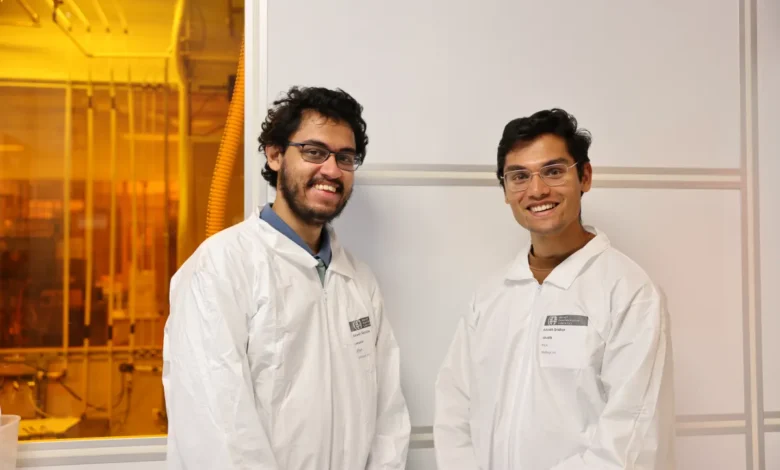
Discovered Materials, a Y Combinator-backed startup based in San Francisco, has launched a $1 million prize challenge aimed at leveraging artificial intelligence to resolve five persistent mysteries in materials science. The company utilizes AI models to identify novel substances essential for constructing next-generation semiconductors. While large language models have demonstrated remarkable proficiency in solving complex mathematical proofs and advancing biological research, they have struggled to navigate the intricate physical laws governing advanced materials.
Advaith Sridhar, co-founder of Discovered Materials, highlighted the unique difficulty of applying AI to this field. “It’s more difficult to specify problems clearly in materials science because it’s not like math, where you have a very specific definition and can get to a yes or no,” Sridhar said. “We came to this discussion [wondering], what are the grand challenges in this field? How do we know AI is making progress?”
To define these benchmarks, the startup enlisted an advisory board of academics from top global universities to outline five critical open problems. Although materials science lacks a direct equivalent to the Millennium Prize Problems, the company is offering a total prize pool of $1 million for successful solutions. The targeted challenges include:
- Developing a theory to explain cuprate superconductivity, which involves materials exhibiting zero electrical resistance at extremely low temperatures.Felipe Jornada, a Stanford professor who assisted in crafting these challenges, emphasized the broader implications of these goals. “Across materials science, there are phenomena we observe but cannot explain,” Jornada stated. “Explaining these phenomena would improve our understanding of physics, and the answers would directly shape how we build electronics, store energy, and manufacture the materials of the future.”Prior to publicizing the challenge, Discovered Materials tested frontier lab models against these problems. These AI agents were granted internet access and other resources to work autonomously for several days on each issue. Despite significant computational power, the models made little progress. However, Sridhar noted that the origin of the solution is secondary to its discovery.“It’s not particularly a concern to us whether we find it, or someone else finds it, or a professor finds it, or the frontier labs find it,” Sridhar said. “The reason we’re putting out these challenges is because we want them to serve as the goalposts. If you go and solve these challenges, we are deepening our understanding of materials and how things around us behave.”He added that tracking progress on these specific issues will demonstrate “whether the models are climbing in this domain.” This initiative reflects a shifting paradigm in scientific inquiry, where AI increasingly uncovers insights and methodologies that human researchers had not previously anticipated. As finding solutions becomes more accessible, the formulation of precise questions becomes paramount.“This is a new way of thinking about science, where we come up with the verification and the challenges first, and then we let somebody come up with the ideas that explain the problem,” Sridhar explained. “Knowing what are the right questions to ask is not trivial and very difficult in this domain, so this is where the professors have really helped us shape what are the right questions we should be asking.”Discovered Materials primarily focuses on developing new materials for the semiconductor industry, collaborating with major chip manufacturers while funding independent scientific research. When announcing its seed funding round in August, Sridhar expressed hope that the company would produce a commercially viable material within a year. That timeline appears to be accelerating.“Those timelines have accelerated a little bit,” he says today. “I’m more confident now that we will be able to find these industrially useful materials in a timeline shorter than a year.”