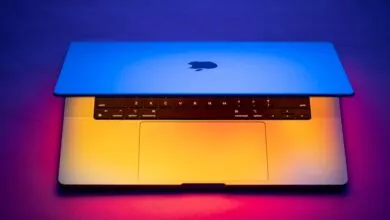
New MacBook Pro Touchscreen: 5 Key Features to Know

▼ Summary
– Reports suggest Apple may introduce a new top-tier “MacBook Ultra” line above the current M5 Pro and M5 Max models.
– The initial devices will use M5 Pro and M5 Max chips, with second-generation models expected to feature M7 Pro and M7 Max chips in late 2027.
– New high-end MacBook Pros are anticipated to debut OLED displays manufactured by Samsung Display for improved contrast and power efficiency.
– Apple is expected to break its long-standing policy by introducing touchscreen functionality to the MacBook Pro lineup.
– The new models are scheduled for announcement at the “Pro and tell” event in Los Angeles, following recent releases of other Mac and iPad products.
Reports indicate that Apple’s upcoming high-end laptop lineup may break from tradition, potentially launching under the MacBook Ultra name rather than continuing the standard MacBook Pro branding. This new tier is expected to sit above the current M5 Pro and M5 Max models, suggesting a stratified product strategy where the existing lines remain available alongside this premium offering. The announcement is scheduled for today at Apple’s “Pro and tell” event in Los Angeles, with pre-orders set to open at 10:10 a.m. Pacific Time. Bloomberg reports that general availability could begin as early as November 6, though the final nomenclature remains unconfirmed by the company.
Processor Strategy and Chipset Availability
Contrary to rumors of a complete generational leap in processors, Apple is expected to retain the existing M5 Pro and M5 Max chips for the initial launch of these touchscreen devices. The company appears to be skipping the rumored M6 Pro and M6 Max variants in favor of future M7 Pro and M7 Max chips, which are slated for second-generation models in late 2027. This decision follows the recent release of the entry-level 14-inch MacBook Pro equipped with the M6 chip, which became available for pre-order yesterday. The strategic pause allows Apple to integrate new display technologies without simultaneously overhauling its silicon roadmap.
OLED Display Technology
A significant upgrade for these new models is the transition to OLED technology, replacing the current mini-LED panels. Industry analysts Mark Gurman and Ming-Chi Kuo have confirmed that Samsung Display is exclusively manufacturing the new panels using an 8.6-generation production line in South Korea, which reached mass production milestones earlier this year. OLED screens offer superior contrast ratios, deeper blacks, and more accurate colors because individual pixels can turn off completely rather than dimming. While OLEDs generally provide better HDR performance, they may not always match the peak brightness levels of mini-LED displays. This shift represents a major visual improvement for professional users who rely on color accuracy and dynamic range.
Touchscreen Integration and macOS Adaptation
The new laptops will mark a historic shift for Apple by introducing direct touch input support on Mac displays. This move abandons Apple’s long-standing resistance to touchscreens on desktop-class computers. Previous attempts, such as the OLED Touch Bar, were discontinued due to limited adoption. Instead, the new design aims to blend touch interactions seamlessly with traditional trackpad and mouse usage. Evidence of this integration is already visible in macOS Golden Gate, which includes features like direct touch input for Sidecar and iPhone-style pull-to-refresh gestures across apps like Safari, Mail, and Calendar. These UI elements suggest Apple has been preparing the operating system for touch-enabled hardware well in advance of the hardware launch.
Structural Changes and Hinge Reinforcement
To accommodate touch functionality, Apple has developed a reinforced hinge and screen assembly to prevent the display from bouncing or shifting when touched. This engineering adjustment addresses common issues found in other touch-enabled PCs, ensuring stability during interaction. Additionally, Apple is reportedly working on a lighter design to align with its goal of creating the thinnest products in their respective categories. Initial reports suggested a significant reduction in thickness, but analyst Mark Gurman recently clarified that the device will not be “significantly thinner in the end.” Despite this correction, the chassis remains optimized, with a reworked cooling system designed to improve airflow through the hinge while reducing overall weight.
Dynamic Island and Pricing Implications
The notch currently present on MacBook Pro models may be replaced by a Dynamic Island-style cutout, similar to those found on iPhones since 2022. This interactive element would expand contextually based on active applications, addressing user complaints about the static notch interfering with the menu bar. Financially, these new ultra-premium models are expected to carry higher price tags than current offerings. Following a $300 price increase across all Macs in June 2026, the starting prices for M5 Pro models are now $2,499 for the 14-inch and $2,999 for the 16-inch versions. Bloomberg suggests the new 14-inch model could start at $2,899, implying a minimum starting price of $3,399 for the 16-inch variant.
(Source: MacRumors)