Ben Affleck’s AI passion impresses the internet
▼ Summary
– Ben Affleck has gone viral for demonstrating detailed knowledge of AI technologies, including neural networks and machine learning, during recent interviews.
– The actor previously sold his AI filmmaking startup to Netflix for a reported $587 million, though he disputes the exact valuation details.
– Affleck explained complex concepts like tensors and convolutional neural networks in simple terms to illustrate how AI assists visual effects workflows.
– He revealed that visiting organizations like OpenAI helped him understand emerging technology and inspired his direct involvement in the AI space.
– The star emphasized an ethical approach to AI in filmmaking, aiming to collaborate with artists rather than replace them.
Ben Affleck’s deep dive into artificial intelligence has captivated audiences, transforming the Hollywood actor into an unlikely tech influencer. After selling his AI filmmaking startup to Netflix for a reported $587 million earlier this year, Affleck recently took center stage in viral video clips that showcase his sophisticated grasp of machine learning, neural networks, and data processing. Far from merely playing a role, the star demonstrated a technical fluency that surprised many observers, even claiming he can write Python code.
The Technical Deep Dive
During a recent appearance on GQ’s “One More Question” series, Affleck dismantled the barrier between celebrity and engineering. He began by reflecting on his lifelong fascination with computers, which intensified as the film industry shifted from analog to digital formats. Rather than using buzzwords for effect, Affleck meticulously defined complex concepts for interviewer Zach Baron, ensuring the audience followed along with terms like transformers, tensors, and GPUs.
Affleck explained that his interest was sparked by the integration of machine learning into visual effects workflows. He detailed how convolutional neural networks serve as precursors to modern transformer models, emphasizing the massive computational power required for simultaneous processing.
“I became more interested in that aspect of it, and the visual effects workflow for many years has included machine learning,” Affleck began. “So I can write, like, pretty shitty Python scripts and stuff like that. Because with convolutional neural networks , which were the sort of precursors to what the transformer can do , which is just much more computation simultaneously , you would do things like, look at what’s called a tensor , which is just the numerical translation of a visual image, in numbers like the batch number, the frame number, the red, green, and blue values of each pixel in each frame, and how many? It’s just that simple, right?”
The clip went viral precisely because of its dense technical accuracy. Affleck further elaborated on how these networks identify patterns for tasks such as edge detection and feature extraction. He described this process as identifying structural elements, such as window ledges, to facilitate the removal of green screens and the insertion of new backgrounds. This level of detail highlighted his hands-on approach to understanding the underlying mechanics of AI generation.
Building Ethical AI Infrastructure
Affleck’s technical knowledge is not merely theoretical; it stems from his role as the CEO of Artists Equity and founder of InterPositive, a company established in 2022. His journey into the technology sector was partly facilitated by his status in Hollywood, allowing him visits to major labs like OpenAI. These experiences helped him conceptualize a business model that prioritizes ethical standards and artist rights.
He clarified that the widely circulated sale price was inaccurate regarding his personal ownership stake, but the core mission remained: creating a dataset that respects likeness and long-standing industry relationships.
“I gambled on this notion that in order to do this in an ethical way and in a way that could take this technology and actually make it work hand in glove with artists in this community where there are very fixed, long-standing relationships around likeness and so forth, we had to create our own dataset,” he said. “So I raised the money. I shot for about eight months with a lot of cameras and a lot of equipment, and created a dataset that would serve as late-stage training for open models to do discrete tasks, sort of where the training code, the inference code, were related to one another and geared toward actual specific tasks that would generate value,” Affleck said.
This strategy involved shooting proprietary footage to train models on specific cinematic standards. By fine-tuning open-source models through weight unfreezing, Affleck’s team could teach the AI to meet production requirements without compromising the integrity of their original work. This method was notably applied during the post-production of his film Animals, where AI assisted in refining the final cut.
A Grounded Perspective on AI Risks
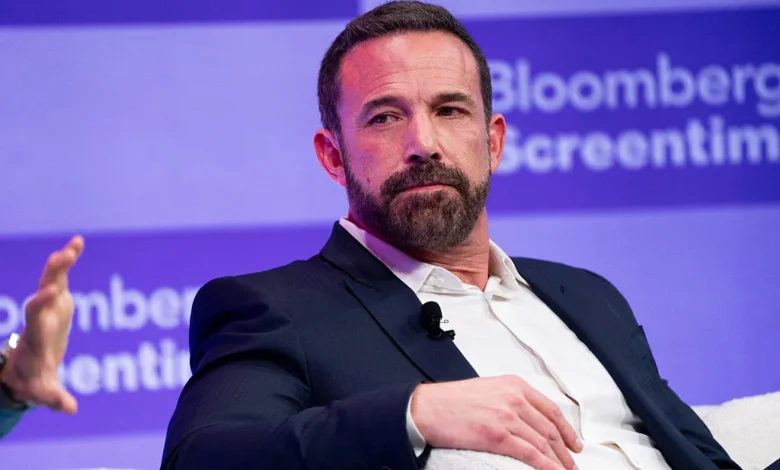
While many public figures express existential dread regarding artificial intelligence, Affleck’s concerns are rooted in immediate societal impacts rather than sci-fi scenarios. Speaking at the Screentime 2026 conference in Los Angeles, he addressed the potential dangers of AI adoption in education and the workforce with a pragmatic outlook.
“When I worry about AI, I worry about my kids in school. I worry about the 30% rise in the number of A’s given out at colleges over the last three years. I worry about learned helplessness. I worry about responsible use. I don’t worry about Skynet, and I don’t think that it’s going to take over [the movie] business in any meaningful way. I think it’s going to be additive,” Affleck said.
His stance underscores a broader shift in Hollywood, where technology is viewed as a collaborative tool rather than a replacement for human creativity. By focusing on fine-tuning and proprietary datasets, Affleck aims to ensure that AI enhances artistic expression while maintaining the ethical boundaries that protect performers and creators.
(Source: TechCrunch)