Chemistry Nobel awarded for life-enabling reactions
▼ Summary
– Life exhibits chirality, relying exclusively on one handedness of molecules despite chemical reactions typically producing a 50-50 mix.
– This selectivity presents a significant challenge for origin-of-life research regarding how uniformity emerged from a balanced mixture.
– The Nobel Prize in Chemistry was awarded to Henri Kagan and Kenso Soai for their discovery of biased chemical reactions.
– Their work demonstrated that reactions can produce large excesses of one molecular form over its mirror image.
– Chirality refers to molecules being non-superimposable mirror images, similar to left and right hands.
The Nobel Prize in Chemistry has been awarded to Henri Kagan and Kenso Soai for their groundbreaking discovery of reactions that generate significant imbalances in molecular handedness, a phenomenon critical to understanding the origins of life. This recognition highlights how specific chemical processes can break symmetry, producing large excesses of one form over another rather than the equal mix typically expected in standard reactions.
Chirality serves as the fundamental concept behind this asymmetry. While often described using the terms left- and right-handed, the scientific community prefers the descriptors dextro (D) and levo (L). The analogy of human hands illustrates this perfectly: both possess identical components like fingers and thumbs arranged in the same sequence, yet they remain non-superimposable mirror images. When one hand is oriented with the thumb up, the fingers curl in the opposite direction compared to the other, demonstrating how slight spatial variations create distinct entities despite identical constituent parts.
This selectivity is vital because biological systems are incredibly picky about molecular geometry. Most organisms rely exclusively on one chiral form of essential molecules. Enzymes, which act as biological catalysts, are highly specialized structures that generally fail to function if presented with the wrong enantiomer. Consequently, the presence of only one form in living tissue stands in stark contrast to the 50-50 mixture that most conventional chemical reactions produce.
For researchers studying the origin of life, this disparity presents a significant puzzle. If early Earth contained an even distribution of left- and right-handed chemicals, it remains unclear how nature transitioned from that balanced state to a biosphere dominated by a single chiral preference. The work of Kagan and Soai provides crucial insights into this mystery by demonstrating that chemical reactions can indeed be biased, offering a potential mechanism for how homochirality emerged in the natural world.
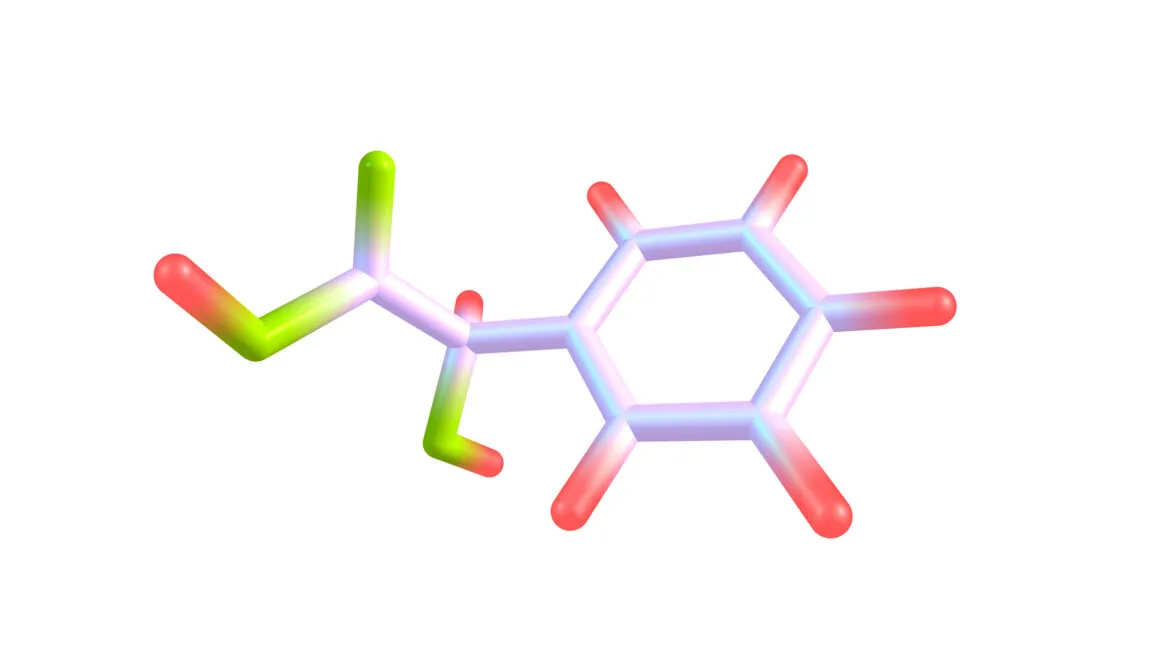
On a more technical level, chirality often arises from carbon atoms, which feature four bonding sites distributed evenly across their spherical surface. When each site connects to a different chemical group, the molecule becomes asymmetric. Swapping the positions of any two groups results in a different three-dimensional arrangement. These subtle structural differences are enough to classify molecules as distinct mirror images, underscoring the precision required for biological compatibility and the importance of asymmetric synthesis in both nature and laboratory settings.
(Source: Ars Technica)