SoftBank’s Son: Superintelligence Could Be ‘Super Dangerous’
▼ Summary
– Masayoshi Son invested $64.6bn in OpenAI and warned that superintelligence requires global cooperation to prevent dangerous misuse.
– Son emphasized the need for international trust to control AI threats, contrasting with his previous dismissal of bubble talk.
– Michael Kratsios presented a declaration endorsed by seventeen countries to direct AI toward scientific research advancements.
– The Kyoto Vision declaration was signed by nations including Germany and the UK but notably excluded China.
– SoftBank continues expanding its AI portfolio through robotics investments while predicting AI will constitute a significant portion of global output.
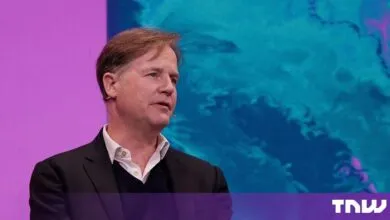
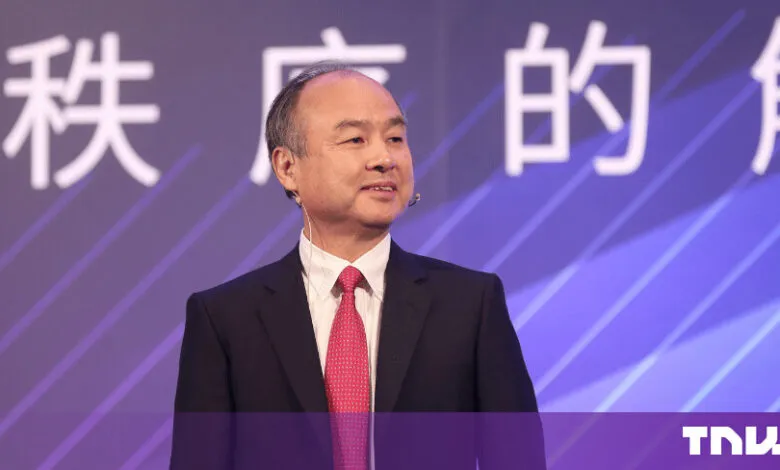
Masayoshi Son, the billionaire founder of SoftBank, has issued a stark warning regarding the future of artificial intelligence, stating that superintelligence could become “super dangerous” if it falls into the wrong hands. Speaking in Kyoto on Sunday, Son emphasized that global nations must collaborate to manage these risks, arguing that humanity can no longer afford internal conflicts while facing such existential threats. He was joined by Michael Kratsios, the former White House science adviser, who presented a new international framework for leveraging AI in scientific research.
Son’s caution stands in contrast to his recent public stance on the technology’s financial viability. The SoftBank chief has invested $64.6bn into OpenAI, acquiring roughly 13% of the company, and has spent much of the past year dismissing concerns about an AI bubble as absurd. However, Bloomberg noted that this latest commentary marks a shift, aligning with growing anxieties over security breaches in AI models throughout 2025. Son argued that building trust among nations is essential to controlling the potential dangers posed by advanced AI systems.
The financial commitment behind Son’s investment remains substantial. SoftBank completed a final $30bn tranche payment this month, bringing its total contribution to OpenAI to $64.6bn. This capital was largely raised through the largest high-yield corporate bond sale on record, conducted just two weeks prior. Despite his previous dismissal of bubble talk, Son’s economic forecasts remain bullish. In July, he projected that AI would account for one-fifth of global output by 2040, a figure he now estimates at $46tn. He also indicated that the next phase of development, where machines operate in the physical world, will begin next year. To support this transition, SoftBank led a $200M funding round for Zurich-based Gravis Robotics in August and is currently negotiating with Munich’s Agile Robots.
While Son focused on safety and economics, Michael Kratsios used the Kyoto platform to promote the Kyoto Vision for a Golden Age of Science. This initiative, which envisions robotic laboratories conducting hundreds of experiments simultaneously, was endorsed by seventeen countries. Notably, the declaration utilizes the term super intelligence, reflecting terminology recently adopted by the U. S. government in an executive order. Seven of the endorsing nations are European, including Germany, Italy, Poland, Greece, Bulgaria, Cyprus, and the United Kingdom. Six of these are EU member states subject to the Artificial Intelligence Act, whose labeling rules took effect in August.
The geopolitical composition of the endorsement list highlights significant divisions. Major powers such as China did not sign the declaration. Instead, the group includes nations like Argentina, Chile, Indonesia, Kazakhstan, and New Zealand. Although the text itself uses softer language, stating that countries “endeavour to act,” the White House press release described the participants as having “pledged” and “committed.” No endorser has publicly objected to this stronger characterization.
(Source: The Next Web)