ISS Robotic Arm Malfunctions: Large Canadarm2 Stops Working
▼ Summary
– The Canadarm2 robotic arm on the International Space Station became immobilized following a routine walk-off maneuver with its mobile transporter.
– Engineers are currently investigating whether the malfunction stems from software data issues or physical hardware failures in the arm or transporter.
– The robotic arm, supplied by the Canadian Space Agency and manufactured by MDA, was originally designed for a fifteen-year operational lifetime.
– It has now exceeded its design life by over a decade while remaining critical for capturing cargo vehicles like SpaceX’s Dragon and Northrop Grumman’s Cygnus.
– NASA has not yet provided public comment regarding the status of the repairs or the specific nature of the technical problem.
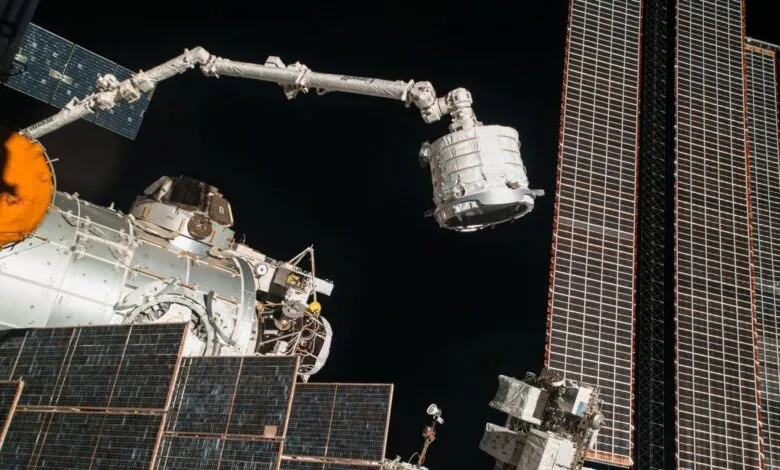
The International Space Station is currently grappling with a significant technical failure involving its primary robotic manipulator. During a standard operational procedure known as a “walk-off,” where the Canadarm2 relocates itself along the station’s exterior, the system encountered a critical halt. The 58-foot-long arm, which functions like an inchworm by gripping and releasing different points on the structure, became immobilized alongside the mobile transporter that guides it along the main truss.
This incident marks a potential turning point for a piece of hardware that has long been considered an engineering marvel. Because both ends of the arm are essentially identical, it can traverse the entire length of the laboratory without needing to be detached and reattached. However, following the recent maneuver, ground controllers lost the ability to move either the arm or the transporter vehicle. By Sunday evening, teams were actively investigating whether the root cause lay in software glitches, data transmission errors, or physical hardware failures within the mechanical components themselves. As of late Monday morning, a NASA spokesperson had not provided further details regarding the status of the troubleshooting efforts.
Exceeding Design Expectations
The complexity of the situation is heightened by the age of the equipment. Developed by the Canadian space corporation MDA and delivered to orbit aboard the Space Shuttle Endeavour in April 2001, Canadarm2 was built with a nominal design lifetime of just 15 years. It has now operated for more than two decades, significantly surpassing its original engineering specifications. Despite being well past its intended service window, the arm continues to perform heavy-duty tasks, boasting a mass of nearly two metric tons and the capacity to handle payloads weighing up to 116 tons.
For much of its extended service life, the robotic arm has been indispensable for station logistics. It serves as the primary interface for capturing visiting spacecraft. Early iterations of cargo vehicles from SpaceX, Northrop Grumman, and Japan’s HTV-X program relied entirely on Canadarm2 to secure their approach and guide them into designated berthing ports at the facility. This reliance underscores the critical nature of the current malfunction, as the loss of this capability could impact future resupply missions and external maintenance operations.
(Source: Ars Technica)


