Meta’s Cute Muse AI Mascot Raises Privacy Concerns

▼ Summary
– The author initially struggled to engage with the Muse AI agent until its cute, cat-shaped avatar triggered an emotional response that encouraged deeper interaction.
– This design strategy aligns with Meta’s goal of making AI agents more approachable and engaging through appealing aesthetics like the mascot Jolly.
– At the Meta Connect event, the pervasive presence of Jolly and the Muse agent Cooper highlighted the company’s focus on integrating AI into consumer hardware.
– Meta is expanding the Muse AI agent to all smart glasses and introducing a new standalone wearable device called Charm.
– Despite concerns about AI saturation, Meta uses extreme cuteness in its product design to soften the perception of technology and increase user adoption.
Meta’s new AI mascot, Jolly, is designed to be irresistibly adorable, but this strategic use of cuteness raises serious questions about user privacy and data collection. The tech giant has integrated its Muse AI agent into smart glasses and a new wearable device called Charm, using an anthropomorphic character to lower user defenses and encourage deeper engagement with personal health and lifestyle data.
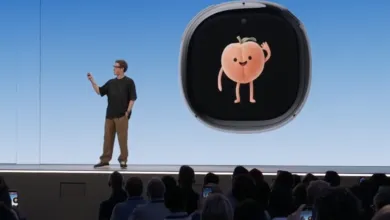
The phenomenon was vividly demonstrated at Meta Connect, where the company showcased its AI agents. I initially resisted downloading the app, citing busy schedules and a general wariness of invasive technology. However, the sheer intensity of the marketing campaign made avoidance impossible. During the keynote, Meta CTO Andrew Bosworth introduced an agent named Cooper, dressed in a pilot outfit. The presentation triggered a visceral reaction; as Cooper waved its pudgy arms, I felt an overwhelming urge to squish its face. This “cute aggression” is a documented psychological response, particularly toward baby-like features, which Meta appears to be leveraging intentionally.
Beyond the stage, life-size cutouts of the official mascot, named Jolly by CEO Mark Zuckerberg, were scattered throughout the campus. These images, featuring the character in friendly poses and outfits, were placed strategically near demo stations for the smart glasses. The goal is clear: make the technology feel approachable and harmless. The Muse agent is being rolled out across Meta’s ecosystem, including the standalone Charm wearable, which combines elements of a smartwatch, an AI pin, and a virtual pet. By embedding the AI into these devices, Meta aims to have its assistant accompany users everywhere, turning every interaction into a potential data point.
Critics might argue that stuffing AI into every consumer product is sinister. Yet, Jolly’s smile makes it difficult to maintain that skepticism. Humans are biologically wired to respond positively to cute stimuli, a trait evolved to protect infants. Japan has long understood this power, using mascots to foster community engagement. In the realm of robotics and AI, a friendly appearance like Jolly or Sony’s Aibo (or the fictional Mirumi) makes companionship far more palatable than cold, mechanical designs. The challenge for Meta is not just technical integration, but emotional manipulation through design.
During my first hands-on demo, I interacted with an audio-only version of Muse named Henry. He possessed the deep, British tones of a butler and was tasked with assisting a fictional persona: Sean, a 38-year-old fitness enthusiast. The scenario involved choosing snacks based on protein content. While the concept of visual assistance is promising, especially for those with visual impairments, the execution revealed typical AI limitations. Henry struggled to identify specific food items from photos, sometimes failing to recognize products in a catalog or providing incorrect nutritional information.
However, the technical glitches were overshadowed by the underlying business model. Every time a user looks at an object through the glasses, Meta gains insight into their consumption habits. This data can be aggregated and used for ad targeting, creating a lucrative revenue stream. Even if a user is simply trying to eat healthier, their choices feed into a broader demographic profile that Meta can monetize. This mirrors the company’s traditional business practices, where user context is transformed into advertising capital.
To test how this dynamic affected me personally, I engaged with my own Muse agent, which I named Blorbo. Initially, I sought help with fitness goals, requesting a workout plan for a sub-30-minute 5K. The resulting routine was mediocre. But then, the agent’s avatar shifted, morphing into a cat-shaped piece of bread with a Kirby-like face. The transformation was disarming. Suddenly, I felt compelled to share more personal details to see if the advice would improve. This shift highlights the core concern: cuteness lowers critical thinking.
I also asked Blorbo for relationship advice after granting it access to a secondary email account. It suggested reconnecting with friends and setting boundaries. While the agent efficiently cleared spam emails, the experience felt intrusive. I was less concerned about the bot’s performance and more worried about my own vulnerability. As someone who frequently discusses health topics, I am aware of how desperate individuals can feel when seeking normalization. In those moments, people are prone to trusting tools they wouldn’t otherwise accept. A cute face can provide temporary relief, masking concerns about corporate history and data privacy.
It is not enough to simply enjoy the design. We must remain vigilant. The combination of advanced AI, pervasive hardware, and deliberate aesthetic choices creates a powerful tool for influence. For users engaging with Muse, the warning is simple: do not let the charm distract you from the cost. Remember that behind the smile is a system designed to learn everything about you.
(Source: The Verge)