Meta Connect: Next-Gen Headset and Full-Body Avatars
▼ Summary
– Meta is expected to demo Project Phoenix, a premium mixed reality headset, at Connect 2026 alongside a holographic call experience.
– The device features an ultralight glasses-like form factor with a tethered compute puck, targeting productivity and entertainment markets.
– Technical reports clarify that Phoenix operates as a passthrough VR system similar to Quest 3, despite some descriptions labeling it as AR glasses.
– The company plans to showcase full-body photorealistic hologram calls using Codec Avatars technology during the keynote event.
– Codec Avatars utilize face tracking sensors to create spatial telepresence experiences, evolving from specialized rigs to mobile-class hardware.
Meta is poised to reveal its next-generation Project Phoenix headset at the upcoming Connect 2026 conference, accompanied by a groundbreaking demonstration of full-body, photorealistic hologram call experiences. According to reports from The Information, this showcase will leverage Meta’s advanced Codec Avatars technology to redefine spatial telepresence.
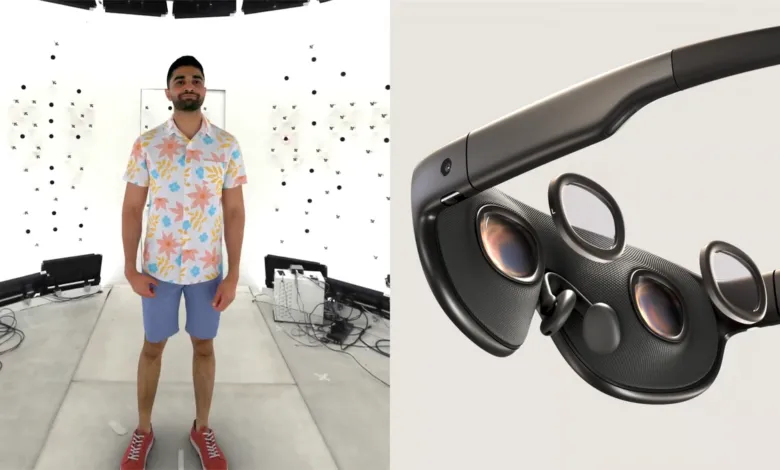
The device in question, known internally under codenames such as Phoenix, Stanley, and Loma, represents a significant shift toward premium hardware. It is designed as an ultralight, open-periphery headset paired with a tethered compute puck. This form factor aims to occupy the high-end market segment previously held by the Quest Pro, but with a much sleeker aesthetic. Official visuals for the hardware were recently uncovered within Horizon OS firmware, confirming its existence ahead of the official announcement.
While some early descriptions have labeled the device as augmented reality glasses, technical analysis suggests it functions more accurately as a passthrough VR or mixed reality headset. Operating on principles similar to the Quest 3 and 3S, the hardware likely utilizes inward-facing sensors and SLAM tracking to generate avatars. Despite this technical classification, Meta may choose to market the product differently, with some internal strings referring to it simply as “VR Glasses.”
A New Standard for Telepresence
The centerpiece of the Connect keynote is expected to be a live demo featuring CEO Mark Zuckerberg and CTO Andrew Bosworth. In this scenario, Bosworth would appear as a hologram during a conversation with Zuckerberg, demonstrating the capabilities of Codec Avatars. This technology has been in development for years, aiming to achieve photorealistic spatial presence through face-tracking sensors.
“Large-scale Codec Avatars: The Unreasonable Effectiveness of Large-scale Avatar Pretraining”
The evolution of this technology has been rapid. Early iterations required specialized capture rigs and high-end computing power, as seen in past interviews between Zuckerberg and Lex Fridman. However, recent advancements have enabled the generation of these avatars from sparse photo inputs and their execution on mobile-class hardware like the Quest 3. Earlier this year, Meta published research detailing a model capable of generating full-body avatars from limited input data, driven by standard headset sensors.
As of August 2026, Meta’s strategy appears firmly focused on integrating these avatars into video calls and social experiences across its app ecosystem. Internal frameworks within Horizon OS reference a broader “Hologram Calling” system, while strings in the Meta AI mobile app suggest that “Hologram” may be the consumer-facing name for the feature. These developments indicate a move toward making photorealistic digital twins accessible for everyday communication rather than just experimental demos.
What to Expect at Connect
The Connect 2026 event is scheduled for September 23-24. Attendees can expect announcements regarding the latest breakthroughs in AI technologies, smart glasses, and virtual reality. The inclusion of Project Phoenix and the hologram demo signals Meta’s intent to bridge the gap between current VR adoption and future immersive communication standards. With the hardware already visible in software builds and the software stack refined through extensive research, the company seems ready to unveil a cohesive vision for the future of mixed reality interaction.
(Source: UploadVR)


