Dyson’s Overengineered Gadget Faces Waterproofing Issues
▼ Summary
– Dyson launched the $499 CameraJet electric toothbrush, featuring a camera and fluid targeting system, with high expectations for innovation.
– The product was developed over six years using 38 patents to identify and clean gaps between teeth using optical targeting technology.
– Shortly after its September launch, users reported critical failures including water leaking into battery compartments and devices stopping within seconds.
– Major retailers in the US, UK, Singapore, and France quickly removed the CameraJet from sale due to these widespread hardware defects.
– This rapid withdrawal highlights the risks of over-complicating established products like toothbrushes with advanced but fragile technology.
The pursuit of technological complexity often backfires, a risk vividly illustrated by the recent struggles of Dyson with its latest innovation. While the popular narrative suggests that NASA spent millions developing a space pen while Soviet cosmonauts relied on simple pencils, this tale is largely mythological. Nevertheless, it underscores a timeless truth: simplicity frequently trumps over-engineering. This principle appears to be failing Dyson as it attempts to revolutionize oral hygiene with the Dyson CameraJet, a device that has quickly become entangled in significant technical difficulties.
The evolution of toothbrushes spans centuries. The Chinese invented the first bristle brush during the Ming dynasty, a design that persisted until 1937 when Tomlinson Moseley patented the earliest electric version. The Motodent marked the start of a shift from manual to powered care, a trajectory Dyson has successfully navigated with products like stick vacuums and premium hair dryers. However, their entry into air-purifying headphones was less successful, and their current foray into dental tech faces immediate scrutiny.
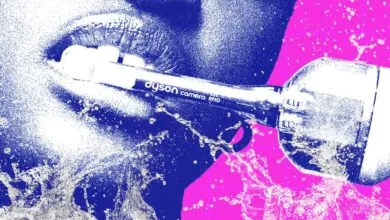
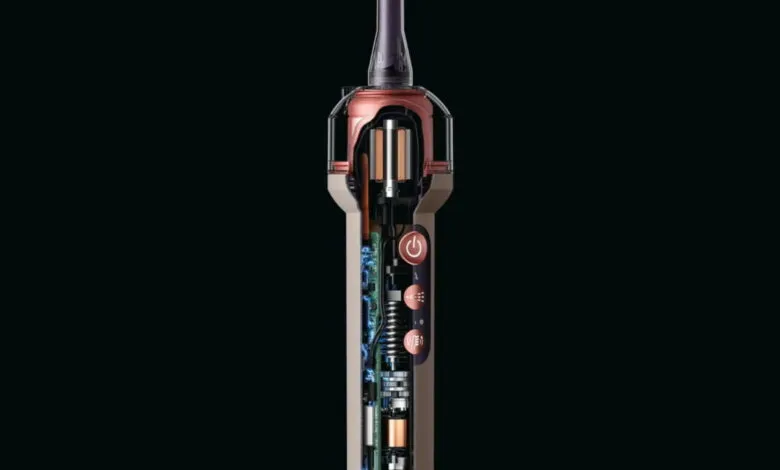
Earlier this month, Dyson unveiled the $499 Dyson CameraJet, a device featuring a microscopic camera designed to direct streams of rinsing fluid into tight interdental spaces. While competitors like the Waterpik Sonic-Fusion 2.0 have already merged brushing and water flossing, Dyson introduced a new layer of sophistication. Their “Gap Optical Targeting system,” trained on 470,000 dental images, uses a macro-lens camera to identify precise spraying locations within 100 milliseconds. The device utilizes 12.5 milliliters of mouth rinse stored in an onboard reservoir.
This ambitious project required six years of development, 38 patents, and substantial financial investment. Despite the hype surrounding its global launch in Paris just weeks ago, the product has encountered severe issues. According to WIRED, the CameraJet is now unavailable for purchase anywhere.
The device hit US shelves on September 8, but trouble emerged almost immediately. By September 9, users were reporting water intrusion in the battery compartment and unit failures occurring within 30 seconds of use. Consumer Reports confirmed these issues, noting their review unit ceased functioning less than 24 hours after unboxing. The retail fallout was swift. On September 11, French outlet Numerama reported that Dyson had halted sales in France. By September 15, retailers in the US, UK, and Singapore, where Dyson’s headquarters are now located, had also pulled the product from their shelves.
(Source: Ars Technica)