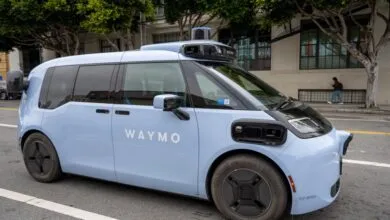
Waymo Expands to Singapore With Robotaxis in 2028

▼ Summary
– Waymo plans to launch its first commercial robotaxi service in Singapore in 2028, marking its entry into the Southeast Asian market.
– The rollout involves a phased approach where electric Jaguar I-PACE vehicles will arrive soon for manual testing and system adaptation until 2027.
– Waymo is collaborating with Singapore’s Ministry of Transport and Land Transport Authority to tailor its autonomous technology to local road conditions and weather.
– The service aims to complement public transit by filling first- and last-mile gaps using an entirely electric fleet that reduces carbon emissions significantly.
– While Waymo highlights its safety record and millions of autonomous miles, specific details regarding fleet size, pricing, and service areas remain undisclosed.
Waymo has officially announced its intention to enter the Southeast Asian market, targeting Singapore as the launchpad for its first international commercial robotaxi service. The company aims to begin offering public rides in 2028, following a strategic timeline that includes vehicle arrival and extensive local adaptation. While the full commercial rollout is set for 2028, the physical infrastructure will arrive much sooner, with the first batch of vehicles scheduled to land in Singapore within the next few months.
The expansion into this new region involves a carefully phased approach. Initially, all-electric Jaguar I-PACE vehicles will be deployed for manual operation until 2027. This period is critical for allowing Waymo’s systems to adapt to specific local conditions, including unique road layouts and the challenging monsoon weather patterns typical of the island nation. During this testing phase, engineers will focus heavily on refining sensor performance to ensure safety and reliability before transitioning to fully autonomous public services via the Waymo app.
A significant portion of this preparation centers on enhancing detection capabilities for diverse road users. While American streets are dominated by cars and pedestrians, Singapore’s roads feature a high density of cyclists and active mobility users. Waymo’s proprietary suite of lidar, radar, and cameras provides 360-degree awareness, but the system requires localized tuning to effectively identify these vulnerable road users in the dense urban environment.
Government support appears robust as Waymo collaborates closely with the Ministry of Transport and the Land Transport Authority. Jeffrey Siow, the Minister for Transport, expressed strong backing for the initiative, stating, “Singapore welcomes Waymo’s entry as our newest autonomous vehicle operator.” He emphasized that the tech giant brings essential operational expertise to the city-state.
Tekedra Mawakana, Co-CEO of Waymo, highlighted the alignment between corporate values and national goals. She noted, “Singapore has built one of the safest, most efficient, and most forward-thinking transportation ecosystems in the world. Their focus on reliability, sustainability, and human-centric progress directly mirrors how we have built Waymo’s technology and service.” This synergy underscores the strategic fit of expanding into a market known for rigorous regulatory standards and high-quality infrastructure.
Waymo intends to integrate its service as a complement to existing mass transit rather than a competitor. The strategy focuses on solving first-mile and last-mile connectivity issues, a model already proving successful in San Francisco where over a third of riders use the service to connect with buses or trains. By filling these gaps, the company aims to enhance overall network efficiency without duplicating rail or bus routes.
Environmental considerations also play a central role in the deployment. The entire fleet consists of electric vehicles, which Waymo estimates reduces carbon emissions by approximately 480 tonnes of CO2 per week at current US operating scales. This aligns with global sustainability targets and supports Singapore’s green initiatives.
The technological pedigree behind the service is substantial. Waymo boasts more than 20 million fully autonomous rides and over 300 million autonomous kilometers driven. Safety metrics from its US operations indicate a 94% reduction in injury-causing crashes compared to human-driven vehicles, providing a strong data foundation for its international expansion.
Despite the clear roadmap, several operational details remain under wraps. Waymo has not disclosed the initial fleet size, pricing structures, service hours, or the specific zones within Singapore that will be covered at launch. For now, the commitment is defined by a target date, the imminent arrival of test vehicles, and a dedicated year of rigorous local testing to master driving in tropical rain.
(Source: The Next Web)