Your Robotaxi Might Be a Narc
▼ Summary
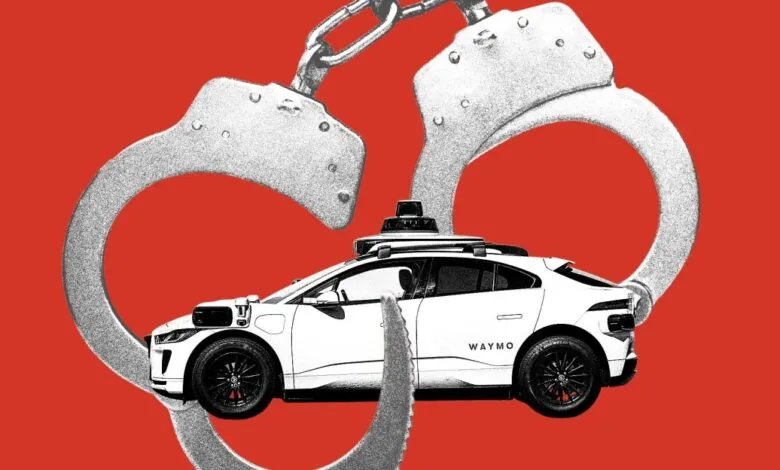
– Two teenagers were arrested after a Waymo robotaxi detected a firearm inside the vehicle and alerted police.
– The incident highlights privacy concerns regarding autonomous vehicles recording footage used for law enforcement.
– Waymo uses internal cameras and automated technology to detect prohibited items and enforce terms of service.
– Law enforcement agencies have previously obtained search warrants for footage from Waymo vehicles in various incidents.
– Waymo has not disclosed details on how its automated system identifies threats or the level of human involvement in alerts.
The Algorithmic Bailiff
The boundary between private transportation and law enforcement is blurring as autonomous vehicles become more sophisticated. In early September, this reality became starkly apparent when two teenagers were arrested after a Waymo robotaxi detected what it identified as a firearm and alerted authorities. According to the Los Angeles Times, the company stated it had identified a violation of its terms of service involving a weapon, pulled the vehicle over, and contacted emergency services. Police subsequently found a loaded AR-style “ghost gun” in the backseat, leading to the passengers’ arrest.
This incident has ignited a broader debate regarding privacy in autonomous vehicles. It raises critical questions about what data these cars record, how that footage is utilized, and the extent to which riders can expect privacy while seated inside a machine equipped with constant surveillance. While human drivers offer a layer of discretion, robotaxis operate under different rules, potentially acting as automated informants rather than neutral carriers.
Surveillance Infrastructure and Legal Precedents
Waymo’s fleet of camera-laden vehicles is already at the center of intense scrutiny regarding surveillance capabilities. Bloomberg reports that law enforcement agencies have successfully obtained search warrants for footage captured by Waymo cars on multiple occasions. For instance, last year the Los Angeles Police Department secured video from a nearby Waymo vehicle that recorded a hit-and-run accident.
Tensions rose further during anti-ICE protests in Los Angeles, where five Waymo vehicles were vandalized and set on fire. Critics questioned whether the cars’ sensors were capturing images of protesters that could later be used as evidence for identification or arrests. Waymo does not publicly disclose the volume of law enforcement requests it receives nor the frequency with which it complies with them.
These concerns mirror the public backlash against Flock Safety’s network of automated license-plate readers, which allow police to track vehicles across jurisdictions and have fueled fears of government overreach. Unlike static cameras, Waymos are mobile units carrying both exterior and interior cameras, moving through city streets and potentially recording interactions in real-time.
Automated Detection vs. Human Judgment
The recent arrest highlights a significant shift in how violations are handled. Police did not request footage after the fact; instead, the vehicle’s internal systems detected a potential threat and initiated the response autonomously. This marks a departure from traditional ride-sharing models where a human driver might exercise judgment or discretion.
Julia Ilina, a Waymo spokesperson, told The Verge via email that the company utilizes interior cameras to enforce its terms of service. She explained that automated technology helps teams identify prohibited items or behaviors, such as firearms. “If Waymo detects a firearm in the vehicle, we may reach out to local law enforcement,” she added.
However, Waymo has remained vague about the technical specifics of this process. The company has not clarified how its system distinguishes between a real weapon and other objects, the confidence threshold required to flag an item, or the role humans play in reviewing alerts before contacting police. These omissions are significant because the decision to escalate a situation to law enforcement was made by an AI-driven system, not a human being.
The Role of Remote Operators and Context
Experts suggest that the detection system likely flags objects resembling weapons for further review rather than making a final determination on its own. Bob Somers, a former engineer at Zoox and technical adviser to the AV-safety nonprofit SAVE-US, noted that software might not need absolute certainty to trigger a review. “If there is a certain set of objects detected, then that would probably loop in a remote operator to take a look at what’s going on,” Somers said.
Phil Koopman, a professor emeritus at Carnegie Mellon University who specializes in autonomous vehicle safety, agreed that computer vision systems can be trained to recognize dangerous situations. “If you can train a computer to look at the road and decide how to drive, you can train a computer to decide if somebody’s holding a gun,” Koopman said. However, he cautioned that these systems are “never 100 percent accurate.”
Accuracy issues are compounded by a lack of context. A human taxi driver shares the ride, hears conversations, and can distinguish between a toy gun and a real one. In contrast, remote operators may only see a brief clip of flagged activity. Waymo states that interior microphones are generally inactive unless a rider initiates support or enables them, meaning reviewers often lack audio context. As of earlier this year, Waymo employed approximately 70 remote assistance agents in the US and Philippines. It remains unclear if these agents are responsible for reviewing internal violations.
In July, Waymo reported two teens to police for underage drinking and shooting a water-bead gun from a vehicle. While the outcome of those charges was unknown, it illustrates the potential for misinterpretation. Phil Koopman emphasized the stakes involved. “It’s really important that Waymo gets it right when they alert the police to something dangerous,” Koopman said. He warned that false alarms could undermine trust in robotaxis and put passengers at risk during police encounters.
Transparency and Rider Expectations
The absence of a human driver can create a false sense of privacy for passengers. In 2023, the San Francisco Standard interviewed individuals who claimed to have engaged in sexual activity in Cruise robotaxis, despite the presence of interior cameras. While no similar incidents were confirmed for Waymo, these episodes demonstrate how easily riders might mistake the lack of a visible driver for a lack of witnesses.
Waymo’s terms of service explicitly prohibit carrying weapons, including toys that resemble guns, and require riders to be at least 18 years old to ride alone in San Francisco. The terms also allow Waymo to suspend accounts for violations. Earlier this year, the company suspended an account after three boys were photographed hanging out of windows and taking selfies. However, the terms do not clearly state that the company may contact police based on internal observations.
Hayley Tsukayama, director of state affairs at the Electronic Frontier Foundation, criticized Waymo’s public policies as overly broad. She argued that riders should not have to infer from general language about “safety and security” that their behavior could lead to police involvement. “I’m not condoning illegal behavior in rideshares,” Tsukayama said, “but if they’re going to share it with authorities, then that should be clearly stated in the policy.” She added that current practices are “outside of the expectations of consumers.”
A New Paradigm for Mobility
As robotaxis become more prevalent, society must redefine the nature of these spaces. Are they private rooms with cameras for safety, continuously monitored environments, or entities capable of self-reporting to authorities? Waymo’s policy allows for sharing data with law enforcement to comply with legal requirements or protect safety, but it does not explicitly outline the automated triggering of police responses.
The incident involving the arrested teens suggests that robotaxis may increasingly function less like transportation and more like decentralized law enforcement units. This concept is already explored in fiction, such as the upcoming short film Road Rage, which depicts a driverless car turning against its passengers. The events of September 2026 provide a glimpse into this emerging reality, where algorithms hold the power to summon police, raising fundamental questions about autonomy, privacy, and justice in the age of self-driving cars.
(Source: The Verge)