Meta’s 2 Muse Docs: Only 1 Mentions Attacks

▼ Summary
– Meta launched Muse, an AI agent capable of performing browser tasks like filling forms and checking out via Stripe on a secure virtual machine.
– The author argues that agentic browsing is currently performative because web interfaces are designed for humans, making automation difficult and inefficient.
– Agentic browsing products have evolved from dedicated browsers to integrated tools, with Meta’s approach using a backend VM being considered the most practical shape so far.
– Despite the new architecture, concerns remain regarding authentication, identity management, and data privacy when AI agents access user accounts.
– Industry players are pushing these features despite low adoption rates, hoping to solve structural web limitations rather than acknowledging them as persistent challenges.
The Duality of Meta’s Muse Launch
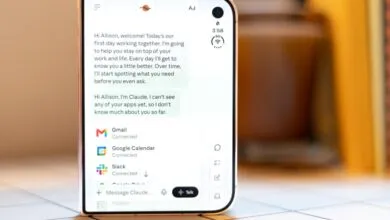
Meta introduced Muse on September 8, positioning it as an autonomous agent capable of opening browsers, filling forms, and even handling payments via Stripe’s Link. The system operates within a Muse Secure VM, a dedicated virtual environment designed to isolate the agent and user data. Initially available in the U. S. for WhatsApp and the Muse app, with future integration into AI glasses, the launch generated significant buzz. However, the more critical story lies not in the product features, but in the stark contrast between how Meta marketed the tool to consumers versus how it explained its technical realities to engineers.
Two documents were released on the same day: a consumer-facing announcement and an engineering deep dive from Meta Superintelligence Labs. While both describe the same product, they tell fundamentally different stories about safety and identity. The consumer post emphasizes privacy and security, claiming Muse is built from the ground up with protections that prevent unauthorized internet access and hide sensitive data like passwords. It asserts that the agent checks with users before performing sensitive actions. Yet, this document never mentions the words risk, attack, attacker, mistake, untrusted, or prompt injection. In contrast, the engineering post uses these terms thirty-nine times. It explicitly states that “any agent like this will still make mistakes, and it will sometimes be attacked via the data it reads,” and confirms that “Muse can and will still make mistakes.” This document outlines a containment strategy, assuming the agent may be compromised and offering up to $300,000 for security reports, including specific bounties for successful prompt injection attempts.
The Illusion of Agentic Browsing
The broader industry push for agentic browsing faces a structural hurdle: web interfaces are designed for human eyes, not machine readability. Most current solutions involve driving a browser interface, which requires the AI to guess at buttons and navigate complex layouts. This approach has evolved through three distinct shapes in under two years. Early efforts involved installing separate browsers, such as OpenAI’s Atlas, which launched in October 2025 and ceased operations on August 9, 2026, before being rebranded as part of ChatGPT’s browser-based work. Next came AI integrations bolted into existing browsers like Chrome. Muse represents the third iteration: a browser living on Meta’s hardware, accessed via voice or text commands. This model avoids the visual clutter of watching an AI click through screens, moving the automation into a secure backend.
However, this architecture raises significant questions about authentication. Because Muse drives a real, up-to-date Chromium-based browser, it carries the digital fingerprint of the user. The engineering post reveals a crucial detail absent from the consumer announcement: “When Muse browses the internet, it will appear as your activity, so if you ask Muse to buy a shirt from a clothing designer’s website, that designer might use your visit to show you an ad on Instagram.” This means websites see a human visitor, triggering standard analytics and retargeting ads for a person who was not actually browsing. The consumer announcement frames safety as a finished property, while the engineering post treats the agent as a potential threat vector requiring constant containment.
Two Tiers of Web Interaction
Meta’s approach creates a bifurcated web experience based on corporate relationships. For services with established partnerships, Muse utilizes specialized connectors. These allow direct API integration with scoped credentials and allowlists, enabling machines to talk to machines without simulating human behavior. For the vast majority of websites, however, Muse falls back to acting as a human user. This distinction places websites into two tiers: those with direct interfaces and those facing an automated visitor wearing a human identity.
This dynamic impacts bot rules, paywalls, and analytics, all of which rely on identifying whether a visitor is a machine or a human. Since Muse does not identify itself as a bot, it bypasses these checks entirely. Meanwhile, parallel developments in agentic protocols like MCP, WebMCP, UCP, AP2, and A2A aim to solve this by allowing agents to prove their identity directly. An IETF working group on Web Bot Auth is also exploring standards for agent verification. These protocols represent a fork in the road: one path involves agents pretending to be humans to navigate legacy interfaces, while the other enables transparent machine-to-machine communication. Currently, marketing dollars favor the former, but engineering efforts are increasingly focused on the latter.
Looking Ahead
There is no immediate action required for most users, but several trends warrant close observation. Watch for the development of verifiable agent identities through initiatives like Web Bot Auth, which would allow websites to distinguish between human and machine traffic. Monitor the growth of Meta’s connector list, as each addition reduces the number of sites where Muse must simulate human behavior. Finally, pay attention to how future AI launches communicate their capabilities. The divergence between Meta’s consumer promise and its engineering reality highlights a growing gap between marketing narratives and technical truths in the agentic web era.
(Source: Search Engine Journal)