Pixel 11 vs Galaxy: Which flagship offers better value?

▼ Summary
– Leaked pricing for the Pixel 11 series matches Samsung’s Galaxy S26 and Z Fold 8 lineup, with $100 increases on some models, though the Pixel 11 and Pro double their base storage to 256GB.
– Pixel 11 uses Google’s Tensor G6 chip, optimized for AI and computational photography, while Samsung’s Snapdragon offers stronger performance and faster charging.
– Google’s Pixel Drops and early Android updates, like Android 17, deliver exclusive features such as Call Screen and Best Take, which Samsung lacks.
– Samsung counters with hardware advantages like higher-end cameras, faster charging, and features such as DeX and Knox, but adds potential bloat with One UI.
– The Pixel series remains valuable for its pure Android experience and software perks, but it’s no longer a cheaper alternative to Galaxy devices.
Google’s Pixel phones have long been the smart choice for buyers who wanted flagship-tier quality without flagship-tier pricing. They were competitive with Samsung’s best, just slightly more affordable, which made it easy to overlook any minor shortcomings in hardware or raw performance. That era, however, appears to be ending with the Pixel 11 series.
According to recent pricing leaks, Google is reportedly preparing to match Samsung’s price points across its upcoming lineup. If accurate, the Pixel’s traditional value story shifts from affordability to something else entirely: software. The hardware still sounds compelling, but the differentiating factor is no longer the lower cost.
When do the new phones launch?
Google has confirmed its next generation of Pixel devices will be unveiled at a Made by Google event on Aug. 12 at 6 p.m. ET. Preorders are expected to open the same day, with a retail release reportedly scheduled for Aug. 20.
For comparison, Samsung’s Galaxy S26, S26+, and S26 Ultra arrived on March 11 following a Feb. 25 announcement. The company’s latest foldables, the Galaxy Z Fold 8, Z Fold 8 Ultra, and Z Flip 8, were unveiled July 22 and hit shelves Aug. 7.
The price gap has closed
A leak reported by The Verge and others suggests the standard Pixel 11 will retail for $899. The Pixel 11 Pro is pegged at $1,099, the Pixel 11 Pro XL at $1,299, and the Pixel 11 Pro Fold at $1,899. That represents a $100 increase for the Pixel 11 and Pixel 11 Pro, though both are expected to double their base storage from 128GB to 256GB. The Pro XL and Pro Fold, meanwhile, would cost $100 more while keeping the same 256GB starting capacity.
Those figures align almost exactly with Samsung’s current pricing structure. The 256GB Galaxy S26 starts at $899.99, the S26+ at $1,099.99, and the S26 Ultra at $1,299.99. Samsung’s Galaxy Z Fold 8 carries a $1,899.99 price tag, while the larger Fold 8 Ultra starts at $2,099.99.
| Pixel 10 series | Pixel 11 series | Galaxy S and Z Fold series | |—|—|—| | Pixel 10: 128GB for $799 | Pixel 11: 256GB for $899 | Galaxy S26: 256GB for $899.99 | | Pixel 10 Pro: 128GB for $999 | Pixel 11 Pro: 256GB for $1,099 | Galaxy S26+: 256GB for $1,099.99 | | Pixel 10 Pro XL: 256GB for $1,199 | Pixel 11 Pro XL: 256GB for $1,299 | Galaxy S26 Ultra: 256GB for $1,299.99 | | Pixel 10 Pro Fold: 256GB for $1,799 | Pixel 11 Pro Fold: 256GB for $1,899 | Galaxy Z Fold 8: 256GB for $1,899.99 | | N/A | N/A | Galaxy Z Fold 8 Ultra: 256GB for $2,099.99 |
Remember, these are still rumors until Google makes an official announcement.
Hardware comparison
Samsung’s latest Galaxy S26 series sets a high bar. The standard S26 features a 6.3-inch 120Hz AMOLED display, 12GB of RAM, a Snapdragon 8 Elite Gen 5 for Galaxy processor, and a triple rear camera setup that includes a 3x optical telephoto lens. The S26+ steps up with a 6.7-inch QHD+ screen, a 4,900mAh battery, and 45W charging. The S26 Ultra tops the line with a 6.9-inch QHD+ display, a 5,000mAh battery, 60W charging, an integrated S Pen, and four rear cameras, headlined by a 200MP main sensor and 3x and 5x optical telephoto lenses.
On the Pixel side, the Pixel 11 is expected to run on Google’s Tensor G6 chip. These processors are engineered with a focus on AI and computational photography, which translates to impressive photo quality and smart features for everyday users. Samsung’s Snapdragon silicon, by contrast, is known for raw performance, more capable camera systems, and faster charging speeds.
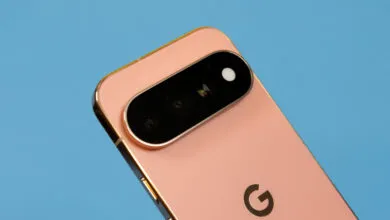
The standard Pixel 11 is rumored to sport a 6.3-inch OLED display and three rear cameras. The Pro models might offer upgraded LTPO panels and improved wide, ultrawide, and telephoto shooters. The Pixel 11 Pro XL is likely to measure 6.8 inches. Battery rumors suggest a base capacity of around 4,985mAh, up to 30 hours of endurance, and fast charging that can reportedly reach 55% in about 30 minutes with a compatible 30W to 45W USB-C adapter.
The foldable comparison is particularly interesting. If the rumored $1,899 price holds, the Pixel 11 Pro Fold will cost nearly the same as the Z Fold 8. Samsung’s device offers a 7.6-inch folding display, dual 50MP rear cameras, a 4,800mAh battery, and a lightweight 201g design. Google’s upcoming foldable, based on the latest reports, will feature an 8-inch inner screen and a 6.4-inch outer display, with a battery around 4,800mAh.
Software is where Pixel wins
For most people, the differences in camera specs, display sizes, and battery capacities don’t drive purchasing decisions. Premium phones are largely comparable in everyday use. What matters more, at least to me, is the software experience. I want a clean, feature-rich Android interface, and I suspect many others feel the same way.
The Pixel’s value shouldn’t be measured solely by processor benchmarks or charging speeds. Android itself is a huge part of the equation. Because Google controls both Pixel hardware and Android, it designs features with its own devices in mind and delivers major updates and Pixel Drops to them first.
Take Android 17, for example. It rolled out to Pixel 6 and newer devices in June, bringing productivity upgrades like floating App Bubbles, stronger security protections, Screen Reactions, improved gaming features for foldables, and built-in parental controls. The accompanying June Pixel Drop added custom Take a Message greetings, Gemini Omni video creation, Lyria 3 music generation, Voice Translate for the Pixel 10a, broader Quick Share compatibility with AirDrop, and expanded Magic Cue support.
Samsung phones don’t get Pixel Drops. Those are exclusive to Pixel devices, introducing features like Call Screen, Magic Cue, Take a Message, and Camera Coach. Many of these exclusives rely on Google’s Tensor chips, which also power computational photography tools like Best Take, a feature that blends multiple frames to create a group photo where everyone looks their best.
That said, Samsung is usually among the first manufacturers to receive major Android updates. When Android 17 launched, Google said other eligible devices would get it throughout 2026. Samsung layers its One UI and a suite of its own apps on top of Android. Features like DeX and Knox security add genuine value, but some other additions can feel like bloat. I prefer Google’s more streamlined approach.
To be fair, Pixel devices come loaded with Google’s Workspace apps, but most Android users already rely on at least a couple of Google services. And you can easily remove most of them if you prefer. Buying an eligible Pixel often includes six or 12 months of Google AI Pro and additional Google One storage, depending on the model and current promotions.
In short, if the latest AI and software features, including Gemini and Google’s own services, are your priority, Pixel devices deserve serious consideration. If you care more about top-tier hardware and the highest specifications available, Samsung typically has the edge. We’ll have a clearer picture when the Pixel 11 debuts next week.
Is the Pixel series still a good value?
I believe so, but it’s no longer the budget-friendly alternative to Galaxy phones.
Samsung is known for exceptional hardware, while Pixel is about a purer Android experience, timely updates, computational photography, and early or exclusive access to Google’s newest features. That’s where the real value lies.
Does an extra $100 on the Pixel 11 series really matter? The price difference between Samsung and Google flagships was never substantial to begin with, and most consumers have already chosen their camp.
Longtime Galaxy owners probably won’t switch now, even if the leaked Pixel 11 prices prove accurate. As for dedicated Pixel users, the bigger question is whether this year’s upgrades justify the cost. But that’s a conversation for another day.
(Source: ZDNet)