Ukraine: Starshield limits hamper defense against Russian strikes
▼ Summary
– Ukrainian President Volodymyr Zelenskyy alleged that Starshield satellite connectivity is restricted on drones traveling above 161 kilometers per hour in occupied territories.
– SpaceX explicitly denied these allegations, stating that there has been no change to the service’s operational parameters or restrictions.
– Zelenskyy claimed the speed limit prevents Ukraine from intercepting Russian drones, thereby allowing more strikes to succeed against Ukrainian positions.
– The US government controls Starshield restrictions, and while Elon Musk confirmed this authority, the Pentagon declined to investigate who ordered the limits.
– Ukrainian officials suspect the reinstatement of the speed limit is a strategic move by the US to exert pressure on Ukraine during ongoing peace talks with Russia.
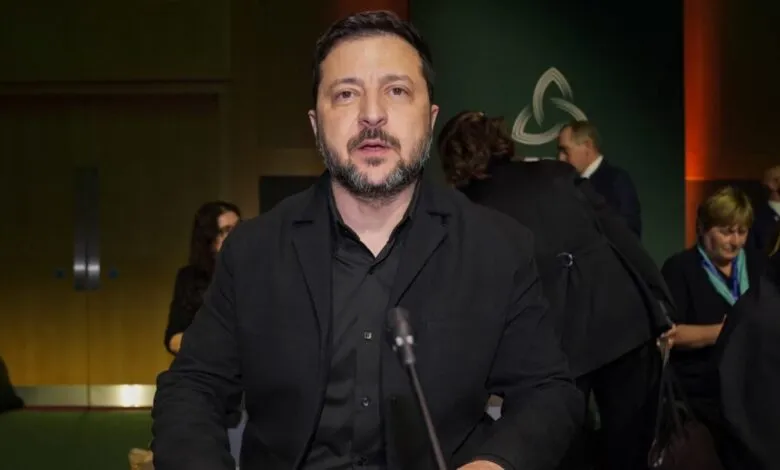
Ukraine’s defense capabilities face renewed constraints as Starshield connectivity restrictions reportedly reappear, hindering the nation’s ability to intercept high-speed Russian drone incursions. President Volodymyr Zelenskyy addressed these developments during his address at the 9th European Political Community Summit in Ireland, revealing that satellite-based counter-drone systems are once again failing when targets exceed specific velocity thresholds within occupied territories.
Zelenskyy confirmed that speed restrictions on Starshield have returned, effectively capping operational effectiveness at 161 kilometers per hour (100 miles per hour). The Ukrainian leader emphasized that this limitation prevents Kyiv from successfully engaging Russian drones that approach from temporarily occupied zones, thereby allowing more hostile strikes to penetrate defensive lines. “We have detected speed restrictions on Starshield on our Ukrainian territory again, in the temporarily occupied parts of Ukraine,” Zelenskyy stated. “The speed limit is back at 161 kilometers per hour,that’s 100 miles per hour.”
The Starshield system, which serves as the military-grade counterpart to SpaceX’s commercial Starlink network, relies on uninterrupted satellite communication to guide precision munitions and surveillance assets. According to Ukrainian officials, the reinstatement of this velocity cap significantly degrades their capacity to neutralize fast-moving aerial threats. The administration suspects that Washington may be leveraging these technical limitations as diplomatic leverage during ongoing peace negotiations with Moscow, though such claims remain unverified by independent sources.
SpaceX has firmly rejected the allegations regarding operational changes. A representative from the company’s media relations department issued a direct rebuttal to Ars Technica, stating, “This is false. There has been no change.” This denial contradicts the account provided by the Ukrainian government, creating a stark divergence in narratives surrounding the technology’s current performance parameters.
While SpaceX manages the hardware and satellite infrastructure, Elon Musk clarified last month that any decisions concerning usage restrictions fall under the authority of the US government. The Pentagon has awarded multiple contracts to SpaceX to facilitate Starshield access for Ukrainian forces, yet the chain of command for implementing technical limits remains opaque. The Pentagon inspector general’s office recently declined a request from US senators to investigate who authorized the specific restrictions, leaving questions about accountability unresolved.
For Ukraine, the implications are immediate and tactical. Without reliable satellite connectivity on drones capable of exceeding the imposed speed barrier, Kyiv lacks the means to intercept Russian drones launching from occupied regions. This gap in air defense underscores the complex interplay between technological dependence and geopolitical strategy, as allies balance support for Ukrainian sovereignty against broader diplomatic objectives.
(Source: Ars Technica)