Boeing’s Sole US Astronaut Transporter: ‘Incredibly Excited’
▼ Summary
– NASA will purchase two additional flights on Boeing’s Starliner spacecraft and provide financial support to help the company resume crewed operations.
– The decision aims to maintain US access to low-Earth orbit after SpaceX plans to retire its older Crew Dragon vehicle in favor of Starship.
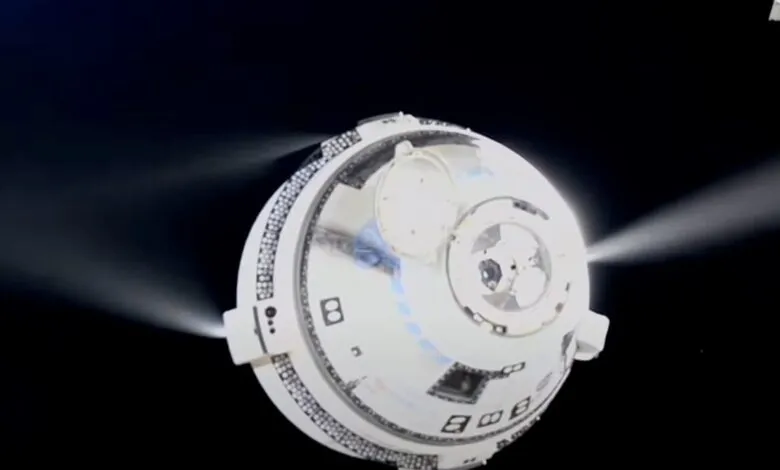
– Boeing has faced significant delays and technical issues with Starliner, including thruster problems that nearly caused a catastrophic failure during a test flight.
– NASA is contributing $359 million to assist Boeing in rebuilding the reaction control system and certifying the new Vulcan rocket for human missions.
– Future mission schedules include an uncrewed demonstration flight targeted for late 2026 or early 2027, followed by a crewed mission in mid-2028 commanded by Woody Hoburg.
NASA has officially committed to purchasing two additional flights on Boeing’s Starliner spacecraft while providing financial backing to help the company restore the vehicle to operational status. This decision ensures continued American access to low-Earth orbit as SpaceX prepares to phase out its current fleet in favor of newer technologies. The agency also intends to support Boeing in certifying a new launch system to replace the Atlas V rocket, which is scheduled for retirement.
This move confirms earlier reports indicating that NASA must maintain redundancy in crew transport capabilities. With SpaceX focusing its resources on the next-generation Starship, the older Falcon 9 and Crew Dragon platforms are expected to be retired sooner rather than later. NASA Administrator Jared Isaacman addressed this strategic shift during a press conference, highlighting the necessity of diversifying transport options.
“I do not think it’s a secret that SpaceX intends to sunset older platforms like Falcon and Dragon as they concentrate on their next-generation capability, Starship,” Isaacman stated.
Overcoming Significant Technical Hurdles
While SpaceX’s Crew Dragon has successfully transported astronauts to orbit for over six years, Boeing’s path has been fraught with delays and technical failures. The Starliner program has faced numerous setbacks during uncrewed test flights in 2019 and 2022. These issues culminated in serious problems during the first crewed test flight in June 2024, where thruster malfunctions nearly resulted in the loss of the two astronauts aboard.
Given these challenges, there was speculation that Boeing might abandon the project, having already absorbed more than $2 billion in losses. However, NASA’s decision to inject further funds into the program underscores the critical need for a second provider. The space agency has already contributed $5.1 billion under the fixed-price Commercial Crew contract, but determined that additional support was necessary to ensure success.
To address the immediate technical deficiencies, NASA will provide $359 million to assist Boeing in rebuilding the reaction control system thrusters that overheated during previous tests. Dana Weigel, manager of NASA’s Low Earth Orbit Program, confirmed that this funding will also help certify United Launch Alliance’s Vulcan rocket for human missions, providing a reliable launch vehicle for future Starliner flights.
Future Mission Timeline
With these new options exercised, NASA’s total commitment to Starliner now stands at six spaceflights. The schedule includes an uncrewed demonstration mission, Starliner-1, which is currently slated for launch between December 2026 and January 2027. Following this, three crewed missions are already under contract.
The first of these crewed flights, designated Starliner-2, is expected to launch in mid-2028. NASA announced that veteran astronaut Woody Hoburg will serve as the commander for this inaugural crewed mission. This timeline reflects a cautious approach, allowing ample time for testing and certification before returning humans to orbit on the new spacecraft.
(Source: Ars Technica)


