NASA’s PRIMA Aims to Build $1B Telescope in Record Time
▼ Summary
– NASA announced that the PRIMA mission is on track to launch in the early 2030s as the first Probe Explorer.
– The Probe Explorer class aims to balance cost and science output between smaller Explorer missions and expensive flagships.
– PRIMA was selected over the competing AXIS X-ray observatory due to budget and schedule concerns for the latter.
– Scientists criticized mismanagement at NASA’s Goddard Space Flight Center regarding the disqualified AXIS mission.
– PRIMA will be led by the Jet Propulsion Laboratory, which is currently facing institutional challenges and layoffs.
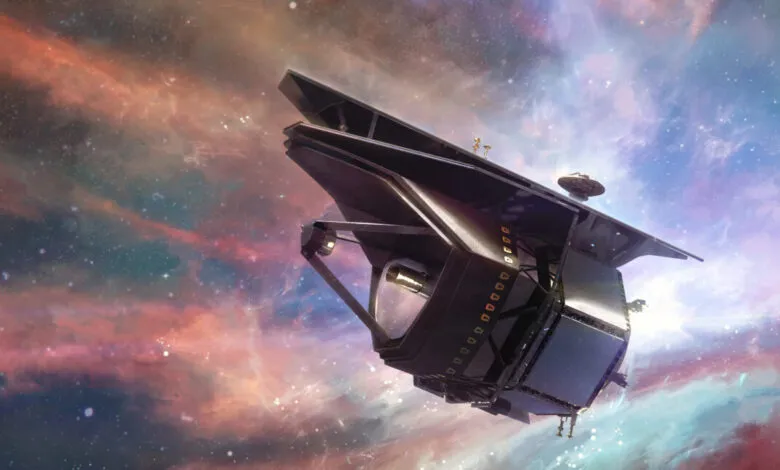
NASA has officially selected the PRIMA mission as the inaugural project for its new Probe Explorer class of space telescopes, marking a strategic pivot toward high-impact astrophysics within tighter fiscal constraints. The agency confirmed that this initiative aims to bridge the gap between low-cost Explorer-class missions and expensive flagship observatories like the Nancy Grace Roman Space Telescope. By targeting a launch in the early 2030s, NASA hopes to demonstrate that significant scientific returns can be achieved without the multi-billion-dollar price tags associated with traditional large-scale projects.
The concept of Probe Explorers emerged from recommendations by an independent panel of scientists who identified a need for a middle ground in the agency’s portfolio. While Explorer missions typically operate under cost caps of a few hundred million dollars and flagships often exceed $4 billion, the Probe category seeks to optimize this spectrum. For years, NASA evaluated potential concepts for this new tier, but uncertainty lingered regarding whether the science budget could sustain development amid financial pressures from the Trump administration. The recent announcement signals confidence that resources are now available to advance PRIMA, short for the Probe far-Infrared Mission for Astrophysics, into active development.
Selection of PRIMA followed the disqualification of a competing proposal, the AXIS X-ray observatory, earlier this year. According to NASA, AXIS failed to meet the strict schedule and budget requirements necessary for a Probe Explorer mission. The decision has sparked internal debate, particularly because the scientist leading the AXIS concept study attributed the failure to systemic issues at Goddard Space Flight Center in Greenbelt, Maryland. That facility was slated to lead AXIS if it had proceeded. The researcher criticized the center for what they described as mismanagement and operational disruptions.
In contrast, PRIMA will be managed by the Jet Propulsion Laboratory (JPL) in Pasadena, California. JPL faces its own institutional challenges, including a series of layoffs and a current lack of missions in active development. Despite these hurdles, the laboratory is tasked with steering the first Probe Explorer mission. This shift in leadership highlights the complex logistical landscape NASA must navigate while trying to streamline its approach to deep-space observation. The success of PRIMA will likely determine whether the Probe Explorer model becomes a sustainable staple of future astrophysics research or remains a one-off experiment in cost-effective space exploration.
(Source: Ars Technica)


