YouTube Music launches new labels as AI music floods streaming
▼ Summary
– YouTube Music is introducing a new labeling system to enhance transparency regarding songs created with generative AI.
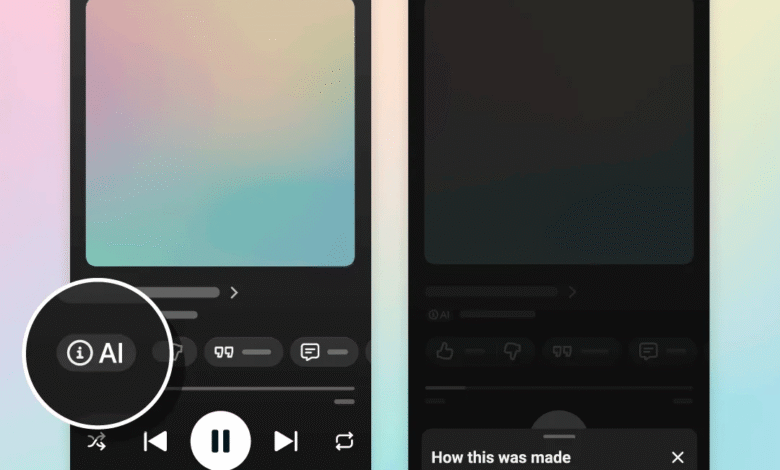
– The labels will appear on the player page and extend to the main YouTube app, detailing specific AI roles in composition and vocals.
– Tracks are categorized into three designations: Fully Gen AI, Partly Gen AI, or No Gen AI, based on partner declarations and detection tools.
– Unlike competitors such as Deezer and TIDAL that restrict or exclude AI music, YouTube focuses on disclosure without banning monetization for AI-assisted tracks.
– This move aligns with industry trends where platforms like Apple Music and Spotify are also implementing their own AI transparency measures.
YouTube Music is introducing a new labeling system to clarify the extent of generative AI involvement in musical releases. Starting this week, users can identify tracks that utilize artificial intelligence for composition or vocals through a dedicated tag on the player interface. This transparency measure extends beyond the music service, with the labels also appearing on the main YouTube app.
The initiative follows collaboration with music partners and the deployment of internal detection tools. According to YouTube’s help documentation, creators must declare their use of generative technology using one of three specific categories: Fully Gen AI, Partly Gen AI, or No Gen AI. The “Fully Gen AI” designation applies to songs entirely produced by algorithms, whereas “Partly Gen AI” covers works where artists blend AI components with live performances. Standard pitch-correction software like Auto-Tune does not trigger an AI label and falls under the “No Gen AI” classification.
This disclosure strategy contrasts with approaches taken by other major streaming platforms. While competitors are increasingly restricting or filtering AI content, YouTube prioritizes listener information. For example, Apple Music plans to launch its own AI Transparency Tags later this year, and Spotify currently employs both AI labels and spam filters. Deezer has adopted a stricter stance, reporting in July that it receives approximately 90,000 fully AI-generated tracks daily. The platform excludes such music from algorithmic recommendations and editorial playlists, withholds royalties for fraudulent streams, and is developing a user-controlled filter to hide AI music. Similarly, TIDAL identifies entirely AI-generated recordings, allows users to disable them, and removes them from royalty distributions.
YouTube’s policy differs significantly in that AI involvement alone does not disqualify a track from monetization. The primary goal is transparency rather than exclusion. The company continues to experiment with AI-powered creation tools itself, including Dream Track, which enables select creators to generate soundtracks featuring synthetic versions of participating artists’ voices.
(Source: TechCrunch)