Google launches video series for odd technical SEO questions
▼ Summary
– Google launched a new YouTube series called “The Non-Canonical Cabinet” to address edge-case technical SEO questions from the industry.
– Hosted by Gary Illyes and Cherry Prommawin, the sitcom-style show tackles complex queries that do not fit standard FAQ pages.
– The first episode clarifies that domain names follow strict ICANN and IETF standards, prohibiting emojis but allowing Internationalized Domain Names via Punycode.
– In contrast, URL paths have fewer restrictions, as Googlebot can crawl and process emojis which are percent-encoded in the system.
– The series builds on previous educational content like “How Search Works” by focusing directly on user-submitted niche search problems.
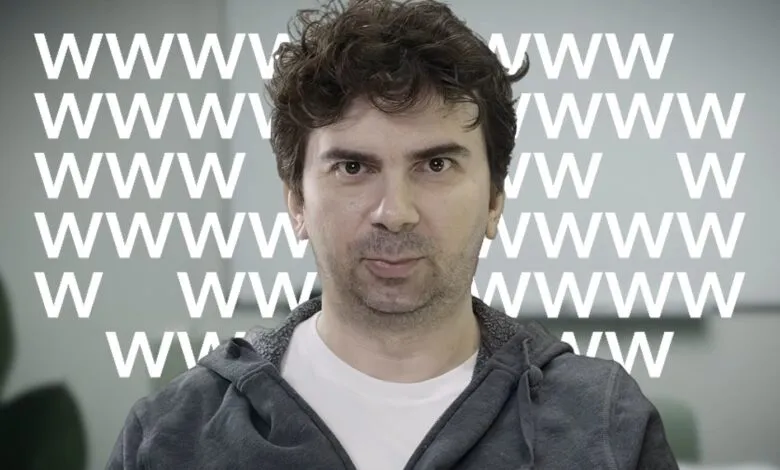
Google has officially launched The Non-Canonical Cabinet, a new YouTube series under the Search Central banner designed to tackle the most peculiar and edge-case technical SEO questions. The inaugural episode, released on October 14, dives into the complexities of domain names and URL paths, specifically addressing whether characters like emojis can be included in these structures and how keyword usage within URLs impacts search rankings.
Hosted by Google’s Gary Illyes and Cherry Prommawin, the series aims to provide clarity on topics that often fall outside standard guidelines. The show was initially teased on October 6 with a trailer that invited viewers to submit their own niche queries in the comments section, fostering a community-driven approach to resolving obscure technical dilemmas.
Beyond Standard FAQs
The premise of The Non-Canonical Cabinet is distinct from previous educational content. While Illyes previously hosted “How Search Works” in 2024, which covered foundational processes like crawling and indexing, this new series takes a different approach. It begins with specific, user-generated questions rather than basic principles. As described in the episode details, the content focuses on inquiries that are not suitable for a standard FAQ page but remain highly relevant for both traditional search results and generative AI features. This format allows for a deeper exploration of gray areas where general advice may not suffice.
Domain Standards and Emoji Restrictions
A significant portion of the first episode focused on the technical rules governing domain names versus URL paths. According to Prommawin, Google strictly adheres to the technical guidelines established by ICANN and the Internet Engineering Task Force (IETF). These standards, outlined in RFCs 1035 and 1123, permit letters, numbers, and hyphens in domain names. To support global accessibility, Internationalized Domain Names (IDNs) allow for native scripts such as Chinese or Arabic, which are then converted into Punycode strings starting with “xn--” for browser compatibility.
Illyes highlighted potential confusion arising from IDNs, noting that certain characters in non-Latin scripts can closely resemble those in English, leading to misinterpretation by users and browsers. For instance, a Cyrillic character might look identical to the Latin letter “p.” Regarding the inclusion of emojis, Illyes clarified that current internet standards prohibit them in domain names. A 2017 ICANN Board Resolution explicitly disallowed emoji in IDN technical standards, although they can still be registered in some country-code top-level domains at the second level.
In contrast, URL paths have fewer restrictions. Illyes confirmed that Googlebot will crawl and process paths containing emojis, which are typically percent-encoded by browsers. For example, a chicken emoji might appear as `%F0%9F%90%94` in the code. However, he warned that not all platforms display these encoded characters correctly, sometimes showing garbled text instead. Google’s existing URL structure documentation already recommends percent encoding for non-ASCII characters, meaning sites following these guidelines require no immediate changes.
The Weight of Keywords and Separators
The episode also addressed the long-debated topic of using keywords in URLs. Illyes described this as an “incredibly small signal” that only holds significance when there is absolutely no other information available to Google, such as on a brand-new site with no indexed content. Once Google can analyze the actual page content, the relevance of keywords in the domain and URL becomes negligible. This aligns with historical statements from John Mueller, who has previously characterized URL keywords as a very lightweight ranking factor.
On the subject of word separators, Illyes explained that Google treats words joined by underscores as a single continuous term. While this method can sometimes work, Google strongly recommends using hyphens as the standard separator across the web. This advice stems from historical conventions where underscores were used to denote concepts meant to stay together, such as function names in programming languages. By using hyphens, website owners ensure better clarity for search engines regarding individual word recognition.
Practical Implications for SEO Professionals
The insights provided in this first episode offer concrete guidance for managing client expectations and optimizing technical setups. For websites already compliant with Google’s URL structure documentation, particularly regarding percent encoding, no modifications are necessary. However, the clarification on keywords serves as a crucial reference point for clients seeking to maximize keyword density in their URLs. Illyes made it clear that adding excessive keywords provides little to no benefit unless the page is entirely unknown to Google. The episode concluded with a strong recommendation against attempting to game search results through keyword stuffing in URLs.
As the series progresses, the next installment will focus on robots.txt. With no fixed release schedule announced yet, interested viewers are encouraged to engage with the content by submitting further edge-case questions in the comments, ensuring the series remains responsive to the evolving needs of the SEO community.
(Source: Search Engine Journal)