Anthropic’s Claude Cowork goes cloud as 90% of sessions are non-coding

▼ Summary
– Anthropic expanded Claude Cowork to web and mobile browsers, allowing tasks to run in the cloud independently of a user’s desktop computer.
– The web and mobile versions are in beta for Max plan subscribers, with broader access and doubled usage limits extended through Aug. 5.
– Anthropic introduced the phrase “the work around the work” to describe Cowork’s focus on administrative tasks like email, spreadsheets, and file organization.
– An analysis of 1.2 million Cowork sessions found that over 90% of usage was unrelated to software development, with 50% attributed to business processes and content creation.
– The desktop version remains the full Cowork experience with access to local files and browsers, while the cloud version relies on connected apps and pushes notifications for user approvals.
Anthropic has officially taken Claude Cowork to the cloud, announcing that the agentic assistant is now accessible via web and mobile browsers. The move comes alongside a revealing look at how people actually use the tool. After analyzing 1.2 million Cowork sessions, the company found that a staggering 90% of usage has nothing to do with coding. Additionally, access to Claude Fable 5 has been extended through July 12, giving users more time to experiment with the latest model.
The company is coining a new phrase to frame Cowork’s purpose: “the work around the work.” The idea is straightforward. Professionals possess deep domain expertise, yet much of their day gets swallowed by administrative clutter. Sorting emails, merging spreadsheets, organizing files, these tasks aren’t the core job. They are the necessary overhead to get to the real work. As Anthropic puts it, “It’s rarely in anyone’s job description, but a large share of everyone’s week.”
While some of this support work demands a desktop environment, most does not. I recently tasked Cowork with scanning my website for vulnerabilities over a weekend. None of that required it to be tethered to my local machine. It could have run perfectly in the cloud. Now, it finally can.
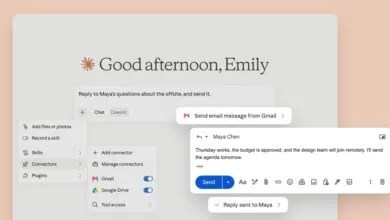
This update effectively untethers your tasks from your hardware. You can start a project at your desk, check its progress from your phone, and retrieve the finished output from any browser. Your laptop no longer needs to be on for Cowork to function. I typically run it on a massive Mac Studio with 128GB of RAM and a 38-inch monitor, but the principle is the same. The machine could be powered off, and the task would continue running. “Close the laptop and head to your meeting; Claude keeps going,” Anthropic stated.
Scheduled tasks can operate entirely online, provided the work itself is web-based. That means Cowork can sift through email threads, review transcripts, and scan news headlines while you sleep. There is one key limitation: cloud-based Claude does not have access to your local browser experience. It relies exclusively on connected apps.
The new mobile app, available for both Android and iOS, serves dual purposes. First, it lets you check task status and receive notifications. If Claude Cowork needs permission or clarification, it pushes an alert to your phone. Drafts of messages won’t be sent until you review and approve them. This ensures you remain in control, even when away from your primary workstation. “When Claude reaches a call only you can make, it asks, and the question reaches your phone,” the company explained. I admit, the idea of granting AI permission from certain private locations feels a bit odd, but the flexibility is undeniably useful in other scenarios.
“Desktop remains the place for deep work, and it’s the full Cowork experience, where Claude can also use your local files and browser,” Anthropic noted. “Users who couldn’t install a desktop app can now use Cowork too.” The web and mobile versions are currently in beta and available to Max plan subscribers. The company said access will expand to lower-tier plans in the coming weeks. To celebrate the launch, doubled Cowork usage limits have been extended through August 5.
The usage statistics from Anthropic are particularly eye-opening. The company sampled 1.2 million anonymized and aggregated Claude Cowork sessions from May 11 to May 31, 2026, spanning more than 600,000 organizations. Given the buzz around Claude Code, you might assume Cowork is primarily a coding tool. Instead, over 90% of sessions were unrelated to software development.
The breakdown is telling. Business process and operations claimed the largest share at 33.4%, followed by content creation and copywriting at 16.4%. Combined, business process and content creation accounted for a full 50% of usage. “Our data suggests that people are using Claude Cowork to assemble and structure the information they can use to act on their expertise,” Anthropic said.
This raises a provocative question for me. If Cowork runs autonomously in the cloud and on a schedule, do I still need a dedicated server running OpenClaw? Can most of what I use OpenClaw for be handled more safely and reliably by Claude? OpenClaw avoids usage limits and has no subscription fee. But if I am already paying for Claude Max, how far can I push it? I suspect I will be back soon with hands-on tests to find out.
(Source: ZDNet)