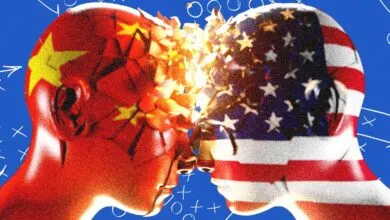
US AI dominance casts shadow over NATO summit

▼ Summary
– The US controls access to the most advanced AI models, such as Anthropic’s Claude Mythos and OpenAI’s latest model, creating leverage at the NATO summit in Ankara on 7-8 July.
– Claude Mythos can find security flaws better than human specialists, and during a government test, it surfaced vulnerabilities in classified US systems within hours.
– The US imposed then lifted export controls on Anthropic’s models, causing an 18-day blackout, while also limiting OpenAI’s model to approved US firms, frustrating allies.
– The summit agenda includes emerging technologies, but AI and cyber will only be briefly mentioned in the closing statement, with key discussions expected in informal talks.
– European allies are building their own defence AI, including a partnership between Helsing and Mistral, as they seek to reduce reliance on US-controlled models.
The most advanced AI models in the world are almost entirely controlled by the United States, and that reality will cast a long shadow over the NATO summit in Ankara on 7 and 8 July. As Donald Trump arrives for the meeting, he holds unusual leverage: Washington decides which allies get access to cutting-edge systems like Anthropic’s Claude Mythos, a model that can identify and exploit security vulnerabilities faster than most human specialists. In a government test, Mythos breached classified US systems within hours.
This dynamic has created a tense undercurrent at the summit. Officially, AI and cybersecurity will receive only brief mentions in the closing statement, according to a NATO official. But the subtext is unmistakable. European allies have been frustrated by the whiplash of US policy, which has swung between strict export controls and expanded access through initiatives like Project Glasswing.
In early June, the Trump administration imposed export controls on Anthropic’s most cyber-capable models, banning foreign nationals from using them and forcing a global shutdown. The blackout lasted 18 days before the controls were lifted on 30 June. The White House has also limited the rollout of OpenAI’s latest model to a small group of approved US firms. This push and pull has prompted a rare Five Eyes warning on AI cyber threats and left frontier models moving between governments faster than regulators can keep up.
“AI is fundamentally changing the threat landscape, and NATO needs to adapt accordingly,” Estonian cyber ambassador Helen Popp told Politico. “Every capability available to adversaries is also available to allies, if they move first.”
Anthropic expanded Project Glasswing in June to around 150 organisations across more than 15 countries, including the EU. But only a few nations, such as the UK, were initially allowed to run evaluations. EU institutions have openly demanded access, and the scramble followed weeks of uncertainty from Washington.
The summit agenda includes a track on emerging and disruptive technologies, but former NATO cyber policy leader Heli Tiirmaa-Klaar said allies avoid formally discussing topics that lack consensus. She expects talks to happen in the margins instead. The US State Department’s cyber bureau is not sending a representative amid an internal reorganisation. Senator Jeanne Shaheen said she will attend partly to reassure allies that the US will not “alienate them” over AI access.
Trump has separately signed NSPM-11, ordering the US military to adopt AI faster and shield models from China. Meanwhile, Europe is hedging by building its own capability, including the defence AI alliance between Helsing and Mistral. The war in Ukraine, now past its fourth year, keeps the stakes concrete. Allies have pledged 1.5% of GDP to protecting critical infrastructure. Laura Galante of the Center for European Policy Analysis called Ukraine the blueprint for operating in AI-fuelled warfare.
A State Department spokesperson said every ally must adopt “trusted leading-edge AI capabilities.” Which capabilities count as trusted, and who grants that trust, is precisely what Ankara will not quite discuss.
(Source: The Next Web)