OpenAI loses three key AI leaders in one day

▼ Summary
– Three senior OpenAI executives, including the heads of Sora and OpenAI for Science, departed as the company discontinues non-core “side quest” projects.
– OpenAI is shutting down its Sora video tool and dismantling its OpenAI for Science initiative to consolidate around its core enterprise AI business.
– A two-year leadership exodus has left only 2 of the company’s 11 original co-founders, with departing talent frequently moving to key competitors like Anthropic and Meta.
– The company’s financial position is marked by high revenue but steep projected losses, intensifying its strategic pivot toward enterprise customers for profitability.
– This restructuring has created a leadership vacuum and a cultural shift away from ambitious research, focusing instead on the operational demands of its core products.
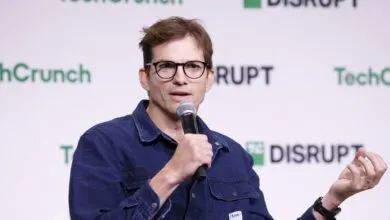
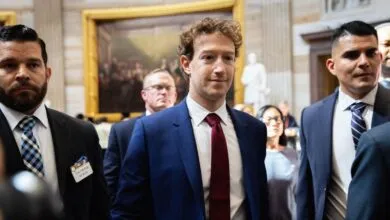
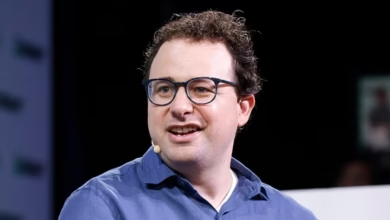
This week saw a significant leadership exodus at OpenAI, with three senior executives announcing their departures on the same day. The exits of former chief product officer Kevin Weil, Sora head Bill Peebles, and enterprise CTO Srinivas Narayanan underscore a strategic pivot toward enterprise AI that is reshaping the company. These moves are part of a broader consolidation, as OpenAI discontinues several high-profile “side quest” projects that no longer align with its commercial focus.
Weil, who joined from Instagram two years ago, had recently been leading the OpenAI for Science initiative. He described his tenure as a mind-expanding experience. His team’s work, including the GPT-Rosalind model for life sciences, will be absorbed into other research groups as the dedicated unit is dissolved. Peebles, who built the Sora video generator from the ground up, called it the adventure of a lifetime and noted its role in sparking massive industry investment in AI video. Narayanan, instrumental in scaling the applied engineering team, cited a desire to spend more time with family.
These departures are directly tied to the shutdown of specific projects. The Sora video generation tool will be discontinued, with its web and app access ending on 26 April and its API following in September. Despite initially attracting a million users, active numbers fell below half a million while operational costs reportedly neared one million dollars daily. Intellectual property complaints from the Motion Picture Association added to its challenges. The closure signals that OpenAI could not make the project’s economics viable, even as it validated the market. Similarly, the dismantling of OpenAI for Science reflects a company-wide shift away from exploratory research and toward core, revenue-driving products like ChatGPT and its API.
This trend is not new. A broader leadership exodus has transformed the company over the past two years. Of OpenAI’s 11 original co-founders, only CEO Sam Altman and President Greg Brockman remain. A long list of senior figures, including former chief scientist Ilya Sutskever and ex-CTO Mira Murati, have departed. In 2025 alone, at least 12 executives left. This talent is not vanishing but redistributing to key competitors. Former co-founder John Schulman joined Anthropic, while other pivotal researchers and leaders have moved to Meta’s Superintelligence Labs or launched their own ventures.
Reasons for the departures vary. Some executives reportedly left over ethical concerns regarding defense contracts, while others pointed to a cultural shift from ambitious research to operational execution. The competitive pressure is real, with Anthropic’s Claude models gaining developer traction and forcing OpenAI to double down on near-term product performance. This environment has made the company less appealing to those originally drawn by its pioneering research mission.
The timing of these latest exits is compounded by other vacancies. Chief of product and business Fidji Simo is on medical leave, COO Brad Lightcap has moved to special projects, and CMO Kate Rouch is departing. While OpenAI has appointed former Slack CEO Denise Dresser as chief revenue officer, the overall effect is a leadership team almost entirely reconstituted around enterprise revenue generation.
Financially, OpenAI presents a paradox. It boasts a staggering annualized revenue run rate exceeding $25 billion, supported by over 900 million weekly ChatGPT users. Enterprise revenue now makes up more than 40% of the total. However, the company projects steep losses of $14 billion on that revenue this year, with a long road to profitability. Its strategy hinges on accelerating enterprise adoption, lowering compute costs, and fending off formidable rivals.
The competitive landscape has intensified. Anthropic now matches OpenAI in revenue while spending far less on training. Google has deeply integrated its Gemini models, and Meta’s superintelligence lab is heavily staffed by ex-OpenAI talent. In response, OpenAI is behaving like a mature tech giant, consolidating its core business and shedding speculative projects. The simultaneous departure of three key leaders is a symptom of this transformation, highlighting that the organization which defined an era is becoming something new, often without the people who built it.
(Source: The Next Web)