Artemis II astronauts process historic moon mission
▼ Summary
– The Artemis II crew is returning to Earth after a nine-day mission that included flying beyond the Moon, with splashdown planned for Friday.
– Commander Reid Wiseman described the profound experience of watching the Earth disappear behind the Moon during the lunar encounter.
– The astronauts experienced a 40-minute radio blackout while farther from Earth than any humans in history, during which they shared cookies and took photos.
– The crew had a brief moment to reflect on their unique position but focused primarily on mission science, with deeper personal processing still to come.
– Pilot Victor Glover highlighted flying into the Moon’s shadow as one of the mission’s greatest gifts.
As the Artemis II mission enters its final phase, the four crew members are starting to process the profound experience of traveling farther from Earth than any humans before them. Their journey around the Moon is nearly complete, with a scheduled splashdown in the Pacific Ocean approaching rapidly. The images from their historic lunar flyby, which occurred earlier this week, remain vivid as they begin the long voyage home.
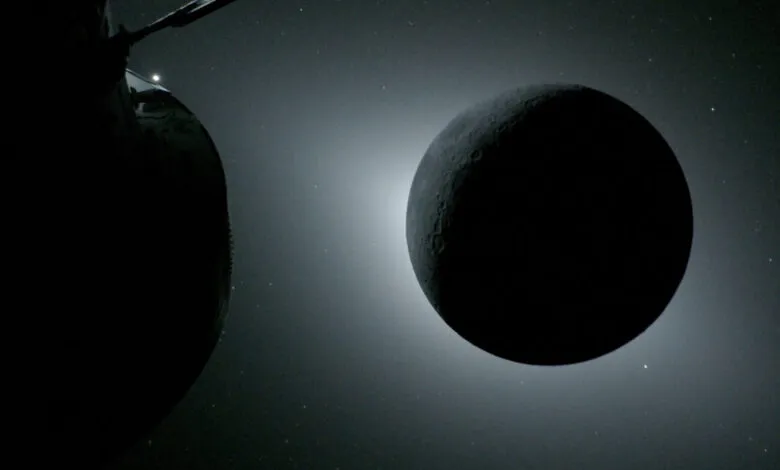
Commander Reid Wiseman described the emotional impact of watching Earth vanish behind the lunar horizon. “I’m actually getting chills right now just thinking about it. My palms are sweating,” he shared. “But it is amazing to watch your home planet disappear behind the Moon. You can see the atmosphere. You could actually see the terrain on the Moon projected across the Earth as the Earth was eclipsing behind the Moon. It was just an unbelievable sight, and then it was gone.”
During their trajectory, which took them over a quarter-million miles into space, the crew experienced a planned 40-minute radio blackout as they passed behind the Moon. Isolated from all communication with mission control, they used the moment for quiet reflection, photography, and even shared maple cookies provided by Canadian astronaut Jeremy Hansen. Hansen’s presence marks a milestone as the first non-American to venture into deep space.
Wiseman noted that the crew has only begun to absorb the magnitude of their journey. “We took about three or four minutes, just as a crew, to really reflect on where we were, and then it was right back into the science,” he explained during a recent press conference. “We still haven’t even begun to reflect on this mission. Human minds should not go through what these just went through, and it is a true gift.”
Another standout moment came when the Orion spacecraft entered the Moon’s shadow shortly after its closest approach, roughly 4,000 miles from the lunar surface. For pilot Victor Glover, this period of darkness ranks among the mission’s “greatest gifts,” offering a stunning celestial vista few have ever witnessed. The astronauts continue to gather data and personal impressions, knowing their unprecedented voyage will provide critical insights for the future of lunar exploration.
(Source: Ars Technica)