Fortnite’s Popularity May Not Last Forever
▼ Summary
– Epic Games laid off around 20% of its staff, a major cut driven by a significant decline in Fortnite’s revenue and player hours.
– The layoffs raise a question about the industry’s future, as companies spent a decade chasing Fortnite’s model of a dominant “forever game.”
– Fortnite’s success warped industry priorities, leading to massive investments in projects aiming for similar market dominance rather than sustainable success.
– The game’s cultural peak involved aggressive marketing and collaborations to maintain relevance, but its original audience aged and it failed to attract enough new, younger players.
– The article argues that no single game can permanently dominate culture, suggesting the industry should refocus on a diverse portfolio of hits rather than chasing an unattainable forever game.
The recent wave of layoffs at Epic Games, affecting roughly 20% of its workforce, follows a familiar and grim corporate script. Yet the news carries a particular weight, given the company’s stature. For years, Epic has been a twin titan, powering much of the industry with Unreal Engine while its flagship title, Fortnite, redefined commercial and cultural success. The specific teams impacted remain unclear, but the underlying cause is not: Fortnite’s revenues are declining, and the drop appears steep. Analyst estimates suggest player hours fell by nearly 30% in 2025 compared to the previous year, prompting drastic cost-cutting measures, including a recent price hike for the game’s V-Bucks currency.
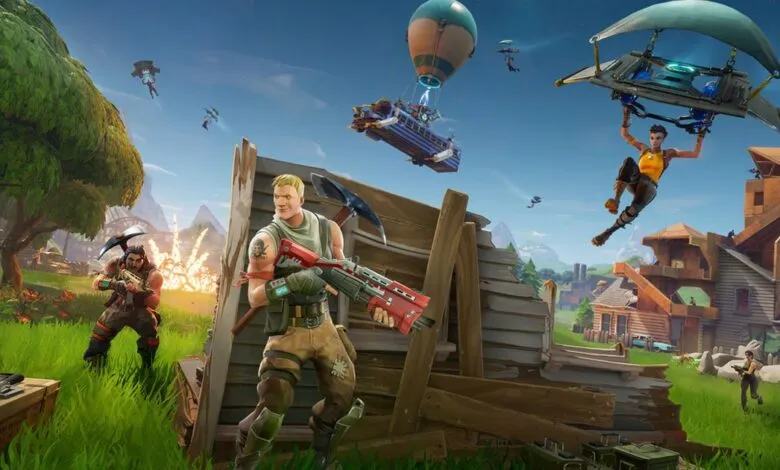
This downturn forces a larger, uncomfortable question for an entire industry. For the better part of a decade, Fortnite has been the north star, the model to emulate. Its unprecedented success justified countless projects and pivots, as publishers spent hundreds of millions chasing the dream of a live service game that could capture perpetual player attention and spending. Fortnite itself seemed to be chasing that same vision, evolving beyond a battle royale into a proposed digital hub for concerts, brand partnerships, and social interaction. It presented a tantalizing idea: the “forever game,” a single, permanent platform that could monetize continuously and serve as a central cultural venue.
For a time, the spectacle worked. Epic deployed massive marketing budgets, staged landmark in-game events with global music stars, and positioned Fortnite not just as a game but as a place. However, spectacle does not guarantee permanence. You can prop up cultural relevance with collaborations and capital for a long time, but you cannot freeze culture in place. Fortnite’s original audience has aged, and the game has struggled to capture the next generation of younger players in the same way. To them, it can feel like an established, even legacy title.
This natural lifecycle is not a failure; it is an inevitability. Games age, audiences move on, and cultural dominance is fleeting. The true failure would be the industry’s continued belief in an impossible standard. The fantasy of a forever game is seductive for executives because it promises to minimize creative risk, replacing it with brand management and service extensions. It is a vision of games as a predictable, endlessly monetizable utility rather than the hit-driven, artistically messy industry it actually is.
The acknowledgment that even Fortnite has a downslope,while still a massively profitable title,could be a crucial inflection point. The terror that one game could absorb all player interest, leaving only scraps for competitors, has evaporated. The market has reaffirmed that no single title owns players forever. Optimistically, this could prompt a healthier recalibration. Perhaps the industry can relearn how to cultivate a diverse portfolio of hits, games that grow organically, serve specific communities, and succeed on their own terms rather than against a monolithic benchmark.
A more pessimistic view is that the obsession will simply transfer, with another platform like Roblox becoming the next candidate for the “forever” crown. Yet even if the fantasy persists, Fortnite’s trajectory offers a vital lesson. Scale buys time, not immortality. No amount of celebrity partnerships or live-service design can insulate a game from the shifting sands of audience taste or elevate it above culture itself. The greatest feature of our creative landscape is that innovation has no end state. Fortnite was never the forever game because such a thing cannot exist, no matter how appealing it looks on a spreadsheet. The end of an era is not an ending, but a return to reality.
(Source: GamesIndustry.biz)