OpenAI Dropped Billion-Dollar Client to Dodge Elon Musk

▼ Summary
– OpenAI terminated its partnership with Cursor following SpaceX’s acquisition of the AI coding tool startup for $60 billion.
– The decision was driven by OpenAI’s inability to trust Elon Musk and his companies to adhere to terms of service agreements.
– Ending the deal represents a significant financial loss, as Cursor was projected to generate over $1 billion in annualized revenue for OpenAI.
– Cursor founder Michael Truell disputed the impact by claiming OpenAI models accounted for only 5% of user traffic, a metric OpenAI rejected as irrelevant to revenue.
– OpenAI aims to present a more stable business profile to investors ahead of its planned public offering next year.
OpenAI severed ties with Cursor, ending a lucrative partnership that generated over $1 billion in annualized revenue. The decision stems from the company’s inability to trust Elon Musk, whose firm, SpaceX, recently acquired the AI coding startup for $60 billion. This move highlights OpenAI’s willingness to sacrifice significant income to avoid potential risks associated with doing business with Musk.
Cursor had been one of OpenAI’s top five customers by revenue at the start of 2026. By spring, the partnership was projected to contribute more than $1 billion annually. Despite this substantial financial loss, OpenAI prioritized security and compliance. In a blog post published late last Friday, the company stated: “We are making this choice because we cannot be confident that SpaceX will use our technology within our terms of service, based on our experience with Elon Musk’s companies violating contracts.”
The breakup occurs as OpenAI prepares for an initial public offering (IPO) next year. Investors are being shown a more stable business model that does not rely heavily on Musk’s goodwill. OpenAI now reports generating over $40 billion in annualized revenue through diverse streams, including subscriptions, advertisements within ChatGPT, and access to its proprietary coding tool, Codex. While losing a major client like Cursor is difficult, the company acknowledges it may impact its reputation among developers who used Cursor as a primary gateway to OpenAI’s models.
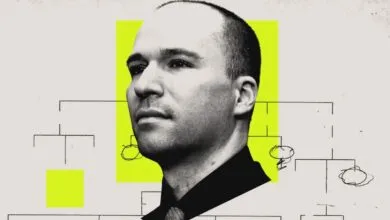
Michael Truell, Cursor’s founder and CEO, responded swiftly on X, claiming that OpenAI’s models account for only about 5% of Cursor user traffic. He argued that this low percentage suggests OpenAI’s tools were not central to Cursor’s value proposition. Thibault Sottiaux, OpenAI’s head of core products, countered that token usage is “not a proxy for revenue nor value created” and challenged Truell to provide the data supporting his claim.
Industry insiders had long suspected the split was inevitable. As OpenAI expands Codex into a standalone coding empire, it has increasingly competed with Cursor for market share. Although the two firms operated as both partners and rivals for over a year, the dynamic shifted after Musk took control. OpenAI cited concerns that SpaceX might attempt to distill or misuse its best AI models. The company noted that earlier this year, Musk appeared to admit during a legal deposition that xAI, now part of SpaceX, had used OpenAI’s models for training. This admission occurred while Musk was testifying in his dismissed lawsuit against OpenAI, where he alleged that Sam Altman and Greg Brockman had misappropriated a charity they founded together.
(Source: Wired)