Meta Plans Up to $10B Yearly Spend on Anthropic AI
▼ Summary
– Meta is a major customer of Anthropic, with internal projections suggesting spending could reach $10 billion annually despite public criticism from Mark Zuckerberg.
– This financial entanglement contrasts with Meta’s public campaign against rival AI labs, which Zuckerberg accuses of consolidating power and automating jobs away.
– Meta engineers heavily utilized Anthropic’s coding tool Claude Code early in the year, leading to significant token usage that prompted internal management changes.
– Anthropic estimates its yearly revenue will exceed $65 billion, making Meta potentially one of its largest single customers by a wide margin.
– Meta used Anthropic’s models to develop and test its consumer agent Hatch, although the publicly launched version will run on different infrastructure.
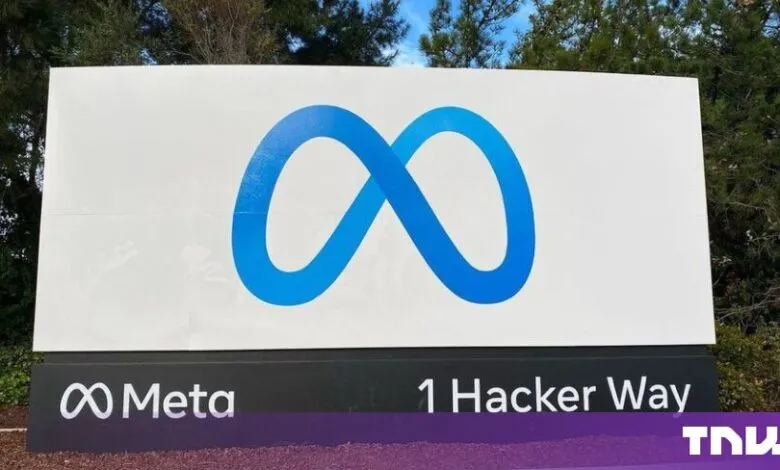
Meta’s financial entanglement with rival AI firm Anthropic has reached unprecedented levels, with internal projections suggesting the social media giant could spend up to $10 billion annually on Anthropic’s models. This massive expenditure occurs despite a highly publicized rivalry between Meta CEO Mark Zuckerberg and Anthropic’s leadership. According to reports from The New York Times, which cited two anonymous sources familiar with private company data, this figure represents a significant portion of Anthropic’s estimated yearly revenue of over $65 billion.
While Meta and Anthropic compete directly in the artificial intelligence market, their business interests are deeply intertwined. Meta is not alone in its reliance on external AI providers; it already pays Microsoft hundreds of millions of dollars annually for model access. Similarly, tech giants Google and Amazon have committed $73 billion to Anthropic while developing their own competing technologies. Despite the competitive tension, Meta has been purchasing Anthropic’s products at scale for most of the year, a fact that contrasts sharply with Zuckerberg’s public rhetoric.
Public Rhetoric vs. Private Spending
Mark Zuckerberg has launched a broad campaign criticizing leading AI laboratories, accusing them of consolidating power and promoting a future filled with fear. In a lengthy essay published earlier this year, he argued that if these labs dominate, “the balance of power will favor larger institutions over individuals.” Meta has supported this narrative with advertising campaigns emphasizing its commitment to empowering people rather than automating jobs away.
However, this public stance does not reflect Meta’s internal spending habits. While Zuckerberg criticizes competitors for allegedly automating work, Meta’s engineers have been heavy users of Anthropic’s tools. The surge in usage began early in the year when employees started using Claude Code, Anthropic’s coding assistant. By April, the enthusiasm had led to internal competitions where staff raced to consume the most Anthropic tokens, a practice dubbed “tokenmaxxing.”
Executives discussed the potential $10 billion cost during this period. As token expenses climbed, Meta removed the leaderboards and informed staff in June that billions would be spent on AI usage. The company subsequently implemented stricter budget management systems, mirroring actions taken by Microsoft in August. Although Meta has reduced some Anthropic spending this summer, it continues to pay hundreds of millions of dollars monthly to the firm.
Strategic Development and Competitive Tactics
Anthropic’s technology played a crucial role in Meta’s development of Hatch, an internal consumer agent described by Zuckerberg as Meta’s next major breakthrough. He envisioned Hatch working “24/7 on your behalf to help achieve your goals and improve your life, your health, your relationships, your finances.” However, the publicly released version of Hatch will run on Meta’s proprietary models rather than Anthropic’s. Reports also suggest Meta may charge up to $199.99 per month for the service.
Simultaneously, Meta is developing its own advanced model, internally known as Watermelon, designed to rival Anthropic’s strongest offerings. Development of Watermelon faced delays after Meta paused pretraining in July before resuming efforts, pushing the expected release to at least October. Neither the launch date for Hatch nor Watermelon has been officially confirmed.
These developments occur against the backdrop of Anthropic’s preparation for an initial public offering (IPO) that could value the company at $2 trillion and raise up to $100 billion. Nat Friedman, Meta’s head of AI product, reportedly warned employees that relying solely on Meta’s own coding tools or those from OpenAI could reduce Anthropic’s revenue prior to the listing. Meta has recently updated its own coding tool, Muse Code, encouraging employees to shift away from Anthropic’s solutions. This strategy mirrors Microsoft’s stated goal to eliminate payments to Anthropic.
Investor Tomasz Tunguz observed the dynamic, stating, “It’s like watching dueling generals compete on the battlefield. Everybody’s gunning to try and destabilize that I. P. O.”
Mutual Financial Interests
The financial relationship between the two companies flows in both directions. In June, Anthropic proposed buying up to $10 billion in computing power from Meta’s data centers over two years. This offer coincided with Meta’s projected spending on Anthropic’s models, creating two separate $10 billion figures pointing in opposite directions. Neither proposal has resulted in a finalized deal.
Meta’s attempts to recruit top talent from Anthropic have largely failed, unlike its successful hires from OpenAI and Google, which often involved nine-figure compensation packages. The industry norm involves complex partnerships across competitors; for instance, Nvidia maintains multibillion-dollar ties with both Meta and Google while they design their own chips.
The reporting on this story highlights additional complexities. The newspaper involved has sued OpenAI and Microsoft over copyright issues, claims both companies deny. The coming months will serve as a critical test: whether Meta’s monthly payments to Anthropic decline before Watermelon’s release and Anthropic’s IPO deadline remains the key metric to watch.
(Source: The Next Web)