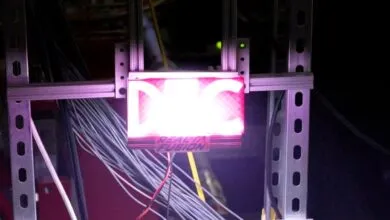
Realta Fusion lights a bulb using its own reactor
▼ Summary
– Realta Fusion demonstrated direct energy conversion (DEC) for the first time by a commercial fusion firm, powering a few light bulbs with several amps at around 100 volts on June 19.
– DEC skips the traditional steam turbine process, aiming for over 90% efficiency compared to about 33% in fission plants, which could improve fusion plant profitability.
– The test was conducted on the WHAM experimental machine, but it did not use deuterium-tritium fuel, so the converter harvested input power rather than alpha particles from a real fusion reaction.
– The concept of DEC dates back to 1974, but Realta claims the first demonstration on a private company’s fusion machine at a scale that could light bulbs.
– Realta plans to build its first commercial reactors by the mid-2030s, with DEC potentially reducing fusion electricity costs by 10 to 20%.
For decades, the primary challenge in nuclear fusion has been generating more energy than it consumes. Now, a new hurdle has emerged: converting that energy into affordable, usable electricity. A startup based in Wisconsin claims to have made a significant leap, recently powering a set of light bulbs directly from its experimental reactor.
The company behind this breakthrough is Realta Fusion. On June 30, it announced what it calls the first demonstration of direct energy conversion (DEC) by a private fusion firm. During a June 19 experiment, the company’s device produced several amps of current at roughly 100 volts, generating enough electricity to illuminate a small number of light bulbs.
Direct energy conversion represents a tantalizing shortcut for the fusion industry. Most reactor designs, including those for traditional fission plants, rely on a conventional method: using heat to boil water, spin a turbine, and drive a generator. This multi-step process is inherently inefficient. DEC bypasses that entire chain, harvesting electricity directly from the charged particles produced during the fusion reaction.
The key incentive here is efficiency. A standard steam turbine in a fission plant converts roughly one-third of its thermal energy into electricity. Realta claims its DEC system can achieve conversion rates above 90 percent. CEO Kieran Furlong explained to TechCrunch that this gain is critical because every fusion plant must allocate a portion of its own power output just to sustain its operations. “We can take power from a plasma,” Furlong said. The more energy a plant can recycle internally, the faster it can become commercially viable.
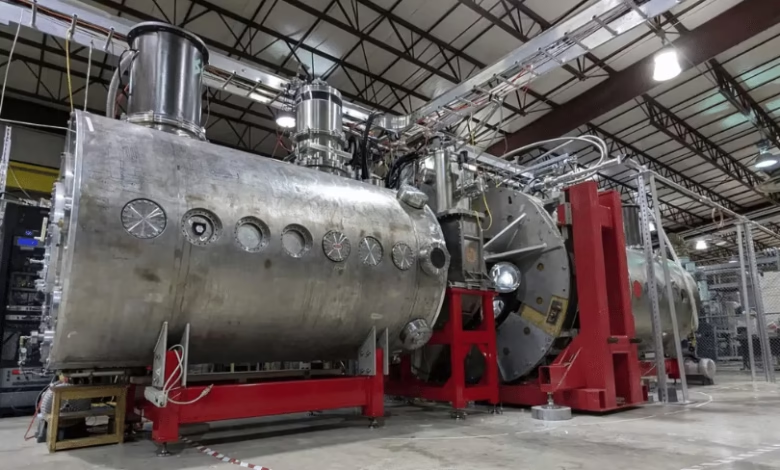
The test was conducted on WHAM, an experimental machine operated jointly by Realta and the University of Wisconsin-Madison. The company attached a prototype converter to one end of the device. This converter works by slowing down the charged particles, which builds up a voltage and drives an electric current. In Realta’s planned first-generation commercial plants, a traditional steam cycle would still handle the majority of electricity generation. DEC would specifically manage the portion of power carried by charged particles, roughly one-fifth of the total output, while also recovering energy used to initiate the reaction.
While the milestone is promising, the company is transparent about its limitations. WHAM does not yet use deuterium-tritium fuel, the standard mixture for a true fusion reaction. Consequently, the converter harvested energy from the input power source, not from the alpha particles that a real fusion plant would generate. In essence, the hardware has been validated, but this experiment did not produce net electricity from fusion.
“This is not yet a demonstration of net-electricity,” said Derek Sutherland, the company’s chief scientific officer. “Those are milestones for our future fusion machines.”
The concept of direct energy conversion is not new. A physicist at Lawrence Livermore National Laboratory first proposed it in 1974, and national labs have demonstrated various versions since the 1970s. What Realta claims as a first is successfully operating DEC on a private company’s fusion machine at a scale sufficient to power a visible load.
The broader fusion energy sector is gaining significant momentum. Following a landmark 2022 experiment that proved a fusion reaction could release more energy than it consumed, the field has pivoted from fundamental physics to engineering and economic challenges. Investors have poured capital into numerous ventures, including Germany’s Proxima Fusion (focused on stellarator designs) and Marvel Fusion (working with laser-based approaches). Backers view fusion as a potential cornerstone of clean, baseload power.
Realta is not alone in pursuing direct conversion. Helion, a startup backed by Sam Altman, has built its entire reactor design around DEC, though it has not yet publicly demonstrated the technology. Realta raised $36 million in a Series A round led by Future Ventures last year, and Furlong confirmed the company is currently raising additional funds. It is also one of eight firms selected for the U. S. Department of Energy’s flagship fusion development program.
For now, the achievement is modest and honestly framed: a handful of glowing bulbs, powered by a converter attached to a machine that is not yet a full power plant. Realta plans to build its first commercial reactors by the mid-2030s. If direct conversion scales as expected, it could reduce the cost of fusion-generated electricity by 10 to 20 percent. That is the bet the company is making. The light bulbs are the first tangible evidence that the underlying electrical path works.
(Source: The Next Web)