June Research Roundup: 6 Science Stories You Missed

▼ Summary
– The monthly roundup highlights scientific stories that nearly went unnoticed, including the science of soccer’s scissors feint.
– The scissors feint is a dribbling maneuver where a player fakes going one way with the outside of their foot then cuts the other.
– Japanese scientists studied this technique in university and junior high school players, using high-speed cameras to capture movements.
Time is a scarce commodity in science journalism, and many fascinating studies never get the spotlight they deserve. This month, we’re catching up on six remarkable stories that almost slipped past our radar, from the biomechanics of a soccer feint to the physics behind a coiled poop and the long-awaited decoding of ancient scrolls.
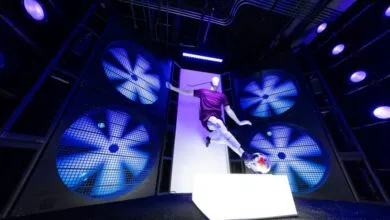
The physics of soccer’s scissors feint has drawn fresh attention during the FIFA World Cup. Japanese researchers analyzed high-speed camera footage of university and junior high school players performing this classic dribbling move, where a player fakes a direction with the outside of their foot before cutting the opposite way. The study reveals how skill level influences the body’s weight shift and foot placement, offering new insights into dribbling dynamics that could refine training techniques.
Another standout story explores the physics of poo’s distinctive coiled shape. Scientists have long wondered why human feces often form a spiral, and new modeling shows that the colon’s muscular contractions and the stool’s viscosity create this characteristic twist. The findings could aid in diagnosing digestive disorders by linking shape changes to gut health.
A boron buckyball has also made headlines. Chemists successfully synthesized a hollow cage of 40 boron atoms, a feat previously thought impossible due to boron’s bonding quirks. This boron buckyball could unlock new materials for energy storage and nanotechnology, expanding the family of cage-like molecules beyond carbon.
Finally, the Vesuvius challenge to decipher the Herculaneum scrolls has achieved a major breakthrough. Using advanced AI and X-ray imaging, researchers have read more text from the carbonized papyri buried by Mount Vesuvius in 79 AD. This latest success brings us closer to recovering lost works of ancient philosophy and literature, a triumph of digital archaeology.
(Source: Ars Technica)