Apple Skips M6, Moves Straight to M7 Chips
▼ Summary
– Apple will skip high-end M6 Pro and Max chips, releasing only a base M6 for entry-level Macs in 2025, with high-end chips arriving in 2027 as part of a new M7 generation.
– The M7 line is built primarily around on-device AI processing, aiming to meet demand for AI and heavier graphics work, while the base M6 improves memory bandwidth to about 200GB/s.
– This breaks Apple’s pattern since 2020 of releasing Pro and Max variants for every M-series chip, marking the first generation with only a base chip.
– The M7 Pro and Max are expected by late 2027, with the M7 Ultra not due until 2028, creating a long wait for users wanting Apple’s fastest silicon.
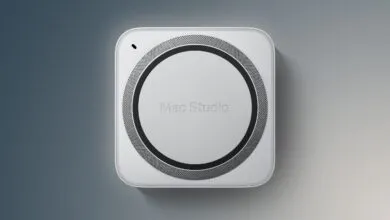
– Apple plans an M5 Ultra stopgap for 2025 in a new Mac Studio, but has cut orders of the existing M3 Ultra Mac Studio from 512GB to 96GB due to supply and cost pressure.
Apple is rewriting its own chip playbook. The company plans to skip the high-end versions of its M6 processor and jump directly to a new M7 line built primarily for artificial intelligence. Starting in 2027, Apple’s most powerful Macs will run on M7 chips, not the M6.
The shift in how Apple rolls out its Mac silicon is more significant than a simple name change. A base M6 chip will debut as early as this year, powering entry-level Macs. But for the first time since the M1 era, Apple will not release Pro or Max variants of that generation. Those higher-performance chips will instead arrive in 2027 under the M7 banner, according to a Bloomberg report citing people familiar with the plans. Apple, currently shipping its M5 series, declined to comment.
This departure matters because it breaks a pattern Apple has held steady since 2020. Every chip family from M1 through M5 included Pro and Max versions. The M1, M2, and M3 even offered a top-tier Ultra. An M-series generation with only a base chip is an industry first.
The split affects which machines get which silicon. Apple’s Pro and Max chips drive high-end Mac minis, Mac Studios, and MacBook Pros. Base chips power entry-level MacBook Pros, cheaper Mac minis, iMacs, and some iPad Pro and iPad Air models. Skipping the high-end M6, then, delays upgrades for Apple’s most demanding computers, not its cheapest.
Why Apple is leapfrogging
The official reasoning is speed. Apple wants to fast-track technology originally planned for later, aiming to meet rising demand for on-device AI and heavier graphics workloads. The M7 line, sources said, is built primarily around on-device AI processing.
A less flattering interpretation also exists. The entire industry is wrestling with a chip and memory shortage that has pushed up costs, squeezed margins, and forced delays. Apple raised prices on every current Mac and iPad on the same day this roadmap leaked. A tidy “AI fast-track” story also provides a convenient frame for a roadmap reshaped by scarcity.
What the M6 actually brings
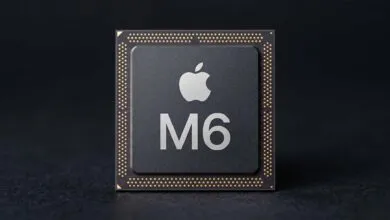
The base M6 is no minor update. Apple has tested it in a refreshed entry-level MacBook Pro, code-named J804, and built it to lead its class. Internally, the chip goes by Komodo. The headline gain is memory bandwidth, a measure of how fast a chip moves data, which matters more than ever for AI.
The M6 is set to reach about 200GB/s, up from roughly 153GB/s on the M5. It pairs that with a new memory architecture, an upgraded neural engine for AI tasks, and faster cores across the board. A redesigned graphics processor adds up to 12 cores, two more than the M5, to juggle AI and rendering simultaneously.
The long wait for Pro power
The catch is timing. Apple plans the base M7 as early as the first half of 2027. The M7 Pro and Max could follow as late as the end of that year. The M7 Ultra, the chip behind the most powerful Mac Studio, is not due until 2028. The base M7 is slated for about 240GB/s of bandwidth.
Anyone who wants Apple’s fastest silicon faces a real wait. A buyer eyeing a top MacBook Pro or Mac Studio has two options: settle for an M5-era machine or hold out well into 2027, and to 2028 for the Ultra.
One stopgap remains. Apple still plans an M5 Ultra. It should arrive as early as this year in a new Mac Studio, one that slipped because of supply and cost pressure. The chip is no slouch, with around 36 processing cores and 80 graphics cores. Apple has tested it with up to 768GB of memory. Yet the squeeze is real. Apple has cut new orders of the existing M3 Ultra Mac Studio from 512GB to just 96GB.
A bet on in-house AI silicon
The reshuffle lands at a sensitive moment. Apple’s chips are its sharpest edge over rivals that lean on Intel and Qualcomm. The silicon team now reports to Johny Srouji, newly promoted to chief hardware officer. John Ternus, meanwhile, is moving toward the chief executive role.
The Mac is only part of it. Apple is also said to be moving iPhone chips to a 2-nanometre process. Fresh silicon is coming for a foldable phone due this year, and for 20th-anniversary iPhones in 2027. Designing its own chips remains the company’s core advantage, which is exactly why a roadmap this scrambled is worth watching.
The throughline is AI. Apple is rebuilding its chip plan around on-device intelligence while a shortage reshapes what it can ship and when. Whether that leaves Pro users patient or frustrated is the question the next two years will settle.
(Source: The Next Web)