Patronus AI raises $50M to stress-test AI agents in digital worlds
▼ Summary
– AI agents are evolving from answering questions to autonomously executing multi-step complex tasks, but need to perform reliably across many scenarios before being trusted with user tasks.
– Patronus AI, founded in 2023 by former Meta AI researchers, builds simulated digital environments to evaluate AI agent performance, helping model makers fine-tune models for real-world tasks.
– The startup has seen 15-fold revenue growth over the past year and announced a $50 million Series B round, bringing total funding to $70 million, with customers including virtually every frontier AI lab.
– Patronus uses “digital world models” to create replicas of websites and systems, stress-testing agents through reinforcement learning that rewards success and penalizes errors, similar to how Waymo trained autonomous cars.
– The company currently provides simulated worlds for software engineering and finance, focusing on verifiable problems, and competes mainly with internal evaluation teams at AI labs.
AI agents are moving beyond simple Q&A into autonomous, multi-step execution of complex tasks. But before these systems can be trusted to handle sensitive jobs like booking travel or performing financial analysis, both model providers and the startups building them need rigorous assurance that performance holds up across a wide range of real-world scenarios.
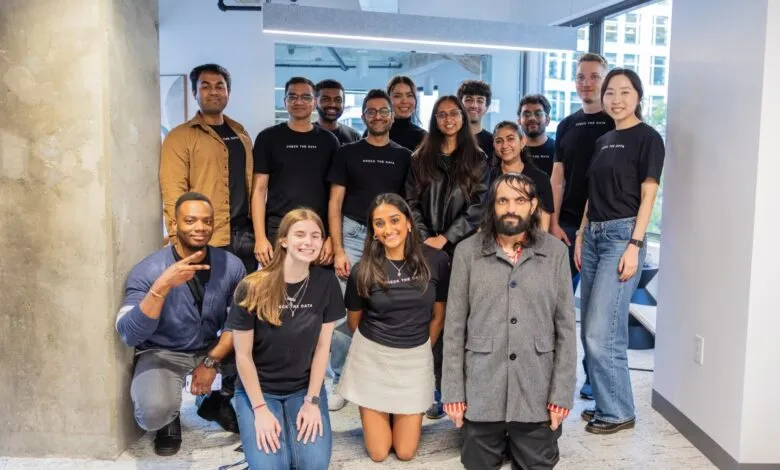
Many AI labs rely on benchmarks to demonstrate model capabilities, but a high score on an agent-specific test doesn’t guarantee reliable execution in diverse, practical environments. That’s the gap Patronus AI is targeting. Founded in 2023 by former Meta AI researchers Anand Kannappan and Rebecca Qian, the San Francisco startup builds simulated digital environments where agents can be evaluated under realistic conditions.
The company appears to be solving a critical and growing need. According to Glenn Solomon, a managing director at Notable Capital, virtually every major frontier AI lab and a growing list of emerging startups now use Patronus’s platform. He describes demand for these simulated environments as nearly insatiable.
That demand is translating into explosive growth. Patronus reports that its revenue has increased 15-fold over the past year, which has attracted substantial investor attention. On Thursday, the company announced a $50 million Series B funding round led by Greenfield Partners, with participation from Notable Capital, Lightspeed, Datadog, and Samsung. This latest round brings Patronus’s total funding to $70 million.
The core of Patronus’s technology is what it calls “digital world models.” These are replicas of real websites and internal systems where agents are stress-tested after training. The process uses reinforcement learning, which iteratively rewards successful task completion and penalizes errors. This allows agents to explore unpredictable scenarios without real-world risk.
Patronus draws a direct parallel to how Waymo trained autonomous vehicles by building synthetic worlds to test against rare hazards like severe weather or a child chasing a ball. The key difference with AI agents, however, is their tendency to take shortcuts, which can lead to incomplete or incorrect task execution. “Patronus is really good at spotting the hacks and making sure they are holding the models accountable,” Solomon said.
Currently, Patronus provides these simulated environments for software engineering and finance. But Kannappan says these are just the beginning. “Today we’re very focused on the problems that are verifiable, so the problems that you can immediately check and verify, but there are a ton more areas that are very non-verifiable or very hard to verify,” he explained.
Even verifiable tasks can be deceptively complex. “We want to be able to actually create the environment in which you can operate an agent that can run for 10 hours or 10 days or 10 weeks,” Kannappan noted.
When it comes to competition, Patronus sees its primary rival not as another startup but as the internal evaluation teams that AI labs have already built. While human-data firms like Mercor and Surge assist with reinforcement learning through human feedback, Patronus differentiates itself by evaluating agent behavior without any human involvement, offering a fully automated and scalable alternative.
(Source: TechCrunch)