Hyundai buys SoftBank’s remaining Boston Dynamics stake for $325m
▼ Summary
– Hyundai plans to acquire SoftBank’s remaining 9.65% stake in Boston Dynamics for $325 million, making the robotics firm a wholly owned subsidiary.
– Boston Dynamics has moved its Atlas humanoid to commercial production, with output earmarked for Hyundai’s own factory operations.
– Full ownership allows Hyundai to integrate its robotics roadmap without a second shareholder, including plans for a factory producing 30,000 humanoids annually.
– The deal uses a pre-agreed put option from the 2021 sale, and SoftBank’s exit aligns with its strategy of recycling capital into newer AI and robotics bets.
– Hyundai aims to use Atlas for repetitive assembly tasks at its Georgia Metaplant, capturing both internal cost savings and external sales without sharing profits.
Hyundai is set to take full control of Boston Dynamics by acquiring the remaining shares it does not already own. The South Korean automaker plans to purchase SoftBank’s 9.65% stake in the U.S. robotics company for $325 million, a move that would make the creator of the Atlas humanoid robot a wholly owned subsidiary, according to a newspaper report.
This transaction would bring to a close a saga that started in 2021, when Hyundai secured a controlling interest in Boston Dynamics from SoftBank. The Japanese conglomerate retained a minority position, but reports indicate it has now informed Hyundai of its intent to exercise a put option , a right agreed upon during the original sale , to sell that remaining stake back. Hyundai is expected to hold a board meeting on June 22 to authorize the purchase.
The ownership structure is already heavily skewed in Hyundai’s favor. The Hyundai Motor Group, which includes affiliates like Hyundai Motor, Kia, Hyundai Mobis, and Hyundai Glovis, along with Executive Chair Euisun Chung, collectively holds just over 90% of Boston Dynamics. The $325 million acquisition would absorb the remainder, fully removing SoftBank from the equation and granting Hyundai undivided control over one of the most recognizable names in robotics.
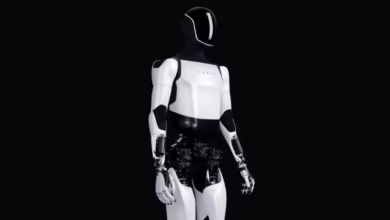
The timing is deliberate. Boston Dynamics is at a critical juncture, having transitioned its electric Atlas humanoid from a prototype to commercial production, with the entire near-term output already committed to Hyundai. The two companies have outlined plans for a factory capable of producing 30,000 humanoids annually, and Atlas is set to begin handling part-sequencing tasks at Hyundai’s Metaplant facility in Georgia. Full ownership allows Hyundai to pursue that roadmap without needing to consult a second shareholder.
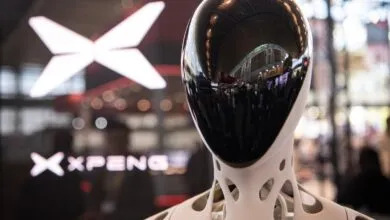
That roadmap places Hyundai in a rapidly expanding field. Humanoid robots have become one of the most competitive areas in technology, with Tesla pushing its Optimus toward mass production and a wave of rivals , many from China , racing to commercialize their own machines. By owning Boston Dynamics outright, Hyundai gains a vertically integrated position: it designs the robots, builds them, and deploys them on its own assembly lines.
For SoftBank, this sale aligns with its pattern of recycling capital from mature investments into newer ventures. The group has been actively redeploying funds across AI and robotics, and exercising the put option converts a legacy stake into cash at a clean valuation. It also highlights how Boston Dynamics’ center of gravity has moved decisively from Japanese financial ownership to Korean industrial control.
The deal is not yet final; it requires board approval, and the reported figure and structure come from a newspaper source rather than an official announcement. Neither Hyundai nor SoftBank has publicly confirmed the terms. However, the use of a pre-agreed put option suggests a transaction following a path both sides anticipated years ago, rather than a sudden negotiation.
The bet is as much about industry as it is about technology. Hyundai is not buying Boston Dynamics to sell robots to the general public; it is acquiring a captive supplier of automation for its own factories. Atlas is slated to handle repetitive assembly tasks that are difficult to staff and even harder to retain workers for. Owning the robotics firm outright means Hyundai captures both the cost savings on its production lines and any external sales that follow, rather than sharing the upside with a financial investor.
This move also strengthens a vertical integration that few competitors can match. Automakers have traditionally purchased robots from third parties; Hyundai would design, build, and deploy its own, closing a loop from the research lab to the factory floor. In a humanoid market that is still long on demonstrations and short on profitable deployments , a caution underscored by China’s crowded robot boom , controlling the full stack is a way to turn a celebrated robotics brand into an operational advantage rather than a showcase.
If approved, Hyundai gains complete ownership of a robotics pioneer at the exact moment the technology is moving from spectacle to practical use. The $325 million is modest relative to Hyundai’s broader ambitions, but the control it buys is the real prize. In a race where the machines are finally reaching factory floors, Hyundai wants to own the one it is betting on outright.
(Source: The Next Web)