Epic plans to let you use Fortnite skins in other games
▼ Summary
– Unreal Engine 6 will allow developers to create games that use a player’s Fortnite skins and to build their own skins compatible with Fortnite.
– Epic aims to prove the concept of an interoperable metaverse by respecting player purchases across an interconnected game ecosystem.
– The system’s success depends on developers adopting it, which may require incentives to support Epic’s ecosystem.
– Unreal Engine 6 is targeting an early access release by the end of 2027, with full release 12-18 months later.
– Epic faces challenges including layoffs, declining Fortnite engagement, and pushback from developers like Poncle over its use of generative AI.
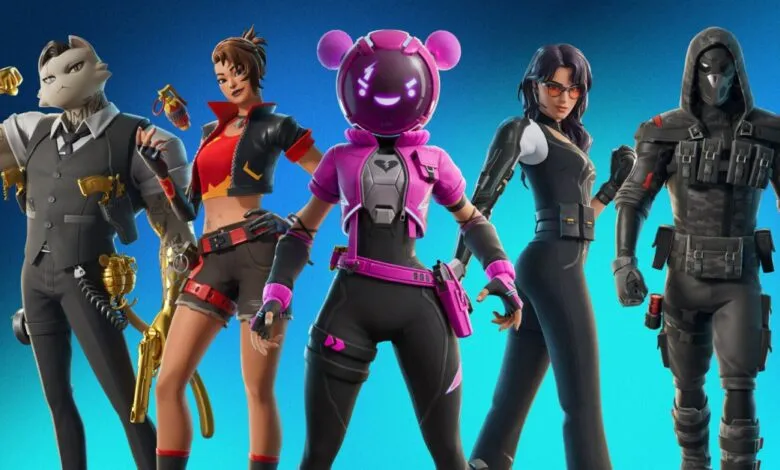
Epic Games has long championed the idea of a connected metaverse, but that vision has remained largely theoretical. Now, with the arrival of Unreal Engine 6, the company is preparing to take a concrete step forward. The next major iteration of its game development platform will allow developers to create games that support Fortnite skins, and conversely, let them build their own cosmetic items that work within Fortnite’s ecosystem.
“We’re tackling this problem first because we want to prove things out with a system that’s complex enough to be a meaningful existence proof of the idea, and one that inherently comes with a ton of player value by respecting their purchases across an interconnected ecosystem of games,” said Marcus Wassmer, Epic’s EVP of development, in a blog post tied to the company’s State of Unreal keynote.
If the system works and gains traction among developers, the payoff could be significant. Many players have invested heavily in Fortnite cosmetics, and the ability to use those items across different games would add real value. Imagine striding through a non-Fortnite title dressed as John Wick or a Stormtrooper Samurai. That kind of cross-game utility would be a welcome change.
However, widespread adoption is far from guaranteed. Developers will need to actively integrate the system into their own titles, which requires time and resources. Without clear incentives, many may choose not to build a bridge that primarily feeds Epic’s own ecosystem. Timing is another hurdle. Epic plans to release an early access version of Unreal Engine 6 by the end of 2027, with the full launch following 12 to 18 months later. That means interested developers won’t even have the necessary tools for years.
The announcement comes at a challenging moment for Fortnite. In March, Epic laid off more than 1,000 workers, citing a decline in player engagement. While the game still boasts 75 million monthly active users, according to Epic’s Hannah Lowry, it no longer commands the cultural dominance it once did. To reverse the trend, Epic is leaning into more gaming crossovers and a redesigned startup experience. Instead of dropping players into a lobby, the game will now open with a Roblox-like “Discover” screen showcasing different experiences. Meanwhile, Epic’s planned persistent universe with Disney has yet to materialize, more than two years after its initial announcement.
Epic is also facing backlash over its use of generative AI. The company recently detailed how it leverages AI to assist with creating Fortnite art. As part of the State of Unreal news, Epic announced it would add an experimental MCP plugin to Unreal Engine, enabling developers to connect large language models to their projects for asset generation and other tasks. But the announcement already sparked controversy. During the keynote, Epic revealed a planned Fortnite crossover with the indie hit Vampire Survivors. Shortly after, Poncle, the game’s developer, said it would be “reviewing” the collaboration due to “today’s news about gen AI usage by Epic to create all sort [sic] of game assets, including Fortnite characters.”
(Source: The Verge)