Apple defends AI privacy even when using Google servers
▼ Summary
– Apple announced it will use Google’s Gemini language models for its new Siri AI, running on Nvidia hardware in Google servers.
– Apple continues to make the same privacy promises as before, despite now using third-party AI infrastructure instead of solely its own devices or servers.
– Apple has long emphasized user privacy through encryption and on-device processing to minimize data leaving user devices.
– Apple Intelligence faces hardware limitations, as local models on iPhones or Macs are too small for advanced capabilities.
– Apple executives explained how the Google partnership would preserve privacy while providing the necessary compute capacity for Siri AI.
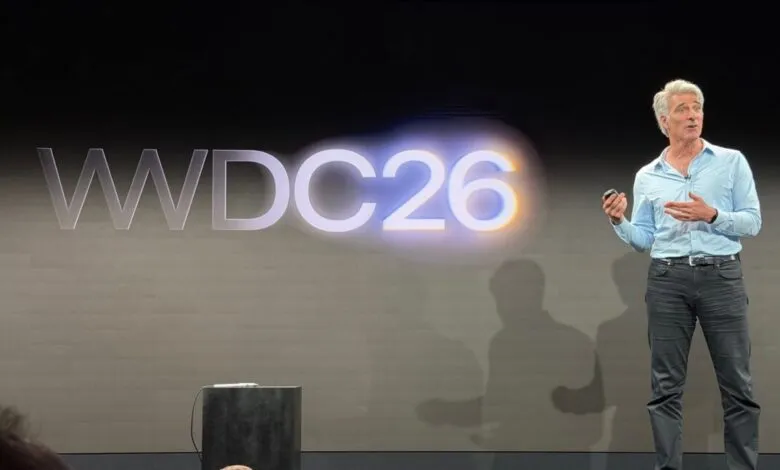
Apple is standing firm on its privacy promises despite now relying on Google servers and Nvidia hardware to power its next-generation Siri upgrade. The company revealed at its Worldwide Developers Conference this week that the long-awaited feature, now officially branded “Siri AI,” operates using Google’s Gemini language models running on Nvidia chips housed in Google’s data centers. Yet Apple insists that the same privacy protections it previously guaranteed,when all AI processing occurred either on-device or within Apple-controlled servers,remain fully intact.
For years, Apple has positioned user privacy as a cornerstone of its ecosystem. Its cloud infrastructure relies on encryption designed to block access from outsiders, including Apple’s own employees. The company has also emphasized on-device processing for tasks like image scanning, minimizing the amount of data that ever leaves a user’s device.
However, the launch of Apple Intelligence has exposed the hardware limitations of Apple’s approach. The language and reasoning models that can run locally on an iPhone or Mac are inherently small, which restricts their performance and accuracy. Apple’s Private Cloud Compute system offered a partial remedy, but it depended entirely on Apple’s own server hardware. Scaling that infrastructure to support Siri AI would have required a massive data center investment the company has so far avoided.
During a smaller session following the WWDC keynote, Apple’s Craig Federighi and other executives explained to journalists how the company intends to maintain user privacy while accessing the computational power it needs through its partnership with Google.
(Source: Ars Technica)