Dell’s new XPS 14 improves on nearly every front
▼ Summary
– The 2026 Dell XPS 14 features strong build quality and good performance from Intel’s Core Ultra Series 3 chips, with physical function row keys and improved speakers and battery life replacing the previous model’s flaws.
– The OLED model’s 2880 x 1800 touchscreen delivers bright, rich colors and deep contrast, while the IPS model offers a variable refresh rate that dips to 1Hz for exceptional battery life.
– Both configurations have three Thunderbolt 4 ports and a 3.5mm audio jack, with the entry-level model priced at $1,999.99 and the OLED version at $2,899.99.
– The haptic trackpad and gapless keyboard remain weak points, with the trackpad sometimes requiring extra pressure and the 0.8mm key travel feeling stilted and prone to typos.
– Despite being a major improvement over last year’s XPS 13, the XPS 14’s high price makes it a tough sell against cheaper competitors like MacBooks and Asus Zenbooks that offer better performance or features.
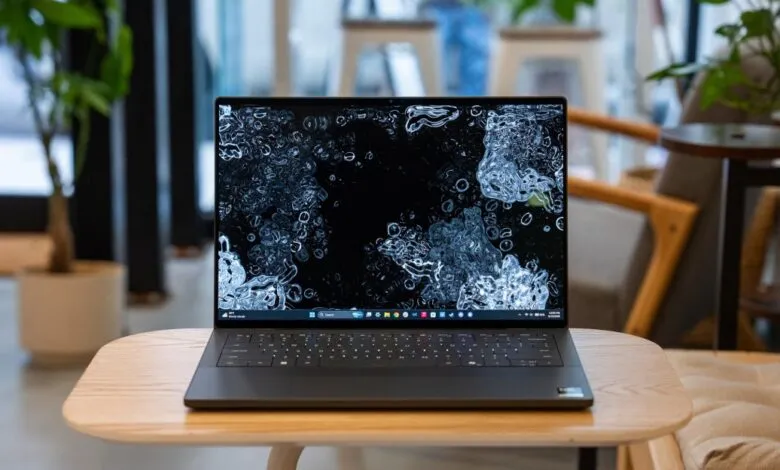
The 2026 Dell XPS 14 marks a significant return to form for the iconic laptop line, delivering exceptional build quality in a slim chassis and strong performance powered by Intel’s new Core Ultra Series 3 “Panther Lake” processors. Dell has also wisely abandoned its confusing “Premium Plus” naming scheme, a move that alone feels like a victory. After the disappointing XPS 13 last year, this new model feels like a genuine resurrection.
The improvements are substantial and welcome. The most obvious change is the return of a physical function row, replacing the frustrating capacitive touch buttons. The haptic trackpad now has subtle boundary lines, making it far more usable than the seamless, invisible version that plagued earlier models. The speakers have been upgraded, delivering balanced sound, and the battery life is remarkable, especially on the IPS model. However, all this quality comes at a steep price.
Dell provided two configurations for testing. The entry-level model, priced at $1,999.99, features an 8-core Intel Core Ultra 5 325 chip, 16GB of RAM, 512GB of storage, and a 1920 x 1200 IPS display. The premium OLED version costs $2,899.99 and packs a 16-core Core Ultra X7 358H, a more powerful GPU, 32GB of RAM, and a 1TB SSD. Both laptops include three Thunderbolt 4 ports and a 3.5mm audio jack.
The build quality is undeniably impressive. These laptops are only slightly thicker than a MacBook Air but feel denser and more substantial, like a solid slab of metal. The haptic trackpad, while improved with its boundary lines, still has quirks. I sometimes had to press harder than expected for a click, and occasional accidental double-clicks occurred. Resting my palms too heavily while typing also triggered misclicks.
The gapless keyboard remains a point of contention. With only 0.8mm of key travel, it feels shallow despite a tactile bump that provides some feedback. While the physical function row is a major upgrade, I still find typing on this keyboard slower and more error-prone. It’s a subjective issue, but it’s not for me.
The 8-megapixel webcam delivers sharp images in good lighting but loses color and detail in dimmer conditions. The speakers are solid for a thin-and-light laptop, offering a balanced soundstage that can get loud without distortion, though bass is predictably limited.
The standout feature on the OLED model is its 14-inch 2880 x 1800 tandem OLED touchscreen. It’s bright, with deep contrast and vibrant colors that make everything look stunning. The lower-end IPS panel, while reaching 500 nits and handling glare well, appears dull by comparison. However, it has a unique advantage: a variable refresh rate that can drop from 120Hz all the way down to 1Hz for static content, dramatically improving battery life. The OLED matches the 120Hz refresh rate but bottoms out at 20Hz.
This variable refresh rate pays off handsomely. The OLED XPS 14 lasted over 10 hours of mixed usage, while the IPS model exceeded 14 hours. In our battery rundown test, the IPS config achieved an incredible 26 hours of continuous runtime, beating even Arm-based laptops. This kind of efficiency is rare and welcome in the Windows ecosystem.
The Intel Panther Lake chips contribute to both power efficiency and solid performance. The fans stay quiet even under load, and the keyboard deck remains cool while the bottom gets warm. The higher-end OLED model, with its 12-core GPU, handled 3D rendering in Blender and even managed to play Battlefield 6 at 50fps on low settings. That’s not gaming laptop territory, but it’s impressive for a thin-and-light productivity machine.
Still, raw performance comparisons are less flattering. A fanless M5 MacBook Air outperforms the entry-level XPS 14 in most benchmarks, and the 14-inch M5 MacBook Pro pulls further ahead while adding an HDMI port and SD card slot. This brings us to the XPS 14’s biggest problem: price.
When it launched, the entry-level model cost $1,600. Now it’s $2,000. The OLED version jumped from $2,200 to $2,900. Dell attributes this to “ongoing market conditions,” but the result is a laptop that feels overpriced for its performance. For $200 less than the OLED XPS 14, you can buy an Asus Zenbook Duo with two 14-inch OLED screens and a better Intel chip. The Zenbook A16 offers triple the RAM and a 16-inch OLED for less than the entry-level XPS 14. Against Apple’s MacBook lineup, the price-to-performance comparison is brutal.
It’s commendable that Dell has revitalized the XPS line after its branding misstep. The 2026 XPS 14 is objectively better than its predecessor in nearly every way. But with these price hikes, it’s now a tough sell for entirely new reasons.
(Source: The Verge)