Amazon unveils voice-controlled warehouse robot
▼ Summary
– Amazon has upgraded its autonomous warehouse robot Proteus to understand and respond to spoken language, allowing human workers to assign tasks verbally instead of using specialized software.
– The new Proteus can operate across a much larger area, moving containers between workstations and assisting employees throughout fulfillment centers, rather than only in dock areas.
– The upgraded system is being piloted in Amazon’s labs and is scheduled for deployment in Europe during the first half of 2027.
– Amazon plans to expand other robotics systems, including the touch-sensitive Vulcan robot and a tote-handling system, to more European sites in the coming year.
– Amazon claims it is creating new jobs alongside these technologies and has hired hundreds of thousands of employees globally since introducing robotics.
Amazon has introduced an upgraded version of its fully autonomous warehouse robot, Proteus, now capable of understanding and responding to natural language commands rather than relying on coded instructions. This development marks a significant step in the e-commerce giant’s broader shift toward warehouse automation, as it continues to integrate robotics into operations traditionally handled by human employees.
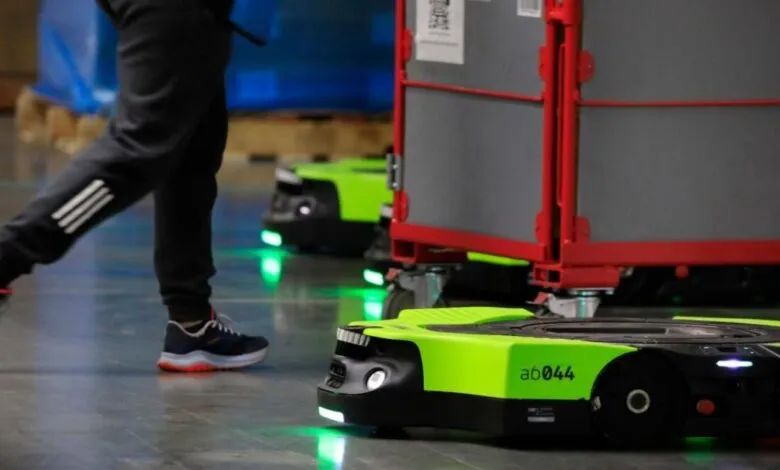
According to Amazon, the AI-powered enhancement allows workers to assign tasks to Proteus using everyday speech, similar to how they would communicate with a coworker. In the past, employees had to operate specialized software to direct the squat, tortoise-like machines, which are designed for heavy lifting and moving large carts within fulfillment centers. “You tell it what needs to be done. It figures out the priority, the route, the timing,” explains Scott Dresser, vice president of Amazon Robotics.
The next-generation Proteus also boasts a much broader operational range. While current models are limited to dock areas, the new system can function across the entire warehouse. Amazon states that “the new system can work anywhere items need to be moved,” including transporting containers upon arrival, shifting them between workstations, and assisting employees throughout fulfillment centers and delivery sites.
Currently, the upgraded Proteus is being tested in Amazon’s laboratories. The company has announced plans to deploy it in Europe during the first half of 2027.
Proteus is just one component of Amazon’s expanding robotics strategy. The company also plans to roll out its touch-sensitive robot, Vulcan, and a collaborative tote-handling system initially piloted in Barcelona to more European sites over the next year.
Despite concerns about job displacement, Amazon maintains that it is “creating new jobs alongside these technologies.” The company reports having hired hundreds of thousands of employees globally since introducing robotics, and it insists the machines are designed to support workers and streamline operations, not to replace them.
(Source: The Verge)