MacBook Neo Draws Industry-Wide Attention
▼ Summary
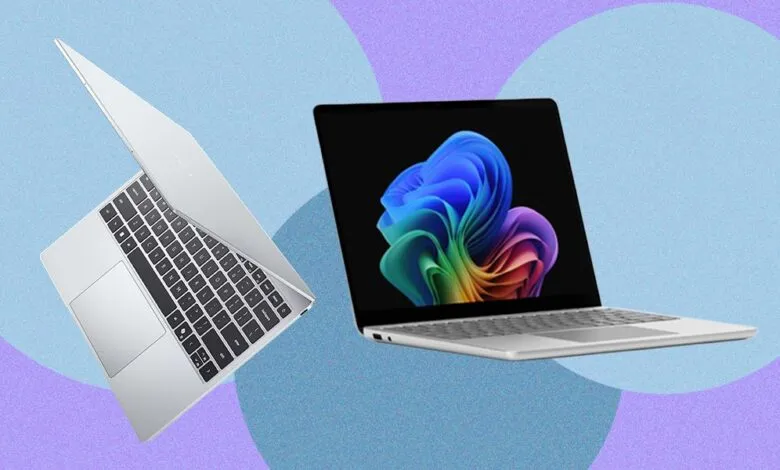
– The Dell XPS 13 starts at $699 ($599 for students) with 8 GB of RAM and a slower Intel Core 5 processor, similar to the MacBook Neo’s trade-offs.
– Unlike the capped MacBook Neo, the XPS 13 can be configured up to 32 GB of RAM and 1 TB of storage, and starts with 512 GB of storage versus the Neo’s 256 GB.
– Competitors like Acer, Lenovo, and HP offer better specs at lower prices but fail to match the MacBook Neo in display quality and chassis materials.
– Microsoft’s upcoming 13-inch Surface Laptop for Business starts at $1,200 with only 8 GB of RAM, a downgrade from the consumer version’s 16 GB, without the XPS 13’s upgraded chassis or screen.
– The article criticizes the 8 GB Surface Laptop as a generational downgrade, implying Apple’s MacBook Neo paved the way for selling such low-RAM configurations in 2026.
At just $699 , or $599 for students , the MacBook Neo is turning heads across the tech industry. The Dell XPS 13 makes similar compromises, starting with only 8 GB of RAM and a slower Intel Core 5 processor (not the Intel Core Ultra). I’m eager to see how its performance and battery life compare to the MacBook Neo, but Dell is clearly following Apple’s lead. Apple used a slower iPhone chip in the Neo instead of an M-series laptop-grade processor.
One advantage of the Dell XPS 13 is its scalability. While the MacBook Neo caps storage and memory, the XPS 13 can be configured with up to 32 GB of RAM and 1 TB of storage. It also starts with 512 GB of storage, double the base configuration of the MacBook Neo.
I’ve recently tested several $500 to $600 laptops from Acer, Lenovo, and HP. Most take a conventional Windows approach to compete with the MacBook Neo, offering better specs at lower prices. They typically include 16 GB of RAM and more powerful chips. However, none match the MacBook Neo’s display quality or chassis materials. That doesn’t mean devices like the HP OmniBook 3 have no place, but they target a different audience than the Dell XPS 13 and MacBook Neo.
The Wrong Direction
It was inevitable that a company would try to ride the MacBook Neo’s success without understanding what makes it work. Last week, Microsoft announced two versions of its Surface Laptop for Business PCs: a higher-end 13.8-inch model and a cheaper 13-inch device. The 13.8-inch model is a standard refresh, featuring Intel’s new Core Ultra X7 368H Panther Lake chip and starting with 16 GB of RAM.
The smaller 13-inch model raises concerns. Despite a starting price of $1,200, that configuration comes with only 8 GB of RAM. Business PCs always carry a premium, so the price itself isn’t shocking. It’s the starting RAM that stands out. Unlike the new Dell XPS 13, Microsoft isn’t pairing this with a thinner chassis or upgraded screen. It simply offers less computing power and calls it good.
To be fair, this “optional” 8 GB model will arrive later this year, separate from the 16 GB and 24 GB versions. But it’s hard to imagine Microsoft selling an 8 GB laptop in 2026 if Apple hadn’t set the precedent. The consumer version of the Surface Laptop 13 started with 16 GB of RAM in 2025. This feels like a clear generational downgrade.
(Source: Wired)