Brain-Scanning Gadgets Are Coming to Your Home
▼ Summary
– Neurable is transitioning to a licensing platform model, allowing its noninvasive brain-scanning technology to be integrated into a wide range of consumer head-worn gadgets by third-party companies.
– The technology uses built-in EEG sensors in headphones to monitor brain waves and provides users with data on focus, cognitive readiness, and mental recovery through a companion app.
– HyperX, an HP-owned gaming brand, is releasing a gaming headset with Neurable’s tech, which a white paper claims improves gamer performance by reducing response times and increasing accuracy.
– Neurable’s CEO states the technology is hardware-agnostic and can be embedded in various headwear like headphones, smart glasses, hats, or helmets, with products branded as “Powered by Neurable AI.”
– Neurable keeps user data on its servers with privacy protections, separating user identifiers from the data, and states its business model is not to sell user data.
The next wearable you place on your head might do more than play music or block out noise,it could scan your brain. Neurable, a Boston-based company specializing in noninvasive brain-scanning technology, announced Tuesday that it is shifting to a licensing platform model. By certifying third-party manufacturers, Neurable expects its technology to appear in a “flood” of consumer gadgets throughout this year and into 2027.
Until now, Neurable focused on a pair of consumer-grade headphones developed in partnership with audio brand Master & Dynamic. The company also holds a contract with the US Department of Defense to explore how its tech can monitor blast overpressure and aid in diagnosing mild traumatic brain injuries in soldiers. With the new licensing approach, Neurable’s sensors could become far more common in everyday headwear.
The headphones rely on built-in electroencephalography (EEG) sensors to track brain waves. That data streams to a companion app, which alerts users when they need a “brain break”,a gentle nudge to pause before burnout sets in, helping maximize productivity. The app also reveals a user’s cognitive readiness for the day, their brain age, and other metrics such as mental recovery, cognitive strain, and anxiety resilience. In 2024, WIRED staff writer Emily Mullin tested the original headphones but found it challenging to verify the accuracy of Neurable’s algorithms.
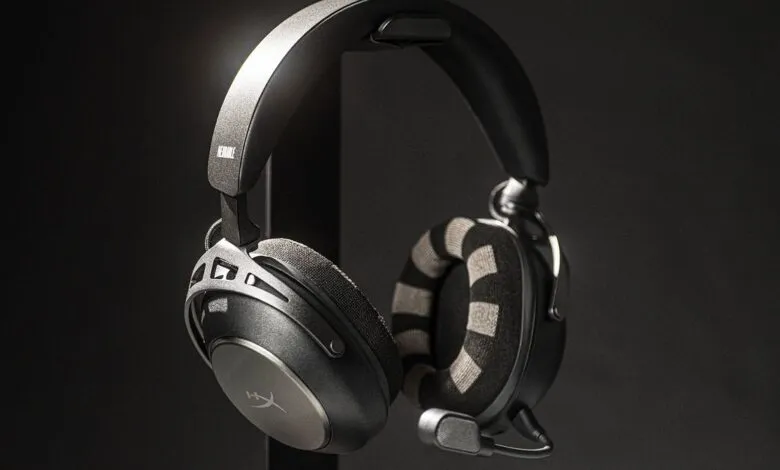
Now, HP-owned gaming brand HyperX is launching a gaming headset incorporating Neurable’s technology, designed to enhance human performance during esports competition. The headset aims to help wearers settle into the optimal mental state for peak performance. Ramses Alcaide, Neurable’s cofounder and CEO, tells WIRED that the company has published a white paper showing improved results among gamers using the tech, including reduced response times in first-person shooter games and a slight uptick in accuracy.
These gains might seem modest, but in the high-speed world of esports, every millisecond matters. Alcaide believes the benefits could extend to other areas as well: a student might reduce anxiety before an exam, while an athlete could calm nerves ahead of a race or game. Neurable’s system is hardware-agnostic; Alcaide says it can be embedded in headphones, smart glasses, hats, or helmets. “There’s a whole landscape of technology that touches your head that’s yet to be embedded with our platform,” he explains.
He compares the trajectory to the rise of Fitbit, which popularized wrist-worn heart-rate tracking. At first, few knew how fitness wearables would be received, but now they are commonplace. Soon, Alcaide predicts, no one will think twice about brain-scanning tech in headphones. Neurable’s technology remains “invisible” inside these devices.
Companies that license Neurable’s tech can integrate it into existing hardware and will control the full experience, from product design to software. These products will be marketed as “Powered by Neurable AI.” User data flows to Neurable’s servers for processing, but the company sets the data privacy protections. User identifiers are separated from the data, and while partner companies manage the user-facing layer, Neurable retains control of the underlying system and data handling. The company has previously stated that its business model does not involve selling user data.
“Any time there’s a new transition to technology, there’s always going to be some anxiety,” Alcaide says. “We’ve been very careful when it comes to that transition. We’re protecting the data, being as ethical as possible.”
Neurable is one of several brain-computer interface (BCI) companies operating in this expanding field. Elemind uses EEGs to improve sleep quality, while Sabi aims to convert thoughts into text. Even Apple has filed a patent for EEG-sensing AirPods, though they have not yet reached the market.
(Source: Wired)