Tech Bros Go All In on Zyn
▼ Summary
– Entrepreneur Garrett Campbell uses 6-mg Zyn pouches constantly during 15-hour workdays, despite initially opposing nicotine, because he believes it boosts focus and gives him a psychological edge in sales calls.
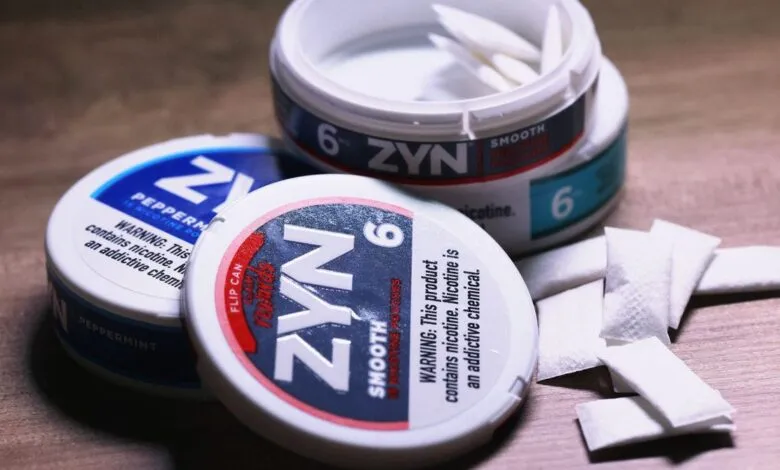
– Zyn, owned by Philip Morris International, distributed 794 million cans in the US last year, a 37% increase, as tech workers adopt nicotine pouches as a clean, nootropic stimulant for marathon workdays.
– Nicotine pouches are increasingly common in the “manosphere” and offered for free at Palantir’s offices, marking a shift similar to historical smoke breaks in workplaces.
– US Health secretary Robert F. Kennedy Jr. has called pouches a safe alternative to smoking, while actors like Leonardo DiCaprio and Josh Brolin use them publicly.
– The industry is rapidly growing, with new brands launching regularly and partnerships forming, such as the UFC’s April deal with pouch brand Fre.
The modern tech founder’s daily toolkit once consisted of little more than a laptop, a coffee habit, and an unshakable sense of ambition. Now, for many, it includes a small, minty pouch tucked discreetly under the upper lip. Entrepreneur Garrett Campbell keeps a 6-mg “cool mint” Zyn in place for nearly every waking moment of his grueling 15-hour workdays, pausing only for meals.
Campbell, a 26-year-old software company founder, admits he once scoffed at the practice. “I was always very against nicotine,” he recalls. When peers first began experimenting with nicotine pouches in college, treating them as a productivity hack, he viewed the habit as “a degenerate thing to do.” Yet the tide turned quickly. Today, he notes that “every single one” of his fellow company founders operates with a pouch pressed against their gum. The numbers back him up: Philip Morris International distributed a staggering 794 million cans of Zyn in the US last fiscal year, a 37 percent jump from the year prior.
What’s driving this shift? Tech workers are increasingly approaching their marathon workdays like “racehorses,” fueled by significant doses of nicotine. Each 6-mg pouch delivers the stimulant equivalent of several cigarettes, but without the smoke, smell, or social stigma attached to traditional smoking or vaping. In Silicon Valley, these pouches have been quietly rebranded as a clean, nootropic stimulant,a tool for mental clarity rather than a dirty habit.
Campbell, who has ADHD and recently sold a sales recruitment company for a substantial sum, swaps his pouches every three hours once the flavor fades. He believes the constant stimulation sharpens his edge during sales calls, allowing him to catch every microexpression. “I just view it as, does this help me make more money and work more efficiently or not?” he asks. “It’s a really weird blend of being stimulating and good for focus, but it’s also relaxing. It keeps you in this cool, calm, and collected feeling.”
The rise of nicotine pouches,typically made from tobacco-free nicotine salt, artificial sweeteners, and synthetic fibers, packed into hockey-puck-shaped tins,has been swift and widespread. Within the so-called manosphere, a sense of camaraderie has emerged among users, who feel they’ve unlocked a secret to peak performance. While athletes have used pouches for over a decade,as many as one in five UK footballers are regular users,the trend has only recently stormed Silicon Valley. The AI firm Palantir now offers them for free in its offices, a milestone for workplace nicotine consumption reminiscent of the 19th-century factory smoke break.
The cultural embrace extends far beyond tech. US Health Secretary Robert F. Kennedy Jr. has described pouches as a safe alternative to smoking, reportedly using them to endure his Senate confirmation hearing. Leonardo DiCaprio sported one on the Golden Globes red carpet, while actor Josh Brolin admits to using them “24 hours a day,” even while asleep. Podcaster Joe Rogan regularly displays his tin on air.
As the industry balloons into a multibillion-dollar market, partnerships and new brands are proliferating. In April, the UFC announced a deal with pouch brand Fre, with an executive from Fre’s parent company citing shared values of being “bold” and “performance-driven.” The message is clear: what was once a vice is now being marketed as a virtue, and tech’s elite are all in.
(Source: Wired)