Apple Business Platform: Manage Devices, Email, and Engagement
▼ Summary
– Apple has launched a new unified platform called Apple Business, which combines its previous business services like Apple Business Essentials and Apple Business Manager.
– The platform provides centralized tools for device management, employee support, and internal communication, including automated device setup and a company directory.
– It offers integrated business services like custom domain email and calendar, plus customer engagement tools for managing brand presence across Apple apps.
– Apple Business will allow businesses to purchase ads in Apple Maps, starting in the U.S. and Canada, which will appear in search results and a Suggested Places feature.
– The service is free globally with optional paid add-ons, and it replaces the older, separate business products, though some features require the latest Apple operating systems.
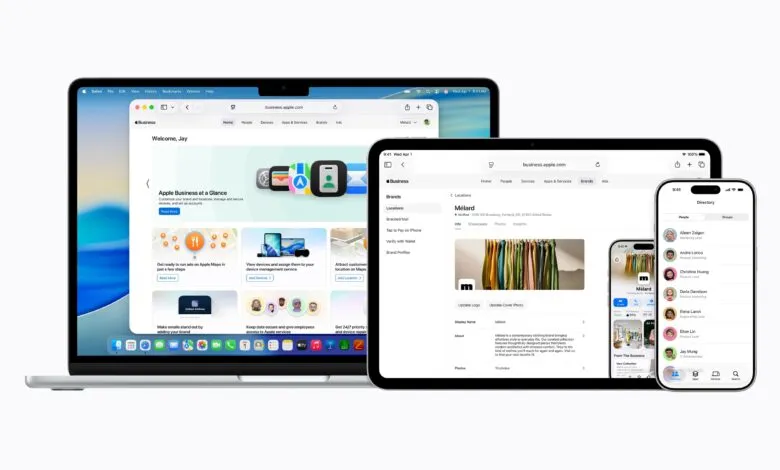
Apple has consolidated its enterprise offerings into a single, comprehensive solution. The newly launched Apple Business platform merges the company’s previous business tools into one unified portal and companion app. This move provides organizations with a centralized hub for overseeing employee devices, internal communications, and customer interactions across all Apple services.
The platform integrates the functionalities of Apple Business Essentials, Apple Business Manager, and Apple Business Connect. Its core strength lies in simplifying IT administration through robust mobile device management (MDM) capabilities. Administrators can configure security policies, deploy applications, and manage user groups from a single dashboard. A feature called Blueprints allows for the pre-configuration of devices purchased directly from Apple or authorized resellers, enabling seamless zero-touch deployment for employees right out of the box.
For the workforce, the platform streamlines daily operations. Employees can access a company directory, install necessary work apps, and request IT support directly through the interface. A key privacy and security benefit is the use of Managed Apple Accounts, which employ cryptographic separation to keep personal and professional data distinct on a single device. This integration extends to major enterprise systems, with automated provisioning available for platforms like Google Workspace and Microsoft Entra ID.
Beyond device management, Apple Business serves as a communication and engagement engine. It includes integrated email, calendar, and directory services linked to a company’s custom domain. For customer-facing initiatives, businesses gain powerful tools to control their brand presence. They can manage brand profiles in Safari and Siri, design branded communications in Apple Mail, and customize place cards in Apple Maps. Additional features support order tracking in Wallet and branding for Tap to Pay transactions.
A significant new opportunity involves advertising. As Apple prepares to introduce ads in Apple Maps this summer, businesses will be able to purchase and manage these campaigns directly through the Apple Business platform. These ads will appear at the top of relevant search results within Maps and in a new Suggested Places feature expected in iOS 26.5. Initially, this advertising capability will be available only in the United States and Canada.
The Apple Business platform is accessible globally in over 200 countries and regions. It is offered as a free service for both new and existing users, with no monthly fees for core device management functions. Optional paid add-ons include expanded iCloud storage and AppleCare+ coverage. With this unified platform now live, Apple has officially discontinued its standalone Apple Business Essentials, Apple Business Manager, and Apple Business Connect services. To access the full suite of features, including the companion app and integrated email services, devices must be running iOS 26, iPadOS 26, or macOS 26.
(Source: MacRumors)