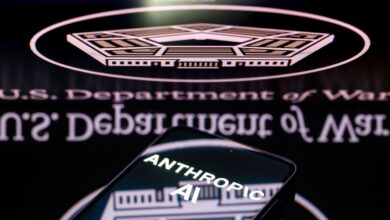
Warren Slams Pentagon’s Anthropic Ban as Retaliation

▼ Summary
– The U.S. Department of Defense designated AI lab Anthropic as a supply-chain risk after it refused to allow its AI to be used for mass surveillance or in lethal autonomous weapons without safeguards.
– Senator Elizabeth Warren criticized the designation as potential retaliation, arguing the Pentagon is trying to force companies to provide tools for domestic spying and autonomous weapons.
– Multiple tech companies and legal groups have filed amicus briefs supporting Anthropic, opposing a designation typically used for foreign adversaries.
– Anthropic is suing the DOD, claiming the action infringes on First Amendment rights, while the Pentagon states it was a national security decision, not punishment for views.
– A court hearing will determine if Anthropic receives a preliminary injunction to maintain the status quo while its lawsuit proceeds.
The conflict between artificial intelligence firm Anthropic and the U.S. Department of Defense is escalating, drawing significant political and industry support for the AI lab. Senator Elizabeth Warren has forcefully entered the fray, accusing the Pentagon of retaliatory action against the company for its ethical stances. In a letter to Defense Secretary Pete Hegseth, Warren argued the department’s decision to label Anthropic a supply-chain risk was an attempt to strong-arm the company, rather than a simple contract termination.
This designation, typically reserved for foreign adversaries, effectively blocks any firm working with the Pentagon from using Anthropic’s products. The senator expressed deep concern that the Defense Department is pressuring companies to provide tools for mass surveillance and the deployment of fully autonomous weapons without proper safeguards. Her characterization of the move as retaliation aligns with a growing chorus of outside voices. Multiple technology firms, including employees from OpenAI, Google, and Microsoft, alongside legal rights groups, have filed legal briefs supporting Anthropic and condemning the Pentagon’s unusual application of the risk label to a domestic company.
The core of the dispute stems from Anthropic’s refusal to permit certain military applications of its AI. The company informed the Pentagon it would not allow its systems to be used for widespread surveillance of American citizens. It also stated its technology was not sufficiently mature for use in the targeting or firing decisions of lethal autonomous weapons without meaningful human control. The Defense Department countered that a private entity cannot dictate lawful military use of its technology, subsequently applying the supply-chain risk designation.
Warren’s letter arrives just before a critical court hearing where a judge will consider Anthropic’s request for a preliminary injunction to halt the designation’s effects during litigation. Anthropic’s lawsuit claims the Pentagon violated its First Amendment rights and punished it on ideological grounds. The government maintains the company’s refusal was a business decision, not protected speech, and that the designation was a necessary national security measure.
Adding to its legal arguments, Anthropic recently submitted court declarations asserting the government’s case relies on technical misunderstandings and raises concerns never discussed during earlier negotiations with the Pentagon. Separately, Senator Warren has also written to OpenAI’s CEO seeking details on that company’s agreement with the Defense Department, a request made just one day after Anthropic’s blacklisting.
(Source: TechCrunch)