Intel Arc B770 GPU Leak: 300W TDP Revealed in Shipping Data
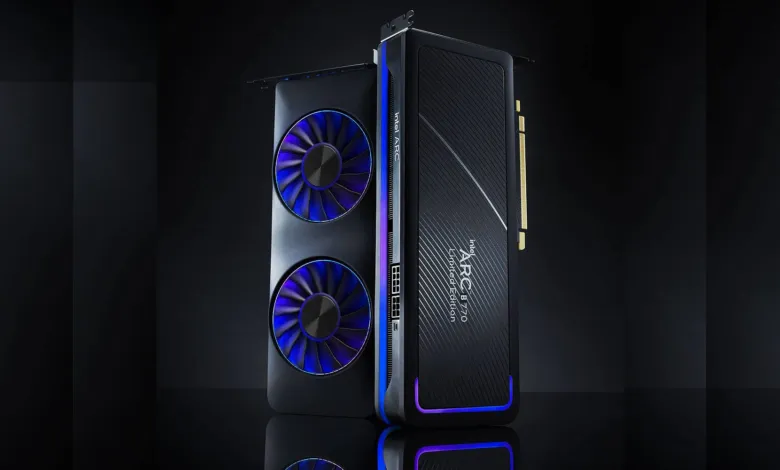
▼ Summary
– A shipping log leak indicates Intel’s upcoming Battlemage GPU will have a significantly higher 300W TDP, making it more power-hungry than its 225W predecessor, the Arc A770.
– The leaked part number “N38341-001” suggests this is a consumer variant of the flagship BMG-G31 chip, which is expected to launch soon.
– This 300W GPU, likely the Arc B770, is a higher-end model compared to the 190W Arc B580, which uses the smaller BMG-G21 chip.
– The rumored Arc B770 specs include 4096 shaders, a 256-bit memory bus, 16GB of 19 Gbps GDDR6 VRAM, and a resulting bandwidth of 608 GB/s.
– For the GPU to succeed, the article suggests it must outperform competitors like the RTX 5060 Ti and RX 9060 XT while being offered at a noticeably lower price.
A recent shipping document has provided a significant clue about the power requirements for Intel’s next-generation Battlemage graphics card, suggesting a substantial increase over current models. The data points to a flagship GPU with a 300W Total Graphics Power (TGP) rating, a notable jump that signals Intel’s ambition to compete in the higher-performance segment of the market.
The leak originates from an NBD shipping manifest, which listed a new part number: N38341-001. This alphanumeric code follows Intel’s established pattern for consumer graphics products. While the document doesn’t explicitly name the specific GPU, the part number strongly indicates it is for the anticipated Intel Arc B770, a card expected to utilize the top-tier BMG-G31 graphics die. This engineering sample’s 300W rating places it well above the 190W TGP of the previously leaked Arc B580, which is based on the smaller BMG-G21 chip.
This projected power draw represents a clear generational leap. For comparison, the current-generation flagship, the Arc A770, operates at a 225W TDP. The move to 300W underscores that the BMG-G31 will be a significantly more powerful, and power-hungry, piece of silicon. This increase is logically tied to the rumored architectural improvements. The G31 die is expected to be larger than the G21 and is speculated to feature 32 Xe2 cores, equivalent to 4096 shaders.
Alongside the core count, other anticipated specifications would support the need for higher power. The card is rumored to boast a 256-bit memory bus paired with 16 GB of GDDR6 memory running at 19 Gbps. This configuration would deliver a robust 608 GB/s of memory bandwidth, a healthy upgrade that should contribute to markedly better performance than the B580. The combination of a more advanced architecture, increased core count, and faster memory positions the B770 as a potential contender against upcoming mid-range offerings from competitors.
For Intel to gain meaningful market share, performance is only one part of the equation. The Arc B770 would likely need to deliver competitive frame rates against cards like the rumored RTX 5060 Ti or RX 9060 XT, but do so at a noticeably lower price point. Aggressive pricing has been a cornerstone of Intel’s strategy in the discrete GPU space, and continuing that approach with a more powerful product could be key to its success. The leaked 300W TGP confirms that Intel is building a substantially more potent graphics card, setting the stage for a more heated battle in the mainstream gaming GPU market later this year.
(Source: WCCFTHECH)