Hygon C86-4G CPU Matches Intel Core i7 Performance
▼ Summary
– Hygon’s C86-4G processor powers China’s first domestic gaming PC and delivers performance close to Intel’s 13th Generation Raptor Lake models.
– The C86-4G features 16 cores, 32 threads, and 32MB of L3 cache, likely based on AMD’s Zen architecture but with a lower 2.8 GHz clock speed.
– It supports modern DDR5 and PCIe 5.0 technologies and is an x86 processor, ensuring compatibility with Windows and applications without translation layers.
– Benchmark results show the C86-4G has weaker single-threaded performance but excels in multi-threaded tasks, outperforming some Intel Core i7 models.
– While Hygon’s processor is a domestic success, Chinese graphics cards still lag behind Nvidia, AMD, and Intel, so the gaming PC uses an Nvidia GPU.
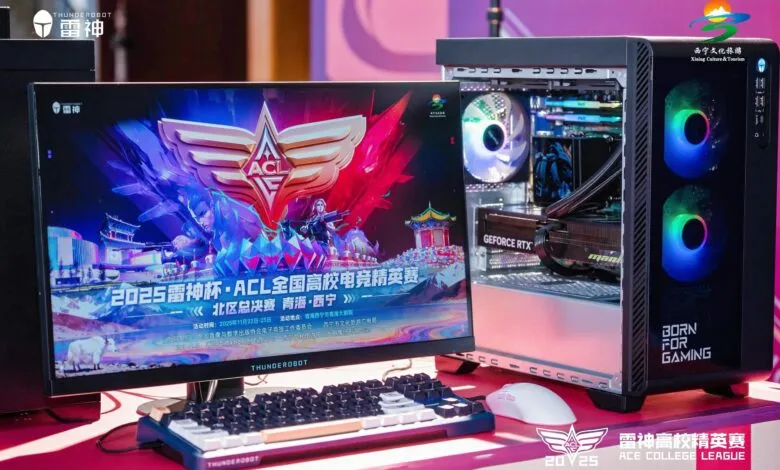
The emergence of the Hygon C86-4G processor marks a significant milestone for China’s semiconductor industry, demonstrating performance that approaches established players like Intel. Recently unveiled within the Thunderobot Black Warrior Hunter Pro, China’s inaugural domestically powered gaming PC, the C86-4G shows capabilities comparable to certain Intel 13th Generation Raptor Lake models, signaling a notable step forward for local chip development.
Specifications for the C86-4G include 16 cores, 32 threads, and 32MB of L3 cache. These features closely resemble AMD’s Zen architecture, which Hygon licensed years ago through a joint venture. Although the company’s official roadmap describes the C86-4G as using a new, self-developed microarchitecture, industry observers believe it still relies on the Zen core design. The chip operates at a base clock speed of 2.8 GHz, which is modest compared to first-generation Zen processors.
One of the most compelling aspects of the C86-4G is its support for DDR5 memory and PCIe 5.0 connectivity, two advanced technologies not originally available on AMD’s Zen platform. This suggests Hygon may have adapted AMD’s Zen chiplets to work with a more modern I/O die that integrates DDR5 and PCIe 5.0 controllers.
Being an x86 processor, the C86-4G offers a crucial advantage over other Chinese CPUs based on Arm or RISC-V architectures: it runs Microsoft Windows and a wide range of compatible applications and games without requiring translation layers. This native compatibility makes it suitable not only for gaming but also for broader professional and consumer use, representing meaningful progress in China’s pursuit of technological self-reliance.
Benchmark results provide insight into the processor’s real-world performance. In the outdated but still referenced SPEC CPU 2006 benchmark, the C86-4G showed weaker single-threaded results, lagging up to 33% behind the Core i7-12700. However, in multi-threaded integer workloads, it outperformed the Core i7-13700 by up to 22% and even edged out the Core i7-14700 by up to 4%. Floating-point multi-threaded performance also saw an 8% improvement over the Core i7-13700.
Using the more contemporary V-Ray benchmark, the C86-4G scored 29% higher than the Core i7-12700 and 7% above the Core i7-13700. Still, it fell 22% short of the Core i7-14700K. These mixed results highlight both the chip’s multi-core strengths and its single-thread limitations.
A Weixin post also claimed the processor can handle popular titles like Valorant and Black Myth: Wukong, though no performance data or visual evidence was shared to support these assertions.
The C86-4G’s relatively low single-thread performance can likely be attributed to its reliance on older Zen cores, while its multi-threaded advantage stems from its 16-core configuration. By comparison, Intel’s Core i7-12700 and i7-13700 include a mix of performance and efficiency cores, with only eight P-cores dedicated to heavy lifting.
While Hygon’s CPU represents a credible step forward, the same cannot yet be said for China’s domestic graphics cards. Despite recent improvements, a substantial performance gap remains compared to offerings from Nvidia, AMD, or Intel. As a result, the Thunderobot gaming PC pairs the Hygon C86-4G with an Nvidia GeForce RTX graphics card to ensure a competitive gaming experience.
For now, Hygon can celebrate a symbolic victory in the CPU space, and Thunderobot earns recognition for launching China’s first gaming desktop powered by a homegrown processor, even if other components still come from abroad.
(Source: Tom’s Hardware)