The Steam Frame: A Revolutionary New VR Experience
▼ Summary
– Valve’s Steam Frame is a lightweight standalone VR headset that can play flat-screen Windows games locally via an Arm chip or stream games wirelessly from a PC using a dedicated dongle.
– The headset uses foveated streaming with eye-tracking to optimize image quality and reduce latency by focusing high-fidelity rendering where the user is looking.
– It features modular design with an expansion port for future accessories and includes comfortable, well-balanced ergonomics with a battery in the head strap.
– Local gaming performance may have occasional stutters due to emulating x86 games on Arm, but Valve is working on improvements and a verification program for compatible games.
– Valve emphasizes the Frame is primarily a wireless streaming headset, targeting a price below the $999 Index and offering controllers with comprehensive inputs for both flat-screen and VR games.
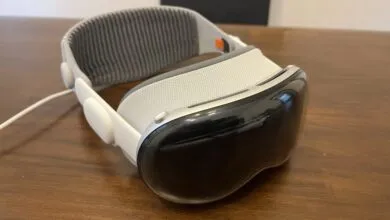
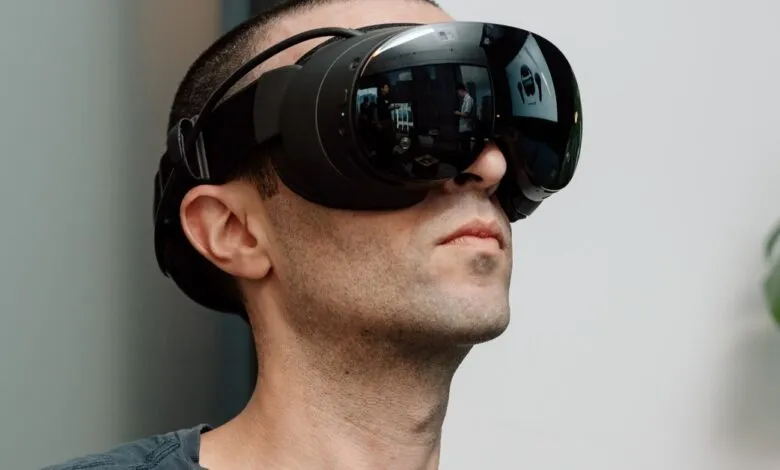
Valve’s upcoming Steam Frame headset aims to fundamentally reshape virtual reality by delivering a completely wireless, high-fidelity experience for your entire Steam library. This standalone device combines local gaming capability with a unique wireless streaming solution, promising to eliminate the common frustrations that cause many VR headsets to be abandoned after their initial novelty fades. After a hands-on session, the impression is that Valve has created something genuinely compelling that could finally make VR a permanent fixture in gaming setups.
The Steam Frame operates in two distinct modes. It functions as a standalone unit, powered by a smartphone-class Arm chip (Snapdragon 8 Gen 3) and local storage or a microSD card, allowing you to play flat-screen Windows games directly on the device. Its more significant innovation, however, is its dedicated streaming capability. A bundled wireless dongle plugs into your gaming PC and transmits games over a 6GHz spectrum, creating a private, high-bandwidth connection that bypasses typical home Wi-Fi congestion. The result is a remarkably low-latency experience that, in practice, feels indistinguishable from a wired connection or native playback.
A key technology enabling this seamless streaming is what Valve terms “foveated streaming.” Unlike foveated rendering, which adjusts graphical detail based on your gaze to save processing power, this system uses the headset’s eye-tracking cameras to optimize data transmission. The technology focuses the highest image quality precisely where your eyes are looking, borrowing bandwidth from your peripheral vision. This process happens automatically over 80 times per second, requiring no extra work from game developers. During a demonstration, this technique proved so effective that visual compromises were completely imperceptible, even when consciously searching for them.
Comfort is another area where the Steam Frame excels. Weighing just 440 grams with its battery strap, it is significantly lighter than many competitors. The headset feels well-balanced out of the box, featuring a plush face cushion and a clever audio system where speakers are spaced to cancel their own vibrations, preventing interference with the headset’s sensors.
While local play is possible, performance on the built-in Arm chip involves some compromises. Since it must emulate x86 Windows game code on the fly, users may encounter occasional gameplay stutters or “hitches.” Valve is addressing this with plans for a system that downloads pre-converted game code, similar to the Steam Deck’s shader pre-caching, and a “Steam Frame Verified” program to clearly label well-optimized titles. The company has clarified that some performance issues observed were due to a bug and expects significant improvements by launch. The battery life for local play is also a consideration, with a 21.6 watt-hour cell, though it can be extended with an external USB-C power bank.
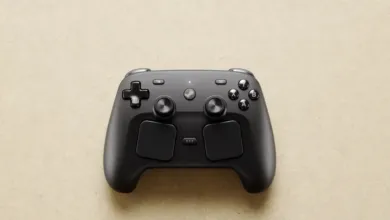
The device’s primary design focus remains wireless streaming. “Steam Frame is a wireless streaming headset, first and foremost,” stated a Valve designer, noting that both hardware and software decisions were optimized around this core function. The included controllers are versatile, equipped with a full suite of inputs, joysticks, buttons, and triggers, for traditional games, plus capacitive sensors for detailed finger tracking in VR titles.
Valve is targeting a price point below its previous $999 Index headset, a goal achieved through certain strategic choices. The headset uses high-quality LCD screens and pancake lenses but does not feature class-leading specs. Most notably, it employs monochrome passthrough instead of color, a deliberate cost-saving measure that the company defends by reiterating the device’s primary identity as a gaming platform. For users seeking more advanced features, the headset is designed with modularity in mind, including an expansion port in the nose piece to support future add-ons like additional cameras.
The overall impression is that Valve has engineered the Steam Frame to be a practical and comfortable gateway to your existing Steam games in VR. It successfully combines lightweight design, innovative wireless technology, and thoughtful ergonomics into a package that feels less like a tech demo and more like a refined consumer product. For many, this could be the headset that finally moves VR from the realm of fleeting interest to a staple of their gaming life.
(Source: The Verge)